Online Reporter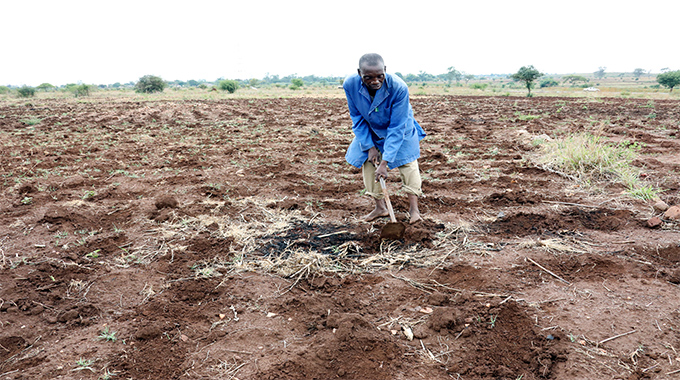
Obert Chifamba-Agri-Insight
THE 2025/26 summer season is shaping up to be the mirror image of its predecessor — characterised by a delayed start and erratic rains at some point, then bountiful precipitation in the end.
Forecasts by the Meteorological Services Department (MSD) are painting a picture of a season capable of presenting farmers with both challenges and opportunities, which require them to be vigilant and adaptable, as they navigate the problems that come with unpredictable climatic changes.
Armed with such knowledge, farmers should approach the season with caution and have fall-back plans in place, as relying on their old ways of doing business could easily lead to significant risks in their agricultural undertakings.
It is exciting to note that Government has already noticed the direction climate change is steering rain-fed agriculture towards and is already pushing for the modernisation of farming through the adoption of irrigation technology.
It has undertaken many dam projects to date and has embarked on the construction of 12 high-impact dams across the country, as a food security precaution.
Of course this insightful project will not be rolled out to completion overnight, as it requires a lot of funding and given that Government already has a plate-full of demands from other sectors of the economy, they may take a bit of time to complete.
Farmers must therefore not just wait for the project to come to their shores without initiating their own mitigation measures to counter climate change challenges.
The 2025/26 season is turning out to be a replica of the 2024/25 one marked by a slow start and an end expected to have lavish rains — lavish enough to beat last season’s.
Obviously, the 2024/25 season left lessons that farmers can always build on to come up with ways of lessening the harsh impact of the hostile weather conditions projected to come somewhere along the season.
It would be recklessness for the country to allow itself to fall freely from the high pedestal it climbed last season, thanks to bumper harvests in crops like wheat and tobacco that performed well regardless of the skewed season.
As farmers go about their preparations for the upcoming season now, they need to incorporate strategies that climate-proof their activities.
The complex seasonal forecast released recently by the MSD essentially highlights both the tribulations and prospects of success in store for the farmers and must not be taken for granted.
The cliché ‘forewarned is forearmed’ may have lost its lustre in the countless centuries of use but still wields some relevance in matters like this.
Farmers may choose to ignore the forecast at their own peril, hence the need to act. And the time to do that is now.
Some may easily recuse themselves from being proactive citing lack of resources but there are always cheaper ways of doing so. These include mulching.
This is just the application of organic materials (like straw, leaves, or grass) around plants to reduce evaporation, maintain soil temperatures at tolerable levels and suppress weeds at the same time.
It does not require rocket science to appreciate the fact that weeds compete with crops for many things and moisture is one of them.
Many farmers have already been practising mulching especially with the Government’s Pfumvudza/Intwasa concept that has enabled them to salvage reasonable yields even during difficult seasons.
This is one effective method that comes without any costs save for the labour required to gather and then apply the mulching material.
Interestingly, the Pfumvudza/Intwasa concept, which has become very popular with many smallholder farmers in recent seasons, requires them to apply mulching material to planting holes as a way of trapping moisture, suppressing weeds and ensuring minimal disturbance to the soil. The concept is a form of conservation tillage that is known to help retain soil moisture while improving soil structure.
On the one hand, farmers may help their cause by adopting crop rotation and crop diversification to enhance soil health, break pest and disease cycles and also reduce dependency on one crop.
The danger with relying on one crop is that it may fail due to various problems and that will mean food insecurity will set in while the farmer will also be without an income.
Ideal rotations will include crops with drought tolerance qualities and can soldier on in adverse weather conditions to allow the farmer to at least get a little something.
One painful observation I have made over many years is that millions, if not billions or trillions of cubic metres of water flow into rivers, then oceans every wet season with very little effort to harvest them for later use.
And if the assertion that some climate scientists believe that rainfall quantities we have been receiving in the past have not changed much from what we are getting at the moment except for the distribution pattern is true, then there is need to urgently start harvesting the water.
They argue that instead of falling evenly throughout the season, the rains are coming in voluminous quantities within a very short space of time in a way that will not allow seepage but just run-off.
And all the run-off is going straight into rivers and seas.
This water could easily make the difference had it been harnessed for later use. It is time farmers walk the talk on commercialising their operations, which needs them to plug up all gaps that can compromise their aspirations.
Rainwater harvesting entails the practice of collecting and storing rainwater using simple structures like tanks or pits. This will help farmers access additional water sources during dry spells.
In a separate but effective method, they can plant along the contours of the land to reduce runoff.
This enhances water permeation and reduces soil erosion.
They can also use barriers to slow the flow of water in gullies thereby reducing erosion and capturing the water in the landscape.
One other simple and cost-effective way of enhancing the soil’s fertility levels and moisture retention capacity comes through the use of organic matter.
Organic manure is known to enhance the soil’s capacity to hold water and nutrients. This is a method that some farmers have used in the past with very high levels of success but had somehow suffered a natural death with many opting to go for organic fertilisers.
Agroforestry has in recent years also come into the picture, as a way of reducing wind erosion, improving soil moisture and providing shade to crops. It involves the incorporation of trees and shrubs into farming systems.
Community knowledge sharing also enables farmers to share best practices and innovations to adapt to changing conditions. This option requires farmers to engage in workshops and form groups that enable them to jointly tackle challenges and share expertise.
By implementing these strategies, dryland farmers can enhance their resilience to climate variability and improve overall agricultural sustainability in promising but tricky seasons like the 2025/26 one.