Online Reporter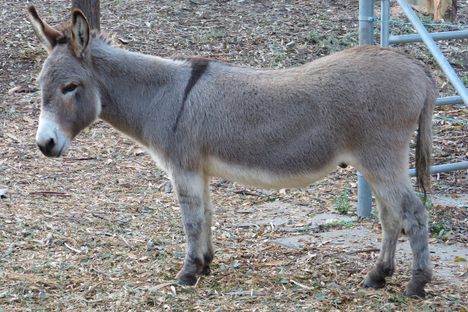
Mthabisi Tshuma, [email protected]
ALONG the country’s major highways, fences are erected on either side, particularly where roads pass through farms and game parks.
The fences are mostly erected by the Government through the Ministry of Transport and Infrastructural Development, while some farmers and game parks also put up additional fencing to keep livestock and wildlife away from the roads.
In 2016, the Traffic Safety Council of Zimbabwe (TSCZ), a parastatal under the Ministry of Transport and Infrastructural Development, embarked on a project to fence off the country’s highways as part of measures to reduce road carnage caused by stray animals.
Where the fencing is properly maintained, it is possible to find two fence lines on the same side of the highway — one erected by the Government and another, a few metres away, installed by landowners.
The system is intended to prevent livestock and other animals from crossing highways at undesignated points and to stop them from freely roaming on the roads.
However, highways are slowly becoming increasingly hazardous, not only because of reckless driving, but also because of the growing presence of stray animals.
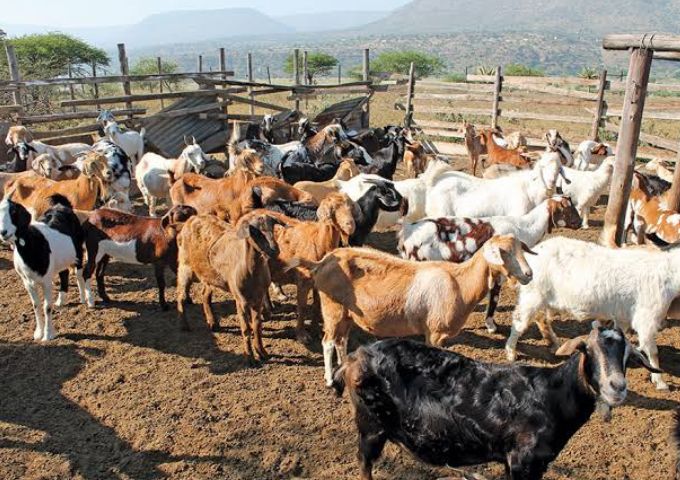
Cattle, goats and donkeys are regularly found on the highways, creating a serious danger for motorists and pedestrians.
The animals, often left to graze on the highway verges can wander onto the highway, forcing motorists to swerve suddenly to avoid collisions. Such evasive manoeuvres can result in loss of control and serious accidents.
The problem is particularly visible along the Bulawayo-Harare Highway, especially between Bulawayo and Gweru, as well as along the Mbalabala-Zvishavane highway around Skuta and the Filabusi turn-off.
The situation has been worsened by the vandalism and theft of highway fencing. In some areas, farmers have also removed sections of their own boundary fences, either to use the materials elsewhere or to allow livestock to graze freely.
As a result, animals are able to move unhindered onto the highways.
A Zimpapers news crew observed that in several sections along the Bulawayo-Harare Highway, the boundary fence has been removed, allowing cattle and donkeys back onto the road.
In other areas, the fence has been cut to create openings for cattle to pass through.
Residents living along the highways blame people from outside their communities for stealing the fencing, saying the vandalism is often carried out at night, making it difficult to apprehend the culprits.
The locals say they have no reason to destroy the fence because they benefit from it by keeping their cattle and donkeys off the highway.
The dangers become particularly pronounced when it is raining or is cold. During the day the tarmac absorbs heat from the sun and remains relatively warm after nightfall while surrounding bush areas can become cold, wet and muddy.
Cattle, goats and donkeys often move to the road at night because it provides a comfortable surface for resting thereby increasing the risk of collisions with vehicles. In winter, motorists are therefore more likely to encounter animals on the road at night.
A significant number of accidents are recorded every year as a result of stray animals.
One of the most recent high-profile incidents involved three Highlanders Football Club executives, who died after their vehicle hit a cow, triggering a multi-vehicle collision at Lochard, about 50 kilometres from Bulawayo along the Harare-Bulawayo Highway.
Club chairman, Kenneth Mhlophe, a retired army colonel, vice-chairman, Fiso Siziba, and treasurer, Nkani Khoza, were returning from Kariba in a Ford Raptor.
Siziba was allegedly behind the wheel when the vehicle hit a cow at around 8pm before side-swiping a bus travelling towards Harare.
The accident prompted the Zimbabwe Republic Police (ZRP) to launch investigations to identify and prosecute the owner of the allegedly stray cow.
National police spokesperson, Commissioner Paul Nyathi, said laws were in place to hold livestock owners accountable for road traffic accidents involving their animals.
“There are laws that hold livestock owners accountable for such road traffic accidents. We hear that the cow that was hit was part of a herd that was being driven by a young man.
“So, the police are seized with the matter. We want to find the owner of the cow and bring them to book. That is why police investigations are still underway,” said Commissioner Nyathi.
In October 2025, opposition lawmaker Desire Moyo died after the vehicle he was travelling in hit an elephant along the Bulawayo-Gweru Highway.
The accident occurred in the early hours the morning while Moyo and four other National Assembly Members were travelling along the highway. He died instantly, while his fellow lawmakers were injured.
In the same month, tragedy struck along the Gweru-Zvishavane Road when a bus carrying 45 passengers rammed into a cow before colliding head-on with an oncoming vehicle, killing two people and injuring 19 others.
The crash occurred at the 10-kilometre peg and involved a bus and a Toyota Hilux truck.
In October 2024, nine people died after an overloaded Toyota Sienta carrying 13 passengers and travelling towards Shamva struck a cow before colliding head-on with a Land Cruiser.
Permanent Secretary in the Office of Vice President Kembo Mohadi, Mr Benson Dube, said stray animals had caused suffering to many people and livestock owners should be held liable.
“I would like to emphasise to those who have livestock close to the highways to ensure that their animals do not stray onto the roads. One cow can cause the death of many people hence the need to keep cattle and other domestic animals off the roads. The Government has put fences to protect our livestock and prevent accidents. It is our duty to see to it that these fences are not vandalised,” said Mr Dube.
Mrs Norma Vundla said communities should unite to reduce road traffic accidents caused by stray animals.
“By working together, we can make our roads safer and reduce the number of accidents caused by stray animals. It’s not just about enforcing laws, but also about changing mindset and promoting a culture of responsibility among communities,” said Mrs Vundla, a cattle farmer from Mvurwi in Mashonaland Central.
Chief Ndondo of Mbembesi said it was disappointing that the fence intended to protect livestock had been vandalised.“When the fence was erected, I held a function with my community to celebrate the good work, but our celebrations were short-lived as thieves started cutting the fence just weeks after it was erected,” he said.
“We are losing a lot of livestock, which is being killed on the roads. Those vandalising the fence are not from this area because the locals appreciate the benefits of this fence.
“We suspect people from resettlement areas are the ones coming to steal the fence because it is not their cattle that are killed on the highway.”–@mthabisi_mthire