

 admin
admin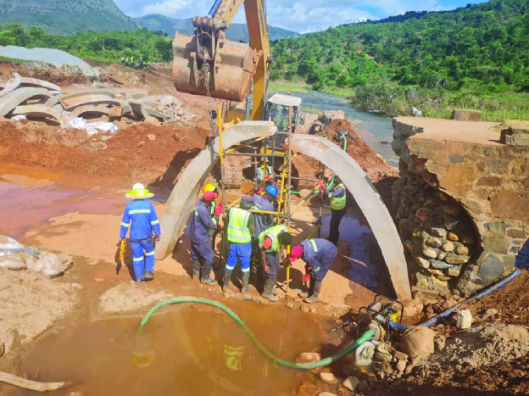
Cletus Mushanawani
News Editor
NATIONAL hero, singer, songwriter and guitarist, Oliver ‘Tuku’ Mtukudzi in one of his chartbusters, MvuraYekunwa, sang: “Samatenga mvura mvura mvura ngaituruke, mhuri yangu ingararama nei mvura ngaituruke . . .”
The song is a prayer for the heavens to open up and pour down the much-needed rains for humans and nature’s survival.
While everyone looks forward to a rainy season characterised by normal to above normal rains, at times the expected outcome can leave scars and bad memories to those affected by the torrential downpours.
The March 2019 devastating Cyclone Idai quickly comes to mind on how Mother Nature, while beautiful and awe-inspiring, can be so brutal and merciless.
Indeed, Mother Nature has an awesome reputation, depending on who you talk to.
She is either wonderful, cruel, awe-inspiring or horrendously evil.
One morning in January this year, Nyanga villagers woke up to the roaring sound of the flooded Gairezi River as it snaked its way down to Zambezi River on its final journey to the India Ocean.
The rains that were expected to bring joy to the villagers, especially those from Nyafaro and Tangwena areas famed for their spirited resistance to be evicted from the ancestral land by the Ian Douglas Smith regime in the 1970s, brought nightmares they are still enduring to this day.
The flooded Gairezi River swept away about 25 metres of the 85m long Gairezi Bridge, leaving areas like Tangwena, Tsatse, Nyafaro, Ngurunda and Madziwanzira inaccessible.
Only a small patch of the bridge was left and only motorcycles and bicycles could cross the bridge, leaving villagers grappling with transport challenges.
Buses and kombis that ply the Nyanga to Nyafaro and Tangwena routes were forced to withdraw their services.
Accessing health services for the villagers became a nightmare despite the area being malaria prone.
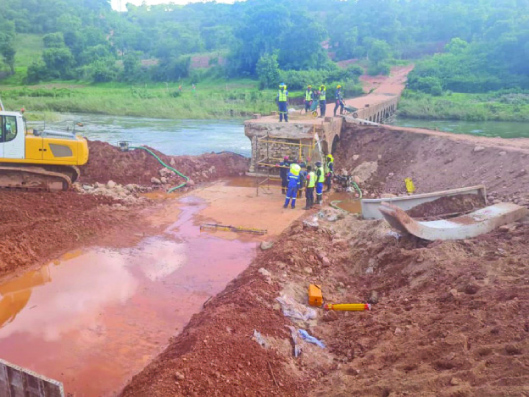
Businesspeople were not spared either as they are now incurring huge costs to transport goods to their shops, with the motorcyclists charging them exorbitant fares to cross their merchandise to the other side of the river.
The motorcyclists are charging US$10 to ferry the goods across the bridge, while some villagers came up with an alternative route near the bridge where they use ox-drawn scotch-carts to transport merchandise and people across the river.
The daring ones resort to swimming to cross the river.
While Government, through the Ministry of Finance and Economic Development and Zimbabwe National Road Administration (ZINARA), is funding the reconstruction of the Gairezi River Bridge, progress suffered a major blow last weekend when the flooded Gairezi River swept away the recently erected culverts.
The contractor, Tensor Systems moved, to the site on November 5 and started work the following day.
They started with the slabs before proceeding to erect culvert panels (concrete prefabricated structures).
They finished the work last week on Thursday, but unfortunately everything was brought back to square one by the heavy rains again.
According to the villagers, torrential rains were received upstream of the river around Troutbeck area, but the river flooded the following morning and knocked down the culvert panels.
The contractors who were expecting to complete the project this week now have to endure a longer working period, but they are confident that they will be done by the end of this month.
Manicaland Provincial Road Engineer, Engineer Kudzai Maganga,confirmed that work has resumed at Gairezi Bridge and is expected to be completed in the near future.
While the social media was awash with the news that the bridge was swept away, Engineer Maganga said: “Nothing was swept away. Water levels rose above the cofferdam during the night and filled the construction area. It has since dropped and the contractor has resumed work.”
True to Engineer Maganga’s words, when The Manica Post visited the bridge on Monday, contractors were busy at work, though lamenting the delay caused by the cruel Mother Nature.
Villagers can hardly wait for the completion of the reconstruction work as the past 11 months have been unforgettable to them.
A businesswoman, Ms Kudzi Nyarwendo, said when the bridge was swept away it brought so many challenges to them.
“Our area is no longer accessible by vehicles, save for motorcycles. Restocking is now a big challenge. We were forced to scale down our operations because of the huge transport costs.
“We are being charged US$10 to transport our stock from Tombo to Madziwanzira, a distance of less than 30km.
“Our area is malaria prone and accessing health services at Gairezi Clinic is a major challenge. When we thought that Government had came to our rescue through refurbishing the damaged bridge, the rains came back to haunt us last week. It rained the whole night on Thursday and Gairezi River was flooded.
“The river was flooded and only the daring ones were able to cross it on Friday and Saturday. Some had to swim to cross it, but women had to abandon their journeys as they could not swim across the river,” said Ms Nyarwendo.
Another villager, Mr Fungai Chigudhu said they are now looking forward to the completion of the bridge.
“Life has not been the same for us since January when the bridge was swept away.
“We are unable to access most services and transport our produce to the market. We hope the contractors will come up with a durable structure that will resist the strong currents associated with the Gairezi River.
“We receive a lot of rains here and the thought of us being cut off from the rest of the world after Gairezi floods leaves us with butterflies in our stomachs.
“We produce a lot of perishable products that should reach the market as soon as possible and it is painful to watch them rotting without having transport to take them to the market when the river is flooded.
“Although we are looking forward to above normal rains, our prayers are that they will not leave a trail of destruction. We hope Mother Nature will not be cruel to us again this time,” said Mr Chigudhu.


 Online Reporter