Online Reporter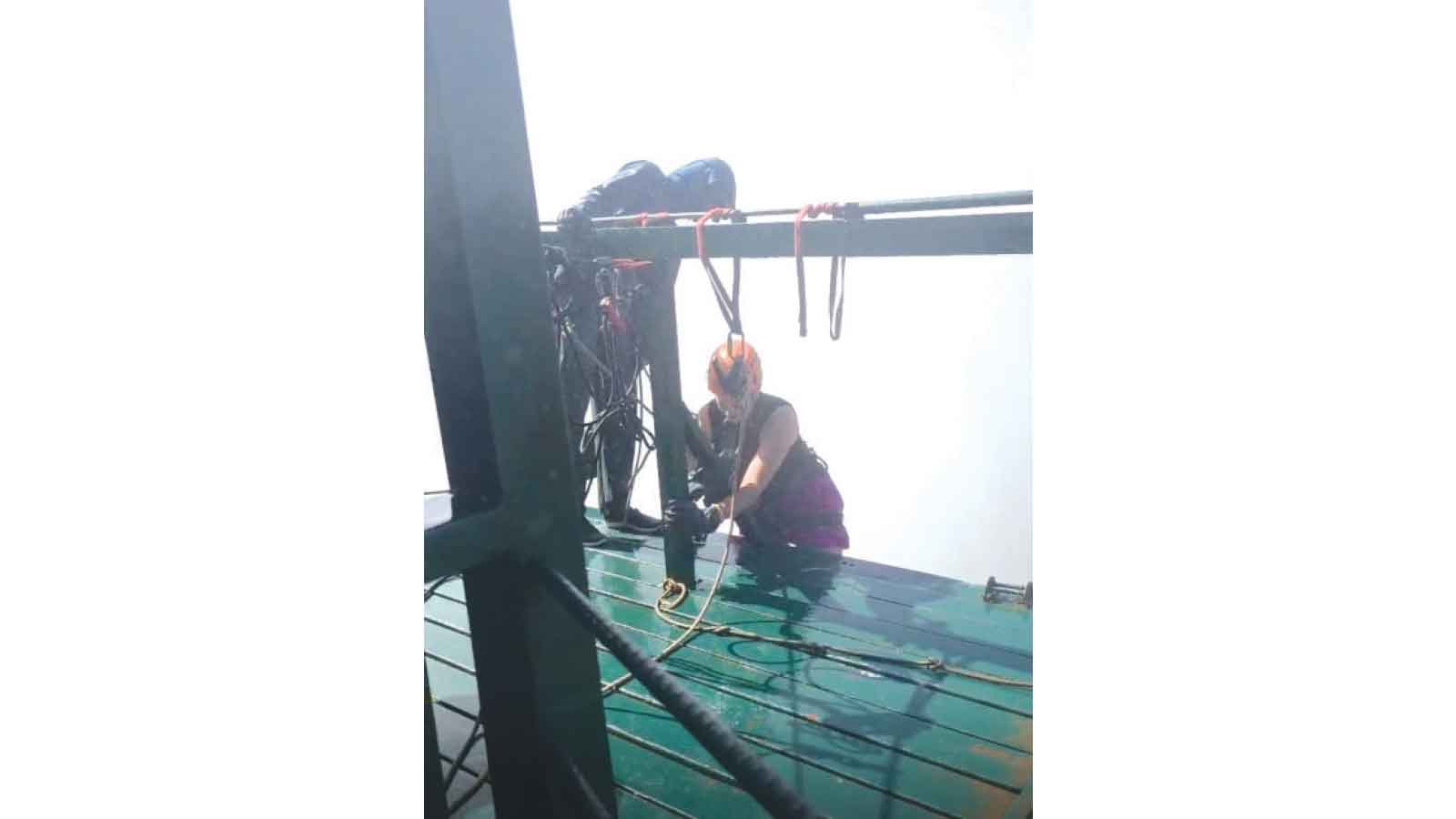
Ivan Zhakata recently in VICTORIA FALLS
The first thing that strikes you is not what you see, but what you hear.
Long before the mighty Victoria Falls comes into view, its thunderous roar echoes through the rainforest like a distant storm refusing to leave. Then comes the mist — a towering curtain of spray rising hundreds of metres into the sky, visible from kilometres away.
Locally known as Mosi-oa-Tunya — “The Smoke That Thunders” — Victoria Falls is one of the world’s most spectacular natural wonders, drawing thousands of visitors daily to Zimbabwe’s tourism capital.
Managed by the Zimbabwe Parks and Wildlife Management Authority (ZimParks), the falls are not merely a destination.
They are an experience, a theatre of nature where beauty, danger, history and adventure collide unforgettably.
For some visitors, admiring the cascading waters from a safe viewing point is enough.
For others, however, standing on the edge is only the beginning.
At Victoria Falls, people willingly sign what many jokingly call their “death warrants” — not because they intend to die, but because they choose to challenge fear itself.
And somehow, they emerge alive.
The most daring among them head to the famous Devil’s Pool on the Zambian side of the falls, where visitors swim to the very lip of the world’s largest curtain of falling water.
From a distance, the idea appears insane.
One slip could send a person plunging more than 100 metres into the gorge below.
Yet nature has carved a submerged rock barrier that creates a natural safety wall during the dry season.
Visitors crawl to the edge, peer over the abyss and pose for photographs that leave relatives back home questioning their sanity. For many, it becomes the ultimate test of courage.
Then there is the Victoria Falls Bridge.
Built in 1905, the bridge stands as one of Africa’s most iconic engineering achievements and an enduring symbol of adventure.
The steel arch structure was part of Cecil Rhodes’ ambitious dream to connect Cape Town to Cairo by rail.
Although Rhodes died before construction began, his vision materialised through the work of engineer George Andrew Hobson.
Stretching 198 metres across the Batoka Gorge, the bridge was constructed from steel shipped from England and assembled on site.
Originally designed for trains, it now carries vehicles, pedestrians and perhaps its most famous users — adrenaline seekers.
Standing on the bridge is a unique experience. A few steps place visitors in Zimbabwe, a few more in Zambia.
It is one of the rare places in the world where a person can literally walk between two countries while suspended above one of nature’s most dramatic landscapes.
Below lies the swirling Boiling Pot, where the Zambezi River crashes into the narrow gorge after plunging over the falls.
The water twists and churns violently, creating whirlpools and powerful currents that make the river appear as though it is boiling.
From the bridge, rainbows dance continuously through the mist while the roar of the falls provides a soundtrack unlike any other.
Yet for some, simply standing on the bridge is not enough.
They come to jump. One moment, they are securely attached to a harness. Next, they are leaping head-first into open space.
The Victoria Falls Bridge hosts one of the world’s most famous bungee jumps, an exhilarating 111-metre plunge into the gorge below.
As instructors count down from three, even the bravest visitors suddenly begin questioning every decision that brought them there.
American tourist Jason Miller from Texas was among those who recently took the plunge.
“When I was standing on the edge, every part of me was screaming not to jump,” he said.
“I honestly thought I had lost my mind, but the moment I leapt, it felt like I was flying. For a few seconds, there was nothing but me, the gorge and the wind.
“It is terrifying, but it is also incredibly liberating. If I come back tomorrow, I will do it again.”
A German couple, Klaus and Anna Weber from Munich, also conquered their fears by completing a tandem jump.
“We talked about backing out at least five times while waiting for our turn,” said Mrs Webber.
“Looking down into that gorge is frightening. Your legs become weak and your mind starts telling you all the reasons why you should not jump.”
Her husband added, “The countdown is the worst part. Once they reach one, there is no time to think. We were screaming all the way down.
“Afterwards, we could not stop laughing. It is something we will remember for the rest of our lives.”
The scream that follows echoes through the gorge before transforming into laughter and disbelief. Many emerge from the experience shaking, emotional and unable to stop smiling.
“I thought I was going to die,” is perhaps the most common phrase heard from first-time jumpers. Yet moments later, they are often encouraging others to do the same.
Not everyone is eager to test their luck.
Watching jumpers from the safety of the bridge viewing platform, a Harare resident, Tawanda Muchetu, said he preferred enjoying the scenery from a safe distance.
“I came here to enjoy the scenery, not to test whether a rope can save my life. Watching other people jump is exciting enough for me.
“The moment I look down into that gorge, my heart starts racing. I would rather keep my feet firmly on the ground,” he said.
Similarly, Victoria Falls resident Nkosilathi Ncube said years of watching tourists leap from the bridge had not convinced him to try it himself.
“People come here from all over the world to jump, and we enjoy watching them,” he said.
“But personally, I do not see myself doing it. Why should I deliberately jump into a gorge when I can enjoy the view safely?
“I respect those who do it because it takes courage, but for me, the excitement ends at watching from a distance. Some of us prefer our adventures without risking heart failure.”
Not far from the bridge, another challenge awaits. Abseiling enthusiasts descend sheer rock faces into the depths of the Batoka Gorge.
Every step downward feels unnatural.
Human instinct demands retreat.
Adventure demands otherwise.
For those who venture deeper into the gorge, the Boiling Pot hike offers a different kind of thrill.
The steep trail snakes down rugged terrain to the base of the falls, where visitors encounter the raw power of the Zambezi at close range.
The journey is physically demanding, particularly under Victoria Falls’ scorching temperatures, but the reward is immense.
At the bottom, the bridge towers overhead while the spray from the falls cools exhausted hikers.
The mighty rapids surge past, and the sheer walls of Batoka Gorge rise dramatically on either side. Here, nature feels untamed and alive.
Some visitors choose to complete the experience with a gorge-side lunch, enjoying panoramic views of the bridge while reflecting on an adventure that few places on earth can offer.
Beyond the adrenaline and breathtaking scenery, Victoria Falls possesses something less tangible but equally powerful.
It has a way of reminding people how small they are. Standing before millions of litres of water crashing over basalt cliffs every minute, human worries seem insignificant.
Perhaps that is why visitors return again and again. Some come seeking thrills. Others come seeking beauty. Many come searching for perspective.
Whatever their reason, they leave transformed. As the sun sets over the Zambezi and golden light illuminates the spray, it becomes clear why Victoria Falls remains one of the Seven Natural Wonders of the World. It is a place where fear and fascination coexist.
And a place where people willingly sign their own “death warrants” — only to walk away with stories that last a lifetime.