Online Reporter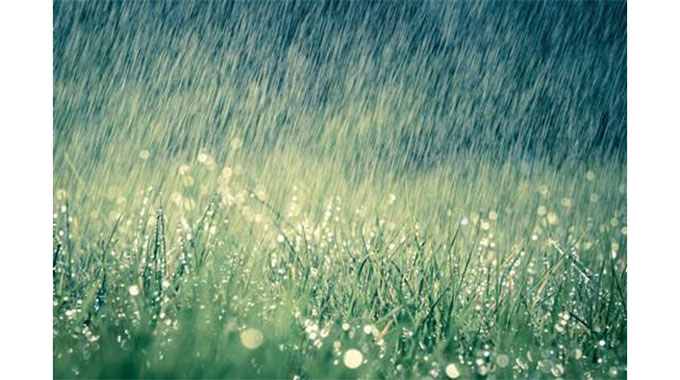
Alphina Ndlovu
RECENTLY, as I prepared to leave for work here in the United Kingdom, the heavens opened. Not with a timid drizzle that politely announces itself before fading away. No. It poured — the kind of rain that makes you pause, the kind that insists on being noticed. Ordinarily, one might simply complain about the British weather and carry on. But this was no ordinary evening. At that very moment, back in our shared community space, one of our own — Joseph Qobolwakhe Mayisa, affectionately known to many as JQ — was being honoured. A communicator. A community builder. A cultural bridge. A son of Zimbabwe.
And for those of us shaped by African ways of knowing, a quiet question emerged almost instinctively: was it just rain?
Modern life has trained many of us to separate the physical from the symbolic. Rain is precipitation. Clouds gather, temperatures shift, moisture condenses, and the scientific explanation is complete. Yet African philosophy has always allowed space for a deeper conversation. In many of our traditions, nature is not mute. Rain is not merely weather. Rain can symbolise blessing. Rain can signify cleansing. Rain can announce transition. Rain can suggest abundance. Rain can mark the end of one season and the beginning of another.
This is not superstition. It is cultural interpretation. It is meaning-making. It reflects a worldview that understands humanity as inseparable from the land, the sky, ancestry, memory and community. African knowledge systems have long recognised that people do not exist apart from nature, but within it. The earth, the seasons and the heavens are woven into the rhythm of communal life and spiritual understanding.
In isiNdebele households, elders often spoke of the natural world with reverence. The land was alive. Seasons carried wisdom. The heavens were not simply above us; they were part of the conversation. When significant moments occurred — births, funerals, leadership transitions or gatherings of communal importance — nature’s participation was observed, remembered and interpreted. Not because every weather pattern was mystical, but because African thought has never reduced life to mechanics alone.
There was always room for symbolism, reflection and poetry in the way our people understood existence. A sudden wind, an unexpected rainstorm or an unusual calmness in the air could become part of communal storytelling, not as scientific fact, but as cultural meaning. Elders understood that human beings need more than explanation; they also need connection, memory and interpretation.
This matters deeply, particularly for younger generations growing up far from home. In the diaspora, cultural memory can easily become fragile. Children inherit accents, technologies and lifestyles from the societies around them, yet often remain disconnected from the philosophies that shaped their ancestors. The danger is not modernity itself, but forgetting.
What stories are we passing on? Will our children know that our ancestors listened to the wind differently? Will they understand that symbolism was part of African intelligence, not evidence of ignorance? Will they inherit science yet lose story? These are not trivial questions. They go to the heart of identity, continuity and belonging.
As a diaspora community, perhaps our greatest task is not simply economic survival, but cultural preservation. It is to ensure that the next generation inherits more than qualifications, passports and opportunities. They must also inherit memory. They must know how their people once understood the world. They must learn that knowledge was carried not only through books, but through rhythm, silence, proverb, ceremony, song and rain.
This does not require rejecting science or reason. African knowledge systems have never been incapable of logic or practical understanding. Rather, they remind us that human life is richer when facts coexist with meaning. Science can explain how rain forms, but culture can still ask what rain means to a people at a particular moment in time. The two understandings are not enemies. They are different languages describing the same reality from different perspectives.
For Africans living abroad, this balance is especially important. Assimilation often arrives quietly. One generation sacrifices to survive; the next slowly loses language, custom and memory. Before long, children can explain complex technology but know little of the wisdom traditions that once shaped their families. Cultural erosion rarely happens dramatically. It happens through silence, omission and forgetting.
That is why moments like the honouring of JQ Mayisa matter beyond the occasion itself. Community recognition is not merely about applauding individual achievement. It is also about affirming continuity. It reminds people scattered across foreign lands that they remain connected by shared history, language, values and memory. To honour one son or daughter of the community is, in many ways, to honour the journeys, sacrifices and resilience of the entire collective.
JQ’s recognition carried that significance. He represents more than personal accomplishment. He stands as part of a generation helping to build bridges between cultures while remaining rooted in heritage. Communicators and community-builders perform vital work in the diaspora because they help communities remember themselves. They preserve stories that might otherwise disappear beneath the noise and speed of modern life.
So when the heavens opened on the evening JQ Mayisa was honoured, perhaps it was simply weather. Perhaps it was nothing more than rain falling over a British city as rain often does. Yet perhaps, in the language of heritage, it was something more poetic. Perhaps nature joined the celebration in its own quiet way. Perhaps the earth paused momentarily to honour one of her sons.
Perhaps, as our elders might say: Izulu livulile. Abadala bavumile. (The heavens opened. The elders approved.)
*Alphina Ndlovu is a Zimbabwean writer, cultural commentator, and a PhD researcher with a focus on African business ecosystems, identity and narrative