Chronicle Editor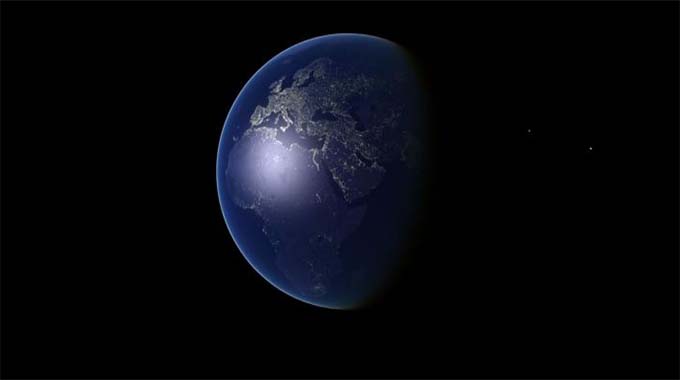
“WHAT news on the Rialto?” These or similar words appeared in The Merchant of Venice that was written by William Shakespeare. It was one of our literature books in 1970 when we did O-level at the Salvation Army’s Mazoe (now Mazowe) Secondary School. We had a polished teacher in Literature in English who was the wife of the Principal, Major Doctor Arthur Thompson.
Some readers may wonder why on earth I start today’s article with an excerpt from a literature set book set in Venice, a famous merchant city in Italy. Messages about the unusual weather constitute contents of daily conversations in which farmers, livestock breeder and keepers exchange information regarding pressing issues — be they political, economic or social.
Worry, anxiety, and trepidation are indelibly etched on their contorted faces. “Where are the rains?” They ask wrong persons who, like them, have no clue whatsoever concerning the whereabouts of the much-needed natural commodity within communities that directly depend on rainwater.
I have often argued that nature knows itself. It knows what is in store for both flora and fauna. Humans sometimes have a tendency of excluding themselves from nature and locate themselves ahead of and above nature. They even think nature was provided for their own sustenance and pleasure. They tend not to bother much about the sustenance of the environment. Hell hath no fury like an angered environment. At global level, nature seeks to destroy the culprits when it is abused. Tsunamis and typhoons are familiar weapons at the disposal of angered Mother Earth.
Men meet and talk as if they do not know that in winter summer announces itself. Likewise, in summer winter announces itself. Nature makes pronouncements well in advance. As so-called civilised people, we are not able to encrypt messages from nature. Civilisation blinds human beings. Nature is never in the habit of waylaying and springing surprises on human beings. If we were socialised into the language of nature, we would have known that the climate and weather would not be what we have come to know and expect. Not all is well.
Italians had fora and platforms where they exchanged information about selling their merchandise. Unfortunately, we do not have equivalents of rialtos. Instead, we unexpectedly bounce into each other and just wonder at the unusual weather patterns.
They have some idea that the current rain season is likely to be gloomy and unpromising. Out of intense desperation, they are buying baled grass, coarse salt, molasses and salt blocks. The situation has all the trappings of something not so normal. Those who witnessed the 1947 drought think we might be headed towards unprecedented weather conditions that will spell doom and peril.
Within an hour, I had received reports about the long-term weather forecast. One colleague said, “Mdala, do not plant crops this year.” He had gathered intelligence that the agricultural season was not that rosy. Rural economies are dependent on natural rain. The crops are grown in the summer season when rains fall. When rains do come, many parts of desolate Matabeleland experience flash flows of rainwater. There is no vegetation to reduce the speed of flow and ensure percolation for the rainwater. We watch helplessly as water carries eroded rich soils only to deposit them in rivers which get choked to death.
With cattle experiencing zero grazing, they stray, ramble and struggle to the silted dams to water. Deposited mud plays havoc on them. Emaciated and weakened, they plod into the treacherous mud there to remain stuck until they lose their lives. Our nearest dam, Mthoyiwane, is now a death trap. Reports of cattle getting stuck and dying are received on a daily basis. There were similar reports emanating from Gohole Dam where cattle lose their lives in the sticky sludge. What’s on the Rialto?
From the standpoint of our column, interest lies in the fact that the heavens are frowning on the humans. The heat that is the subject matter in many conversations is coming from the sun more than from any other cosmic body. Is the sun suddenly emitting more heat now than it did before? We do see solar flares from time to time. The balance between earth and cosmic bodies was at its best following creation. Man was far away from the scene.
There were protective layers of ozone that kept heat and other harmful radiation out of this earth. Then human beings arrived on the scene and engaged in processes, industrial and otherwise, that depleted the naturally provided protective layer. Heat from the sun is not intercepted. There is the greenhouse effect resulting from carbon fuels.
I always remember that I was, several years ago, alerted by a spiritual source to impending doom regarding the changing seasons. Those unschooled in matters of a spiritual nature will view all this as mambo jumbo from low society’s uninitiated into modern science. I was impressed not so long ago when a young artist Bokani in her curatorial statement wrote about her solo exhibition at the National Gallery of Zimbabwe in Bulawayo.
“The exhibition blurs the boundaries between the past, the present and the future.” I thought that was a powerful spiritual statement. Spirituality does precisely that. It spans the past, the present and the future. The three are fused into one. Spirituality, like energy embraces the entire multiverse. Humans, with micro-minds conveniently separate the past, the present and future. All this is done to facilitate and promote conceptualisation, comprehension and understanding of natural phenomena by minuscule minds.
Did the ancients appreciate the link between the heavens and earth? I am persuaded to think they did. Through African cultural astronomy, we have been investigating this particular phenomenon. As pointed out in earlier installations in this column, the link was expressed in several diverse ways that expressed cosmologies of the communities.
We did show that the essential link was bound to agriculture, opening of markets, onset of the rain season and the timing of commencement and end of various ceremonies and rituals. Heavens dictated and the earth obliged. As indicated, human beings sought to replicate the heavens on earth. “As above, so below.” The question now is how human beings will respond to the angered and fighting heavens. Africans may not have significantly contributed towards angering Mother Earth.
However, the Ndebele proverb, “Zonelwa mvu nye,” explains it all. One sheep spoils it for the entire flock. This has been belaboured over a long time. Seeking to replicate the heaves on earth was not without foundation or basis. Africans gazed the heavens and lo and behold, found it beautiful and used its heavenly circular design on the cultural scape on earth.
Not only was the cosmos beautiful and charming, it was, at the same time perceived to be eternal. Africans sought to acquire continuity, eternity, perpetuity and endlessness as expressed and manifested in the cosmos. Now the heavens are rebelling against the citizens of Planet Earth for disturbing he balance and equilibrium that once existed. As we stand, the centre cannot hold. Things begin to fall apart. The heavens have searched and found the culprits.
What the heavens may not lose in the short to medium terms is their enchanting circular designs. They will remain circular and move along elliptical orbits. Some rural communities, and even urban ones, the heavens will continue to inspire design. The avaricious burgeoning urban conglomerates will not immediately engulf, ingest and swallow rural communities amoeba style.

Men will continue to carve traditional stools. Women will continue to coil or plait baskets. Clay pots will still be moulded. In all, these and a lot more, the heavens will be expressed through material designs and their embellishment.
However, what will be critical and important will be to remember that the signature of the heavens is slowly being erased in the name of progress, advancement and civilisation. We owe it to future generations to document and preserve reflections and mirrors of heavens on our forebears’ cultural landscape. One way to achieve that is to establish community galleries, museums, cultural centres and cultural villages where artefacts and crafts will be preserved, but only after careful and informed documentation.
I remember expressing over a Skyz Metro FM programme how grateful I am to Professor Ngwabi Bhebe who passed on a few days ago for shaping the sunset of my life. We were walking from the Meikles Hotel towards Herald House in Harare where we were going to attend a Board meeting for the Zimbabwe Mass Media Trust (ZMMT). We two were coming from outside Harare. Somehow, I indicated my plans to “hang the pen” as characteristically expressed in soccer parlance and circles.
I always tried, whenever possible, to give the Professor my books, which he cherished to read. I remember at the Bulawayo Amphitheatre when he sat at the back during Professor Phineas Makhurane’s memorial service. I spotted him and took some of my books to give him.
After intimating I was about to call it day in the field of writing, he with a lot of emphasis said, “Don’t, don’t, don’t.” I listened to that voice of reason. Little did I know my greatest books were yet to be written after some strong philosophical grounding. I listened and obeyed. I look at the books that I have written and published. It is the sort of books that will enhance and immortalise my legacy.
Certainly, one of these books is Journey to Kalulu Kreativez in Lusaka, Zambia. Whereas I had always concentrated on Zimbabwean cultures, our trip to Lusaka gave me some rare opportunity to sample African cultures outside of Zimbabwe. The book got onto the market on Tuesday last week just in time for the first continental Book Fair in Gaborone, Botswana. Were it not for the encouragement from Professor Ngwabi Bhebe, that kind of book would not have seen the light of day. The book is undoubtedly one of the best to come out of my mind. Imagine if I had settled for hanging the pen?
The book documents the crafts and artifacts held at the Kalulu Kreativez. As pointed out above, it is a way of preserving and documenting African culture. The artefacts will continue to have life within Kalulu Kreativez in a raw form as it were. In my book, the artifacts are interpreted and preserved. The artefacts and crafts carry important African designs that are informed and underpinned by African Thought, African Spirituality and the African worldview.
Besides, if I had hung the pen, my passion for Ancient African Science ( AAS) was not going to get a fair share of my explanations and interpretations. The art and the science have been maligned, trashed and denigrated. Generally, this science that drives, powers and directs the theory and practice of both witchcraft and traditional healing and its related manifestations. Sometimes people come into our lives for specific purposes. Therefore, it was with Professor Ngwabi Bhebe. May his soul rest in eternal peace.


 Online Reporter