Lungelo Ndhlovu
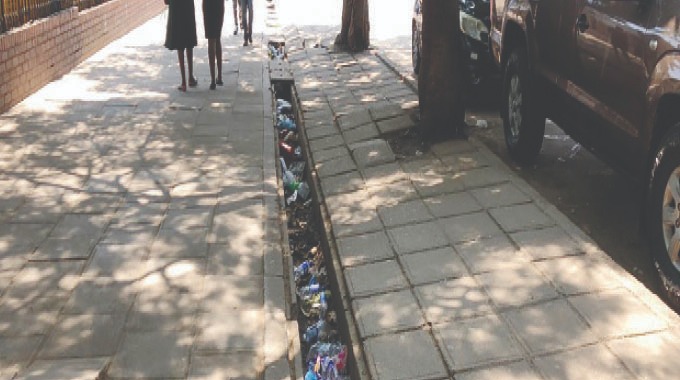
EVERY heavy downpour strips away the illusion that Zimbabwe’s waste problem is under control. In cities such as Bulawayo, rainwater no longer disappears quietly into the ground; it turns into a moving tide of refuse. Storm water surges through illegal dumping sites and narrow sanitary lanes, sweeping up single‑use water bottles, bread bags, plastic packaging and sodden paper, before spilling onto roads and pavements. The result is a city momentarily transformed — drains choked, streets submerged and familiar thoroughfares rendered impassable.
For those who live and work in the city, the impact is immediate and disruptive.
“Every time heavy rain falls, the streets turn into rivers of plastic. The dirty water often takes hours to drain. Business stops, and conditions become unsafe,” says Tendai Shoko, a street vendor who trades in Bulawayo’s central business district
What begins as a problem of waste management quickly escalates into an economic, public health and safety concern.
The burden is felt most severely in low lying suburbs and informal settlements, where drainage infrastructure is either inadequate or absent altogether. In these communities, plastic waste accumulates rapidly and lingers long after floodwaters recede. The longevity of the problem is sobering. Single use plastic bags can take up to 20 years to decompose, while PET bottles may persist in the environment for as long as 500 years. Each storm adds another layer to an already enduring crisis.
Yet elsewhere in the country, a different story is quietly unfolding. Inside the Harare International Conference Centre, delegates reach for chilled glass bottles of water, often unaware that they are participating in a significant environmental shift. The facility now relies on an on-site water purification and bottling plant, eliminating the need for single use plastic bottles and the mountains of waste they generate.
“The hotel industry has traditionally been a major contributor to plastic pollution because of disposable bottles. This project demonstrates that it’s possible to offer guests a world class experience while also caring for the environment,” says Napoleon Mtukwa, finance director at Rainbow Tourism Group. The initiative shows that reducing plastic waste does not require sacrificing quality or convenience — only a willingness to rethink long standing practices.
RTG’s environmental commitment extends beyond water. The group has planted more than 16 000 trees in Kadoma, Sanyati and parts of Harare, illustrating how commercial enterprises can play a meaningful role in ecosystem protection while maintaining high service standards.
The scale of the national challenge, however, remains daunting. According to the Environmental Management Agency, Zimbabwe produces more than 300 000 tonnes of plastic waste each year, yet recycles less than 10 percent of it. Harare alone generates up to 1 000 tonnes of waste daily, with barely half being collected. The remainder clogs drains, spreads disease and ultimately contaminates Lake Chivero, the capital’s main water source and a lifeline for millions of residents.
“The core problem with single use plastics in Zimbabwe is weak regulation and a lack of producer responsibility across product life cycles. This is compounded by a general indifference towards waste among the public,” explains Odilo Linzi, founder of Oleans Waste Management.
Linzi recalls meeting a woman who collects plastics barefoot, sorting through stagnant, filthy water in order to sell recyclables. “She takes pride in feeding her family,” he says. “But no one should have to live like that just to manage someone else’s waste.”
Women, he notes, bear a disproportionate share of the burden. In many households, waste disposal falls squarely on their shoulders. When plastic is burned as a source of fuel — a common practice in poorer communities — it releases toxic fumes linked to respiratory diseases, cancer and reproductive health complications. Women also dominate the informal recycling sector, often working without protective equipment or recognition, exposed daily to hazardous conditions.
Unchecked plastic pollution is not only an environmental failure; it represents a breach of both national and international obligations. Section 73 of Zimbabwe’s Constitution guarantees every citizen the right to an environment that is not harmful to their health or well-being. Internationally, Zimbabwe is a signatory to the Bamako Convention, the African treaty designed to regulate hazardous waste and protect communities from toxic pollution.
While not all plastics are classified as hazardous under the Convention, many contain chemical additives such as lead, cadmium and phthalates. These substances qualify plastic waste as hazardous when it degrades or is burned, releasing toxins into soil, water and the atmosphere. The Bamako Convention obliges member states to prevent hazardous waste generation at source, ensure environmentally sound management and minimise cross border movements.
Under Article 4, Zimbabwe must prohibit hazardous waste dumping and provide adequate disposal facilities, while Article 10 mandates monitoring and enforcement to ensure compliance. Yet implementation has proven challenging. The country lacks a comprehensive system to track plastic waste containing hazardous additives. There is no central inventory detailing how much chemically treated plastic enters the market, where it accumulates, or how much crosses borders through informal imports of banned materials.
EMA acknowledges these constraints. “We are working with companies to promote sustainable packaging and ensure that plastic collection systems are in place,” says Amkela Sidange, the agency’s environmental education and publicity manager.
She notes that thin plastic bags have been banned, polystyrene packaging restricted, and illegal imports monitored. But enforcement remains inconsistent.
Without reliable reporting mechanisms feeding into the Bamako Convention’s Regional Co-ordination and Harmonisation Mechanism, Zimbabwe operates largely in a data vacuum. The regional system designed to harmonise policies, share information and trigger early warning cannot function properly when waste streams go undocumented.
“For a clean environment, everyone must play a part. But citizens cannot shoulder responsibility when the systems meant to control hazardous materials simply don’t exist or aren’t enforced,” Linzi stresses.
Zimbabwe is at present participating in negotiations for a global plastics treaty, alongside efforts to align its domestic policies with Bamako Convention commitments. The HICC model offers a practical starting point — preventing waste at source through on site alternatives, underscored by public education and firmer controls. If replicated across hotels, offices and public institutions, reliance on single use plastics could decline dramatically.
However, experts caution that scaling such solutions demands deeper reform. Comprehensive waste tracking systems must be established, producer responsibility enforced, disposal infrastructure expanded, and hazardous waste data consistently reported at regional level. Article 13 of the Bamako Convention requires precisely this exchange of information to strengthen collective capacity.
When Zimbabwe documents its plastic waste streams, identifies hazardous components and shares that intelligence regionally, it does more than protect itself. It reinforces Africa’s wider environmental early warning system.
As the country looks towards sustainable development, the lesson is clear. Tackling plastic pollution requires prevention at source, strong enforcement of environmental laws, transparency in hazardous waste management and the empowerment of citizens who are too often left to pick up the pieces. Only then can the streets of Harare and Bulawayo be freed from the floods of plastic that have become all too familiar. Only then can Zimbabwe truly honour its promise to protect its people from the hazards international treaties were designed to prevent.