Online Reporter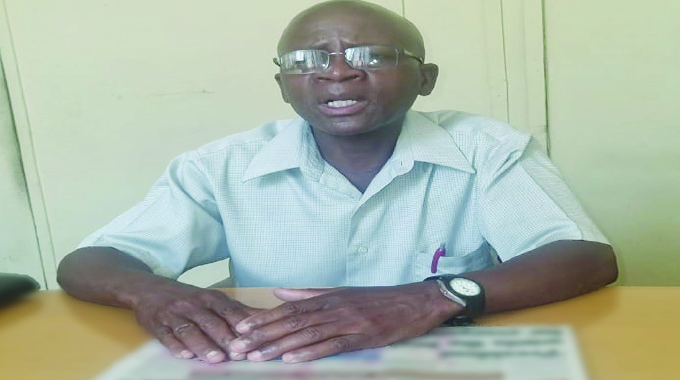
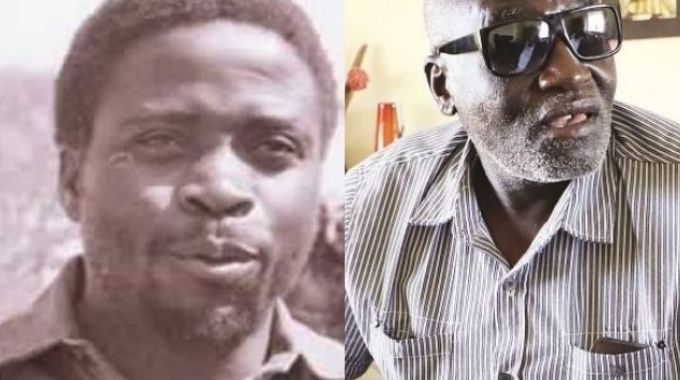
WE continue our interview with Cde Charles Makhuya pseudonym Cde Njabulo Moyo, one of the survivors of the devastating attack by the Rhodesian forces on a ZPRA camp in Boma, near Luso in Angola during the armed liberation struggle. The raid code name Operation Vanity was carried out by seven Canberra fighter bombers.
In this week’s instalment Cde Makhuya recounts the fateful morning of 26 February 1979 and the devastating Rhodesian airstrike on the training camp in Angola. Below are excerpts from the interview. Read on . . .
MS: Last time, you spoke about nature warning you of the impending danger. May you please resume the conversation by taking us through the attack by the Rhodesian Air Force?
Cde Makhuya: The day, 26 February 1979, started like any other at the camp.
It was misty, as was usually the case every morning because of the nearby river.
The river formed a significant part of the camp’s boundary, and the area surrounding it was thick jungle. At the main entrance stood an old church building, indicating that the site had once been a missionary station.
Our communications facility was situated near this old church. Other key features of the camp included the logistics section and the camp hospital.
The recruits’ barracks were built with zinc roofing sheets. In terms of vegetation, there were many eucalyptus trees in the area.
I am giving this rundown of the camp’s geography so you can better understand the context once I begin describing how the bombing unfolded.
MS: So, at what time did the attack begin?
Cde Makhuya: It was around 7.20am, just before 7.30am when the enemy aircraft swooped in on the camp. They approached from the direction of Luso town.
We were used to seeing aircraft flying past the camp, usually planes said to belong to the Cubans or the Angolan Defence Forces. Sometimes, it would be MiGs flying in a formation.
So, when the Rhodesians descended on the camp, they found Angolan civilians gathered at the gate cheering.
They had come to see off the troops departing for Zambia after completing their training, members of the third group.
The Angolan civilians, who lived not far from the camp, were probably drawn by the trucks lined up to transport the departing comrades.
As the civilians stood near the gate, bombs suddenly began to fall, and they became the first victims. The communications centre was the first target hit.
MS: How many aircraft were involved in the bombing?
Cde Makhuya: The Rhodesians deployed seven fighter bombers.
The initial sorties were carried out by five aircraft, while the remaining two arrived slightly later.
The first five didn’t cause much damage, they dropped their payloads and flew off. But the two that followed were the ones that inflicted all the devastation.
When comrades realised we were under attack, they attempted to follow the emergency drills we had been taught, running to the defence pits.
Unfortunately, many were caught off guard, with the pits being some distance away.
The two aircraft then targeted everyone trying to flee, attacking from all directions and causing immense destruction. The bombs they dropped were possibly TNT reinforced with steel materials like axes and hoes.
While the attack continued, the Cubans quickly took command and urged everyone to take cover. Although the bombing caused extensive damage, it did not last very long.
MS: What happened to your air defence system?
Cde Makhuya: The bombing of Boma was a complete surprise attack, though, as in any war situation, we had remained vigilant.
Regarding our air defence, our crew was transporting the 14,5mm anti-aircraft weapon, the Desheka to the camp to hand it over before departing for Zambia. Ironically, the Rhodesian planes flew right over them as they made their way.
The DShK or Desheka as is commonly known had been positioned a short distance from the camp. Another crew did manage to open fire on the fighter bombers, which may explain why they left so quickly. But the damage done in those few minutes was catastrophic.
MS: How did you personally survive the bombing?
Cde Makhuya: I was at the camp hospital when the bombing began as I was part of the medical corps.
I was among the first to jump into the defence pits which were nearby, which is how I survived. During that chaos, the Cubans took command of the situation and began issuing orders.
Their previously friendly attitude shifted dramatically, replaced by a strict military tone.
MS: Could you give us a rundown of the casualties?
Cde Makhuya: We lost five Cuban instructors and one Russian.
Among the Cubans killed were Bafiro and Putty, who were anti-tank instructors. Another was Comrade Portage, a very popular and physically fit infantry instructor.
He was small in stature but had a big presence, he loved his sessions in the camp gym and was a charismatic figure.
Cde Portage was hit along with our own Comrade Ziphongo, the Company Five commander.
They were issuing orders to help comrades escape the bombardment when the bombs struck.
MS: What was the situation at the camp following the bombing?
Cde Makhuya: A Cuban mechanised battalion and units from the Angolan Defence Forces rushed to the camp from Luso, which is about 31km away.
A bulldozer was brought in to prepare a mass grave. We began combing the camp for the dead that afternoon and continued the search the following day.
MS: How many bodies did you recover?
Cde Makhuya: That’s a good question, as many different figures have circulated over the years. As someone who was part of the camp’s medical corps, we were at the forefront of casualty management.
We recovered 160 bodies in and around the camp. There were also many scattered body parts. Additionally, several comrades who were injured died later at the provincial hospital and others in Luanda, where they had been referred for treatment.
MS: Looking back, do you believe there was a mole who leaked information to the Rhodesians?
Cde Makhuya: It’s evident the enemy had first-hand information about Boma, which is quite shocking given the distance between Angola and our country.
According to Rhodesian military literature, they intercepted our signals. This is also mentioned in the memoirs of the late Ron Reid-Daly, commander of the infamous Selous Scouts. In his book Selous Scouts: Top Secret War, he wrote that they had intercepted our communications, including information that the third group would be departing for Zambia on that day.
MS: How did the Cubans respond to the bombing?
Cde Makhuya: They were clearly displeased. Although they never openly accused anyone, their behaviour changed noticeably. Their first reaction was directed at the comrade in charge of our communication system, Cde Missile.
They treated him very harshly, which raised suspicions that they believed there had been a leak from within our ranks. Eventually, Cde Missile was removed and sent back to Zambia.
The Cubans then took full control of the camp.
Even when it came to daily programmes, they initiated everything and only informed us once plans were already in motion.
MS: What eventually happened to the camp?
Cde Makhuya: The camp was later relocated to Malanje, another province in Angola.
n To be concluded next week with Comrade Makhuya reflecting on the period leading to the ceasefire and their return home to an independent Zimbabwe.