malvernmugadzikwa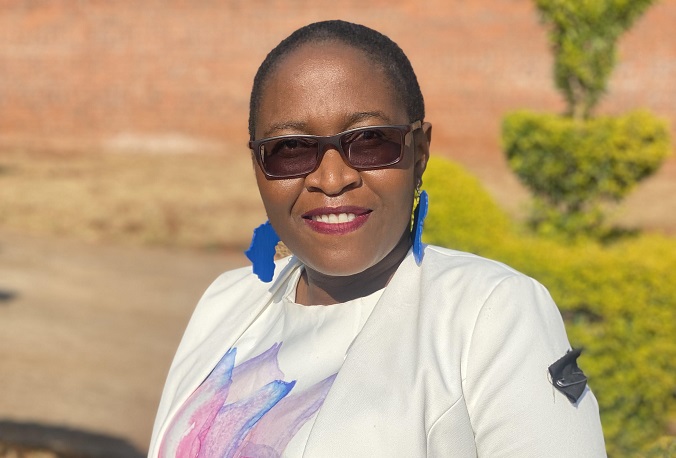
TSITSI NOMSA NGWENYA is a renowned Zimbabwean writer, who works in both Ndebele and English. Born to a Ndebele father and a Shona mother in Matabeleland South, she grew up in this province and attended Minda Girls High School in Maphisa. Her debut Ndebele novel, “Izinyawo Zayizolo” (2016), explores the conflict between the colonially imposed legal system and the indigenous Ndebele system. Her second Ndebele novel, the award-winning “Zalabantu Ziyebantwini”, published on May 11, 2022, delves into contemporary life and its challenges.
Ngwenya examines the rise of mental illness, troubling religious issues and the failures of governance within society. “Fifty Rand Note and other stories” was first published in 2020 by Royal Publishing House, and republished by Carnelian Publishing in 2024. Most of the stories were written from her real estate office in Harare during a period of severe economic hardship, a time when she felt a deep sense of loss. The collection was well-received, particularly within the academia, especially the story exploring the complex relationship between the spirit and the individual. Tertiary students worldwide have used these stories for research. Her novel, “A Portrait of Emlanjeni”, published by United Kingdom-based Carnelian Heart Publishing in March 2023, is considered a work of environmental literature. Dr MOSES MAGADZA interviewed Ngwenya about her writing, motivations and related topics. Read on . . .
****************
Q: In recent times, your name has frequently appeared in book reviews, and you have made strong statements about literature and writing. What motivated these recent comments?
A: The definitive statements I have made recently relate to the themes in my books that have been discussed by various book reviewers.
You normally do not talk back to book reviewers, but I felt I should lightly highlight certain issues.
Q: You once said, “I encourage girls to seek financial and emotional freedom ahead of everything else, including fame.” What did you mean by that?
A: We live in an age where young people are easily tempted by fame. Social media has led some young women to engage in harmful behaviours to gain likes. These virtual affirmations are meaningless. Girls should understand their self-worth and avoid the indecent content prevalent on social media.
We all should strive for decency in our lives and communities.
Q: You have also stated that your writing significantly improved after facing adversity in 2009. How did adversity transform you into a writer?
A: Naturally, I am a person who cannot let a day pass by without being productive.
It comes from my rural Ndebele upbringing. I had nothing else I could do when things fell apart around me in 2008/2009.
I became angry and restless. Writing became a way of taking out the anger.
When I wrote, I never thought I would publish. I wrote to silence the crying baby inside me.
I wrote in no particular sequence until there was a discernible and hazy order in my writings.
Poems, short stories, poems, novels . . . novels . . . I became clearer and clearer in my writings and . . . boom . . . I became coherent, eventually.
Q: You have mentioned being overtaken by a whirlwind of inspiration that drove you to write intensely. How can challenges fuel a writer’s creativity? Is it possible to be creative without experiencing adversity?
A: With the kind of challenges that we have faced in Zimbabwe, one needs to find a distraction of sorts to avoid crushing totally.
You are in the house and electricity is suddenly cut, and while you are thinking, water is cut too and as you are looking for somewhere to sit in the dark, the battery of the phone dies out!
You end up writing!
Some people committed suicide after losing their savings during the 2008/2009 hyperinflation era.
I survived that because I hid in my books. It felt like burning, going down in ashes and rising as smoke. I rose as smoke as I became creative in that distressing situation.
I wrote and wrote, and showed my work to Musaemura Zimunya, Shimmer Chinodya and others.
Q: What do you mean when you say women tend to forget to live for themselves and that women try to live for others, or words to that effect?
A: We tend to love and feel for others more than we do for ourselves.
In Ndebele we have a saying that goes, “Umama ngumama”.
We know pain and we carry it even with tears and broken hearts for the sake of our children.
We do not easily give up on our families.
Sometimes we do not even tell anyone what we are feeling.
It is us! We keep going and fighting to no end.
We are socialised to take and carry pain from a tender age.
Elderly women say, “Qinisela, ungumfazi.”
I grew up hearing this.
My grandmother pierced our ears using a thick white acacia thorn.
She started with my cousins and they cried and yelled.
When it came to my turn, I said, “What if I do not want to be a beautiful woman, but rather a rich and powerful woman who does not have to wake up very early to light a fire and fetch water and firewood?” MaSibanda looked at me and sighed.
I had no holes in my ears until I had it done by a small machine when I already owned a business.
Q: What is your understanding of the highs and lows of feminist literature?
A: I shy away from labels; feminist literature, womanism, etcetera, because they are limiting. I hate labels.
That is not my area.
You can easily become misunderstood.
I just write. You hear me?
I am a writer who is usually clearly interested in matters that affect women, even in their interaction with men and the larger world.
It is because I am a woman. That is my first tribe.
I advocate harmony in the community.
In my work, I seek the rhythm of harmony between men and women, without having to suggest that there should be duty rosters in the home between men and women, and those women should also drive heavy trucks like men, etcetera.
Look, if you think that I am a feminist, go ahead.
But I know that I write from the bottom of my heart.
Q: What do you consider to be three or four iconic works by Zimbabweans and how do they influence your writing?
A: I like Yvonne Vera.
I do not know how many times I have read “Butterfly Burning” and “The Stone Virgins”.
Vera’s craft is awesome.
To read her is to dream and to hear the world wailing.
Her prose-poetry is charming.
Read about Mazvita as she comes into Salisbury in “Without A Name”, and as she gets on the bus back to Mubaira. Vera is my inspiration.
I hope to be able to write like her, but in my own unique way.
I read Chenjerai Hove, Mercy Dhliwayo and Siphiwe Gloria Ndlovu.
Dhliwayo’s storytelling is amazing.
“Ancestors” by Chenjerai Hove is one book I read repeatedly.
Dhliwayo writes the real things that are happening to Zimbabweans of this generation, sad and heartbreaking, too, especially the title story in the collection “Bringing us Back”.
It is real and yet hard to believe if one has not experienced it.
I also keep going back to read Siphiwe Gloria Ndlovu’s work each time I want to write.
There are so many good writers in Zimbabwe but those four are my storytellers.
Q: Your acclaimed Ndebele novel, “Izinyawo Zayizolo” (2016), explores the conflict between modern law and traditional culture. Based on specific examples from your story, what do you believe is a possible solution to this tension?
A: “Izinyawo Zayizolo” brings the flaws of the modern judiciary.
The chief’s mother, MaNxumalo, brings this out when she thinks and comments about the time the courts take to come up with a verdict.
She says if the person spends two years in remand prison, and then later gets acquitted, who pays the damages to him and his family?
No money can do that.
When a person is in prison, who would be taking care of his family?
She also challenges the idea of putting mentally sick people in hospitals.
She suggests that some of the mental problems in our communities could be sorted out within a short period after visiting those gifted with spiritual powers. Some of those problems are spiritual and may need a spiritual dimension.
I come from a community that does not ignore our core values as a people.
Even if modernity is accepted, people still do things the way they are supposed to be done culturally.
I am happy with that and it is my wish to carry forward our rich culture to the next generation, through my storytelling.
Q: Your second Ndebele novel, “Zalabantu Ziyebantwini”, delves into the complexities of mental health. Do you view mental health primarily as a clinical or spiritual issue?
A: Mental health can be both clinical and spiritual.
I will take you back to a character in “Izinyawo Zayizolo”, NakaThathabonke.
An avenging spirit causes her problem; however, Dr Nonceba’s problem is clinical.
Q: I admire Ndebele novelist Barbara Makhalisa-Nkala. Her latest novel — “Gqabula!” — tackles rape, DNA tests and migration. Nkala is thriving in a literary landscape where young Ndebele writers seem to be less prolific. What are your thoughts on this?
A: We applaud Mama Barbara Makhalisa to be doing what she does in the literature sector.
You cannot find a better Barbra Makhalisa.
She is an institution. She is just like her colleague of Shona literature, Aaron Chiundura Moyo.
She is a stakeholder in Ndebele literature.
Her publishing house has discovered many talented young authors.
I am proud and grateful for “Gqabula!”
It is a book worth reading and translating into English so it may reach a wider audience.
I do not think Ndebele writers are slowing down; the problem we are facing is the shortage of professional publishing houses to publish and distribute their books.
Most people end up self-publishing and most of the good work fails to reach proper audiences.
Q: Your story, “The Fifty Rand Note”, is a powerful and poignant depiction of the challenges faced by those who feel displaced in foreign countries. What role has South Africa played in the economic hardships experienced by many Zimbabweans over the past few decades?
A: “The Fifty Rand Note” shows that the grass is not always greener on the other side of the fence.
When I wrote it, I had felt that it is indeed a terrible feeling to live in a country where you know you are not wanted, a country in which you can be killed any time.
When a child is always eating food from neighbours, those neighbours end up throwing the food at the poor child and even beating him up at will.
A 50-rand note is stolen in a minibus in Johannesburg on the way to Soweto and because there are Zimbabweans on the bus, automatically they become the suspects.
It is known that Zimbabweans work, and most employers trust their resourcefulness, industriousness and energy. But they are hated for that by some nationalities . . . Once more, I want to cry as I narrate this. That made me author that book.
Q: Are there any of your stories that you read and re-read? If so, why do you do that and what does that do to you?
A: I read and re-read all my works.
It is not possible to say I like this story more than this.
All my stories are like my children and I like them.
Of course, as I read them now, I want to change here and there an expression or the point of view itself.
The writing continues even when the stories are already published.
Q: To me, “A Portrait of Emlanjeni” appears to be your major work. What seems to inspire the works of key writers from Southern Zimbabwe?
A: “Portrait of Emlanjeni” surprises me too in that regard.
Reviewers like it. I think it is because of the themes in the story.
I think it is about the honest narrative voice.
As I am talking to you, I am supposed to be in Maryland, the United States, where I was invited to carry out workshops on any theme from that novel!
The festival started on August 1, ending on August 10.
When I wrote the story, I wanted to show the beautiful aspects of my Ndebele culture and to find ways of preserving it.
I wrote “Portrait of Emlanjeni” after writing “The Fifty Rand Note”. I come from Emlanjeni itself and I have realised that the most successful writers are those who write about the people and places they know.
Q: What do you think Zimbabweans can do collectively for the good of the country?
A: As Zimbabweans, we need to have respect for each other as a people.
In my view, the economic woes have caused the people to lose the essence of being.
We have lost Ubuntu.
Respect starts with being responsible in every aspect of our life, at home and at work.
We so much lack integrity as a people.
And this is alarming.
Skilled people are running away to go and build other nations . . . yet we have everything we need, from minerals to land, industry and human resources in Zimbabwe.
This is heartbreaking.
Together and collectively, we can transform this nation.
Q: I got the sad news that your father passed away recently. Please accept my deepest condolences. What role did your parents play in making you the writer you are?
A: Thank you.
We laid my father to rest on Monday July 29, 2024 at our ancestral burial site in Matobo.
On that day, I was supposed to travel to Maryland in the US.
My father wrote poetry; however, he did not get any of the works published.
He was a reader.
We grew up in a home with a library back in the village.
I read all the books at a very tender age.
Both my parents encouraged education.
I had that balanced childhood that I can now see encouraged me to be the writer that I am today.
Q: What have the National Arts Merit Awards (NAMA) achieved and how can they be improved?
A: The NAMAs are brilliant, but a national award should make a difference in the life of an artiste herself. The Government and the private sector must find ways of funding NAMA awards.
Q: How have Zimbabwean writers fared in their home country?
A: Writers from within Zimbabwe are affected by piracy and the economy, whether they are Barbara Makhalisa, Aaron Chiundura Moyo or any budding writer.
Publishers are closing shop and that is sad.
But there is good literature coming from within Zimbabwe, regardless of the challenges.
Look at the great and innovative Shona works by my own friends, Memory Chirere and Ignatius Mabasa.
Look at the amazing poetry by Philani Nyoni! Look at the uplifting poetic works by Batsirai Chigama.
Look at the history books by Pathisa Nyathi.
Listen to the poetry of Chirikure Chirikure and others.


 Online Reporter