admin
admin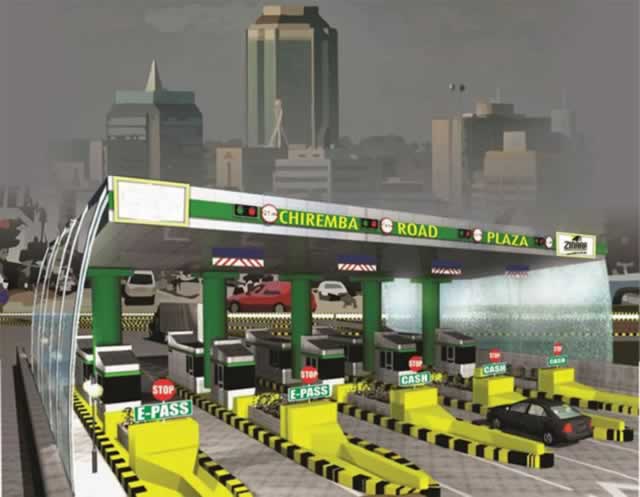
Isdore Guvamombe
Reflections Lounge
The highway from Harare to Chimanimani via Mutare is probably one of the best roads in the country.
Its tar and the marks are telling; its surface does not give any motorist headaches, except for the hairpin curves on Christmas pass and between Wengezi and Chimanimani.
That having been said, the road is an important vein that delivers traffic from the Eastern Highlands to the rest of the world.
From tourism to farming, mining and little everything else, this highway is critical.
I love the banana coves in countryside Manicaland, the high massifs, rolling moorlands, cascading waterfalls and high mountain heath, the lush green roadside timber plantations, the craggy mountains tinged grey by fungus, but of course I dislike the cold weather, especially in winter.
That aside. The Herald News Editor Obert Chifamba and myself recently took off to commiserate with a colleague who had lost his father in Chimanimani. We needed to support him at the funeral wake.
Having left Harare in the evening to catch up with burial the next morning, the weather was, especially good and the traffic very low. I enjoyed driving while Chifamba did most of the talking and of course, here and there he took a nap and a slight snore sold him out. By his own admission he is not used to night riding. Conversely, night riding is my timbre. We played Thomas Mapfumo’s golden oldies and agreed he was a genius.
We went past three Zimbabwe National Road Administration tollgates at Melfort, Rusape and Mutare without much hustle.
Around midnight, we enjoyed the pulsating view of the Christmas Pass, the twinkling and winking lights provided a colourful plumage under the veil of darkness. It was refreshing.
In Mutare, the dearth of traffic and symphony from the closed night sports reminded us of the coronavirus lockdown. The town was virtually dead.
After Mutare, we proceeded to Chimanimani and at 22 Miles tollgate is where we got our shock.
We tried to swipe our way past, it did not work. We tried to EcoCash our way past, it failed again. We did not have cash on us. We were told to park by the side to give those with cash a chance. The attendant, a lady who pretty much looked like Tracey Chapman in both dreadlocks, stature and facials, was not very kind with us. She said without cash there was no solution. And by this time it was way past 1am. A short queue had formed. Many unsuspecting motorists had problems.
We complied and parked roadside. It was not our fault.
The next motorist behind us tried swipe and EcoCash and it failed. He argued with the attendant again. She said without cash there was no solution. It happened to all the other motorists behind us. A few others were lucky to have cash on them.
It was only a police officer, who upon seeing that we were getting agitated after more than 30 minutes of trying and waiting, who explained that the tollgate had a perennial problem with network. It was, according to him a daily occurrence.
There being no shops nearby with Mutare 40km behind us, and worse still, being night, there was nowhere to get cash.
After interrogating her, the attendant confirmed that it was a known problem and that motorists who use the road regularly know the problem and get cash in advance.
So there we were, two senior journalists in the cold of the night, our car parked by the tollgate, begging for cash from other motorists.
For the first time I learnt that begging was difficult, it is an art, for, at times we were dismissed before we even made our request.
None had cash to spare. For 45 minutes we approached every car that came by and got no joy.
Meanwhile, we continued trying both EcoCash and swipe and it failed. Other motorists failed too.
It was very cold. Silly cold. My hands were as cold at the tits of a witch.
The tollgate attendant was unmoved.
“It is neither your fault nor my fault. Am sorry there is nothing I can do. I cannot let you go.
“Yes, you have stayed here too long, but there is no way I can let you go,’’ she repeated, also getting agitated.
Feeling cold, I went back into the car, folded my seat and slept, only to be awaken by Chifamba, who had struck a deal and gotten cash from a policeman who got too concerned after seeing us park for almost an hour.
Funny enough, we did an Eco-Cash transfer into the policeman’s line without hustle and yet we had spent an hour failing to pay at the same tollgate.
Again I had to discover, the following morning while in Chimanimani, that one of my swipe transactions at the Zinara tollgate had gone through, but had not fed back to their system. By the time of writing it had not been reversed. Cry our beloved zinara.
And, so, we bought cash at Nedziwe Business Centre on our way back in order to pay for the tollgate. We found a huge queue of agitated motorists parked by the roadside for failing to have cash on them.
But because we now had cash, we had easy passage.
It is the craze of our time, that Zinara has a tollgate in Mutare known not to have network for mobile money transactions and motorists are forced to spend hours on end begging for cash from passers-by or the journey ends abruptly. Cry our beloved zinara.
But this is a national highway and not a preserve for those who use the road regularly.
It is a sad story that motorists are reduced to beggars or many changers.
To me, it is an unforgivable crime for zinara to waste people’s time because of their own failure.
Time is precious.
It defies logic how, today, zinara has failed to sole the network problem at 22 Miles.
There is no law that forces motorists to have cash on them.
Swipe and EcoCash are legal tender.
Exactly what message is zinara sending to the national economy? The Government has been advocating for a cashless economy and zinara is doing exactly the opposite.
zinara is inconveniencing motorists.
zinara has no shame. It is chicanery!


 Online Reporter