admin
admin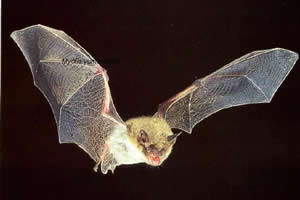
resembling that of a dog and forelimbs that form webbed wings, the nocturnal creatures have been called “winged dragons”, “flying rodents”, “flying rats”, “flying dogs” or simply the “evil ones”.
With extremely elongated fingers and a wing membrane stretched between, the bat’s wing anatomically resembles the human hand. Sharp canine teeth long muzzles and long, extensible tongues that cover in fine bristles, make their appearance even worse and evil.
But southwest of Hurungwe District in Karoi, just after Zvipane, lives a community that feeds on bats and insists that it is indeed a delicacy.
There, one fat bat is enough relish for an adult’s meal with sadza and rice. Large reserves of body fat that bats use to survive during hibernation months in cold weather and also as fuel and as insulation, make the relish to fatty, when cooked.
“The bats are a delicacy. It is good meat. It tastes like goat meat, except that it is too fatty.
“One or two bats can do for a person’s meal. The fat at the bottom of the pot is used as fuel for lighting in lambs,’’ says village head Ephraim Gombarago Matsvaire.
For sure, the villagers there take bats as a delicacy and some have even died trying to harvest the bats from the sacred Magweto Caves. But it is the preparation of the relish that sounds crazy.
Villagers chop off the head that looks like a dog’s and they cut off the flabby and rubberish wings then remove the fur with hot water or fire then finally boil.
The bats have too much fat that remains in the pot and villagers use the fat to fuel lamps. It burns like paraffin.
Of course, this writer did not like the after taste, after the meal and had to quickly chug a coke to stabilise the stomach.
Every evening at sunset, thousands of bats squeeze out of the sacred Magweto Caves for their night hunting escapades and for a moment, the world seems to be at a standstill due to the ultrasonic sound they produce.
The same happens at dawn, when the bats come back.
But the visit to the caves is no easy stroll in the park.
After negotiating our way through the thicket, which started as cattle grazing land of stunted bush shrubbery and savanna grasslands, before giving in to dense mountain forest.
The excursion is fierce, nerve wrecking, hair-raising and spine-chilling as we were all oblivious of the fact that many people had gone into Magweto Caves, never to return.
“You only go there and come back at the benevolence of the spirits, who guard the caves, jealously. Who knows what they think about you?” said a villager who refused to partake the trip.
The deceased’s supposed bravery had made them meet the jaws of death and the same could actually happen to us this day, if any one of us dared circumvent the rules and foul up with the taboos.
We were now halfway atop the sacred mountain when village head Matsvaire, suddenly stopped and instructed us to kneel down in a shaky shriek of a voice. An aura of fear surrounded us.
Hands trembling as he took snuff from a worn pouch, sprinkled it on the ground and pleaded with the ancestral spirits — the sacred vanguards of the Magweto Mountain and its chain of inter-connected caves – to understand our cause, protect and guide us.
Head bowed, hats removed and clapping systematically, alongside him, the ritual was the last call for permission to enter the mountains. Of course, there was no guarantee the ancestors had approved of our presence or not but he had to proceed.
More fearful than before, we took off for the final journey into the mountain. No one spoke loudly. It was all whispers.
Dry leaves cracked under our boots, sending feeding termites into a rattling protest.
We used our hands to push aside fluffy heads of the tinder dry grass to clear the way.
Tree branches swayed with the rhythm of strong mountain top winds, while our bodies formed ghostly shadows, off the silhouette western horizon.
Fish eagles performed a piecing evocative duet, atop a huge musasa tree almost sending us scampering for cover.
I looked up and at a glance, saw the eagles’ distinctive, black white and chestnut feather patterns, gleaming boldly in the sunset hue as they tossed their heads backwards and forth.
On the other side of the slope Musuka River which seemed to be on its final journey to its confluence with Sanyati River was flowing quietly.
Banana groves, luxuriant water reeds, water cabbages, lilies and thickets of riverine vegetation accompanied the water, undisturbed by human activity.
Suddenly, we came to the large caves that are home to thousands if not millions of bats.
“This is it,” Matsvaire shrieked again.
To stay and watch the spectacle, all team members, should not have “touched the breast of a woman the previous night”.
I insisted in going into the cave but the village head could not take it.
“There is no guarantee that all off us did not sleep with women last night. We must have slept in one room to trust each other.
“The best I have done is to lead you to this cave. We can look from the outside. No one will go in today,” declared the village head.
“It takes real men to go into the caves. You need candles because torch battery won’t last five minutes. The bats are attracted to the light and they swarm you as soon as you get in with light.
“There are huge pythons that can easily swallow a man. They also feed on the bats. I personally know of three people from this village went in and never returned.
Bats there are ravenous eaters the quantity of dropping is huge and renewable. It was amazing.
The droppings are eaten by cockroaches and other insects. The result is the best organic fertiliser in the world — bat guano.
At Magweto, villagers also collect guano for fertiliser and a recent survey by a German consultant, showed that the caves have huge guano deposits that can be mined for fertiliser for 15 to 20 years.
The report is now with the Hurungwe Rural District Council, which is now looking for investment partners.
Besides the fertiliser, it is a sure case that, the villagers there will not run out of relish. It might be dangerous to get into the cave, but for a meal, it is worth any effort.


 Online Reporter