Online Reporter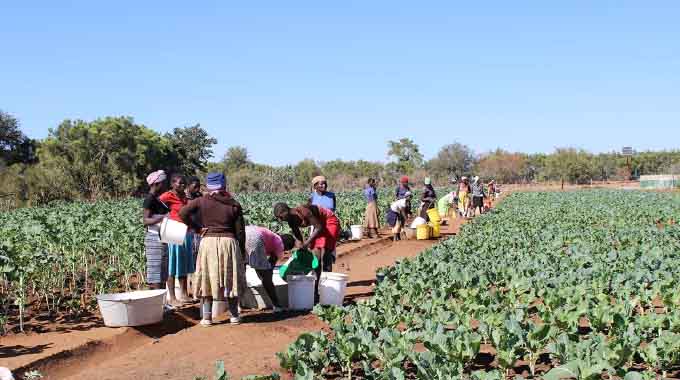
Alphina Ndlovu
WHEN we speak of war, we often speak in the language of men — strategy, weapons, victory and defeat.
It is a language that is loud, visible, and documented. But war has always had another language. Quieter. Less visible.
Yet no less powerful. That is the language of women.
Across history, including in the context of the Anglo-Zulu War of 1879, narratives have largely focused on the battlefield; on regiments, tactics and turning points. These accounts are important. They provide structure and chronology. They help us understand how events unfolded.
But they do not tell the whole story.
Because while men marched into battle, women remained at the heart of society — sustaining, preparing, protecting and ultimately, rebuilding.
Zulu society, like many African societies, was highly structured and deeply communal. War did not begin on the battlefield. It began long before, in the organisation of communities, in the preparation of warriors and in the social systems that enabled resilience.
Women were central to this.
They prepared food and resources that sustained warriors before and after battle. They maintained households and ensured the continuity of daily life. They cared for children, the elderly and the vulnerable — all while carrying the emotional weight of uncertainty.
War, for them, was not a moment. It was a condition. It was the waiting and not knowing who would return.
The silent endurance of loss.
And when the battle ended, their role did not diminish — it intensified. They rebuilt, they restored and they held together what war had fragmented.
Yet, despite this, their presence in historical accounts remains limited.
This absence is not necessarily due to a lack of contribution, but rather the way history has been recorded.
Traditional historical narratives have often prioritised what is visible, measurable and dramatic, the clash of armies, the outcomes of battles and the decisions of leaders.
In doing so, they have overlooked the less visible, but equally critical, dimensions of human experience. These are the emotional labour of war, social labour of survival and generational labour of rebuilding.
To revisit history with a more inclusive lens is not to diminish the role of men. It is to recognise that the story is incomplete without women. And this incompleteness has consequences.
Because when women’s contributions are not fully acknowledged, societies risk undervaluing the very foundations that sustain them, care, resilience, continuity and community.
These are not secondary elements of history. They are central to it. For African communities, both historically and in contemporary contexts, women have consistently carried multiple roles — as nurturers, organisers, protectors and leaders within their spheres of influence.
Their strength has often been expressed not through visibility, but through endurance. Not through recognition, but through responsibility.
This pattern continues today.
In many African societies, women remain at the forefront of maintaining households, supporting extended families and navigating economic and social challenges.
Their labour, much like in times of war, often goes unrecorded and under-appreciated.
This is why revisiting historical narratives matters. It allows us to draw connections between past and present. To understand that the resilience we see today is not new but is inherited.
It has been shaped over generations and has been carried forward.
To ask “Where were the women?” is not simply a historical question. It is a reflective one.
It challenges us to reconsider how we define contribution, how we assign value, and how we tell our collective stories. Because if history is to serve as a guide for the future, it must be as complete as possible.
It must reflect not only moments of conflict, but also the processes of survival.
Not only the actions of those who fought, but also the strength of those who sustained life in the midst of disruption.
As conversations around gender, identity and representation continue to evolve globally, there is increasing recognition of the need to amplify women’s voices — both in contemporary spaces and in historical narratives.
This is not about rewriting history. It is about re-seeing it, expanding it and understanding it fully.
Because when we acknowledge the full spectrum of human experience, we gain a deeper appreciation of what it means to endure, to adapt and to rebuild.
War is often remembered for its destruction. But it should also be remembered for the resilience it demands. And in that resilience, women have always been present. Not on the margins but at the centre.
Alphina Ndlovu is a Zimbabwean writer, cultural commentator and a PhD researcher with a focus on African business ecosystems, identity and narrative