admin
admin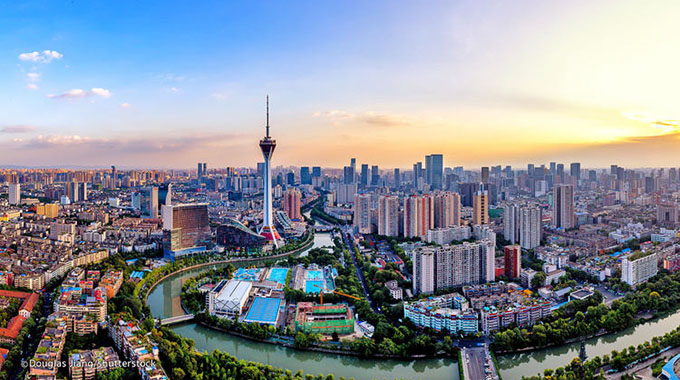
Lovemore Chikova
Development Dialogue
The 71st anniversary of the founding of the People’s Republic of China was marked last week, coming on the back of massive progress in all spheres made by the Asian economic giant.
As China moves ahead, and looks forward to more years of progress, it is important that other developing countries take a serious examination of how the country has managed to make a huge leap forward within a short period.
Such lessons can be useful as fellow developing countries, especially those in Africa, institute various measures to uplift their citizens out of poverty.
In fact, from around 800 million people living in poverty in 1980, China is left with only 5,5 million, who the authorities envisage will no longer be living below the poverty datum line by the end of this year.
Of course, meeting the target could have been affected by Covid-19, which saw some people sliding back into poverty, but this does not mean it is no longer achievable.
It is not only in poverty alleviation where China has made astonishing progress, as it has managed to outshine many other countries in areas like technology, infrastructure and industrial development.
China has achieved a tremendous transformation in the last 71 years, especially when it comes to creating wealth and becoming rich.
What is important about China’s progress is that it provides an alternative to a development model to the one that has been pushed for centuries by Western countries.
Some of the problems affecting developing countries now emanate from colonialism, which some scholars and development theorists blame for retarding growth in emerging economies.
Since the time of colonialism, the former colonisers never pushed a developmental agenda with the purpose of helping people out of poverty.
Colonialism segmented societies, creating conditions of squalor for locals so that they continued to offer their labour for survival.
The colonialists, as represented by Western countries, have been present in developing countries for centuries, but their prescriptions for development have failed to bring joy to their former colonies.
This is why programmes being pushed by Western created institutions like the economic structural adjustments are being heavily criticised for their failures.
Many developing countries are moving away from such development prescriptions, choosing instead to turn to local and practical solutions elsewhere that are relevant to their problems.
In doing that, the developing countries can draw a lot of lessons from China’s progress.
China is a fellow developing country, which used to have the same conditions as obtaining in many developing countries not so long ago.
This means the path it has followed in lifting its people out of poverty appears the most viable route for other developing countries, of course taking only those aspects which apply to local conditions.
This has ignited the debate concerning the emphasis the Western countries are concentrating on as a prerequisite for development aid.
These include private capitalism, liberal democracy and political rights — a system that worked perfectly for Western countries.
But these have failed to bring food on the table of citizens in developing countries because the more they pursue them, the more they appear abstract and unachievable.
Under these political systems, development has remained a mirage even for those developing countries that have tried to embrace them hook, line and sinker.
On the contrary, China has successfully pursued State capitalism, instead of private capitalism, guided democracy instead of liberal democracy and economic rights instead of political rights.
Chinese leaders quickly realised the folly of assuming that having liberal democracy is the ultimate, hence their emphasis on the economy rather than politics.
What developing countries need at the moment is to concentrate on developing their economies because that is the only way people’s lives can be improved.
President Mnangagwa has on several occasions reiterated that Zimbabwe will now focus more on the economy and less on politics.
This stance is meant to shift the people’s attention to tackling issues that really matter when it comes to improving the conditions of living.
The moment developing countries put politics on the back seat and concentrate their energy on the economy is when they will start realising that even with their little expertise, they can actually start the process of moving out of being underdeveloped.
The emphasis should now be more on economic rights, issues that bring food on the table through industrialisation and modernisation of economies.
This can be done by studying the alternative model of development that is being offered to the world by China, which it used to prosper to the levels of becoming the second biggest economy in the world.
The Western system, from the early days of the First Industrial Revolution, has worked well for countries in that region, but it has failed to uplift poor countries out of poverty for centuries.
The system has completely failed to be replicated in developing countries. In fact, attempts to apply the Western development systems have left poor countries sinking deeper in poverty.
But the emergence of China and other countries known as the Asian Tigers has awakened developing countries to an alternative model of development that emphasises on issues that really matter.
Developing countries are being made to chase after what appears to their citizens as illusions.
Building strong economies should be a perquisite for achieving democracy and political rights because it is difficult to sell an idea which has nothing to do with economic progress to people who are living in poverty.
Instead of being perpetually trapped in politics and such abstract concepts like democracy, people in developing countries are increasingly prodding their leaders towards concentrating on the economy.
As China marks its 71st anniversary, it is clear that the progress it has made is out of the realisation that more emphasis on the economy brings quality life as it tackles issues like food security, accommodation, healthcare and education.
A good economy offers much more than just political freedom because it speaks directly to individual needs.
China has achieved a lot through this realisation, as people in other countries can point to and admire the progress made in roads, railways, modern technology and the development of modern infrastructure.
And in dealing with fellow developing countries, China has been emphasising on what it terms “win-win” cooperation which ensures all the side benefit from the deals being made.
If there is a development model which many countries are now inclined towards, it is that being offered by China because it is the nearest to fulfilling the aspirations of the majority.
It is not a mirage, but a system that managed to change China within a short period of time.
Such an achievement under a system totally different from the Western practice brings hope to fellow developing countries that they can follow the Chinese example and achieve their dreams.
Ultimately, a system that ensures creation of wealth within the shortest period of time is the one that will gain favour and traction among people in developing countries.
Almost everywhere you go in China, there are skyscrapers, which signify a booming economy and business in the Asian country.
China is well advanced in technology, with technological hubs found in almost every city, with major national infrastructure projects for science and technology.



 Online Reporter