Chronicle Editor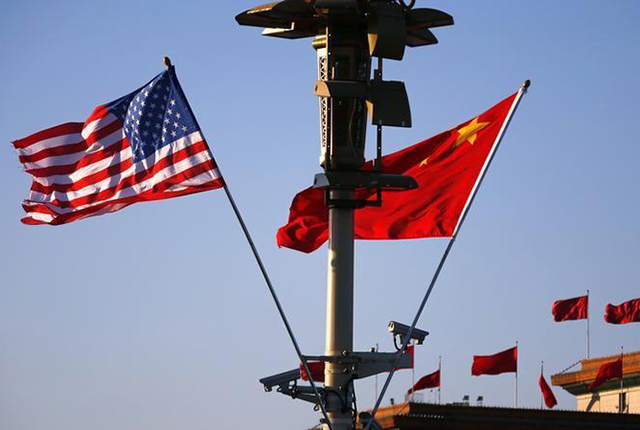
Lovemore Chikova in BEIJING, China—
Following Donald Trump’s victory in the just-held US presidential elections, many people in China have been asking: Wither China-US relations? And these people are justified to be anxious, especially after Trump uttered a number of statements during the campaign trail that are likely to have a seismic impact on China.Yet, whatever happens in the United States or in China for that matter, mutual relations between the two world economic giants will remain crucial to a progressive world.
In fact, between them – China and the US – none can afford to antagonise the other because the two countries realise their importance to maintaining world peace and progress.
The first few months after Trump takes office in January next year will be crucial in defining China-US relations, especially after his sabre-rattling pronouncements during the campaign trail.
Many Chinese are waiting with keen interest to see if Trump will pursue his rhetoric on China-US trade, uttered in the heat of the campaign, or he will work for its improvement.
During that campaign trail, Trump touched on China-US trade and made a number of statements which if pursued could sour future relations between the two countries.
Apart from making indications on his likely foreign policy on China, Trump also revealed his thoughts about the entire Asia-Pacific region.
Here is a recap of what Trump said about the Asia-Pacific region.
China
Trump threatened to impose a 45 percent tariff on imports from the Asian economic giant to protect US industry.
“They (Chinese) suck the blood out of us and we owe them money,” he said in a September interview with CNBC Network.
He also called China “a currency manipulator”.
Japan
Trump threatened to discard the US-Japan Treaty of Mutual Cooperation and Security, arguing that it was tilted in favour of the Asian country.
He actually does not believe that Japan is a true ally of the US.
“You know we have a treaty with Japan, where if Japan is attacked, we have to use the full force and might of the United States,” he told Britain’s Telegraph.
“If we’re attacked, Japan doesn’t have to do anything. They can sit at home and watch Sony television.”
South Korea
Trump said he would withdraw the 28 000 US soldiers deployed on the border between South Korea and North Korea, saying the deployment was costly to his nation.
North Korea
Trump refrained from condemning North Korea outright, instead indicating that he was prepared to talk with its leader Kim Jong-un.
He said Kim’s rise to power at his young age ahead of his father’s associates, after his father died, was a sign that he could not be underestimated.
In light of all these utterances, Trump went under scrutiny in the Asia-Pacific region soon after he won the presidential race.
These statements became the basis for formulating debates around his presidential victory, both in public fora and in the media.
Chinese media, both print and broadcast, devoted acres of space to analysts trying to dissect Trump’s campaign message with regard to the region and its implications.
They especially sought to unpack what will make Trump the Republican Party candidate different from Trump the US president.
President Xi Jinping has since spoken to Trump over the phone.
Reports indicate that he telephoned Trump on Monday and the dialogue between the two was cordial, with both pledging to work together.
President Xi reminded Trump of the 37-year-old formal relations between the two countries.
These bilateral relations, he said, had been continuously progressing and brought tangible benefits to both peoples of China and the US, promoted world and regional peace, stability and prosperity.
On his part, Trump was said to have told President Xi of his willingness to strengthen ties and cooperation, expressing his belief that the relations would witness even greater development.
But Chinese media has been awash with both optimistic and pessimistic views about the reality that Trump was now the new US president-elect.
China Daily USA edition deputy editor Chen Weihua wrote that he was confident Trump would enhance relations between the two countries.
In his opinion headlined “Positive side of Trump in building China-US ties”, Chen argued the US president-elect’s attack of China during his campaign was mere rhetoric.
“Many have taken seriously Trump’s rhetoric on the campaign trail over the 16 months, such as imposing a 45 percent punitive tarrif on Chinese imports and calling China a currency manipulator,” he wrote.
“But how seriously should we take Trump’s campaign rhetoric is a problem. Past US presidential candidates have made crazy vows vis-à-vis China during their campaigns, but forgot them quickly once elected.”
Chen’s views were reinforced by that in his victory speech, Trump appeared conciliatory, promising to “deal fairly with everyone … all people and all nations”.
In the People’s Daily Online article headlined: “Trump’s upsides for China: Analysis”, Centre of China and Globalisation director Mr Wang Huiyao said there were now uncertainties in US foreign policy.
But he reckons Trump’s campaign statements against China could be difficult to implement, as the two countries share most common interests in bilateral cooperation.
Former director of the Asia-Africa Developmental Research Institute under the Development Research Centre of China’s State Council, Zhou Xiaojing, said China should prepare to handle pressure on its currency, the RMB’s exchange rate and on China US trade.
In other stories in the Chinese media, analysts believe there will be doom and gloom with regards to China-US relations after Triump’s win.
China Everbright Securities Co chief economist Xu Gao was quoted as saying that China heavily depended on the US market and that the US and Europe controlled pricing for global commodities.
“Trump is very slippery, he will take all measures to capitalise on such advantages,” he said.
Other Chinese analysts are of the opinion that “trade deals with the US would be tough to move forward and the ongoing talks on a China-US Bilateral Investment Treaty would face tough obstacles”.
Some think that the US will not afford to raise tariffs on Chinese goods since that would hurt world trade, considering the intertwined value chain in manufacturing.
But it is now more likely that the US will move away from direct influence in the Asia-Pacific region following Trump’s pronouncements on Japan, South Korea and North Korea.
It will be a departure from the Barack Obama administration’s foreign policy of Big Brother.
In fact, some note that if Obama does not sign the Trans-Pacific Partnership Agreement (TTP) before he leaves office in January, Trump will discard it.
The TTP is meant to enhance the US’s status as a major player in the Asia-Pacific region and is also aimed at checkmating China in regional affairs.
Despite all that he said, it is still not yet clear what role Trump likes to play in terms of the overall regional security in the Asia-Pacific.
He is obviously going to have a lot on his hands domestically, that it might take him months before he begins to worry about other issues.
Japan and South Korea are also likely to exert pressure on Trump to further their bilateral agreements.
From now on, countries in the Asia-Pacific region, specifically China, Japan, South Korea and North Korea, will be watching with keen interest every move by Trump.



 Online Reporter