Online Reporter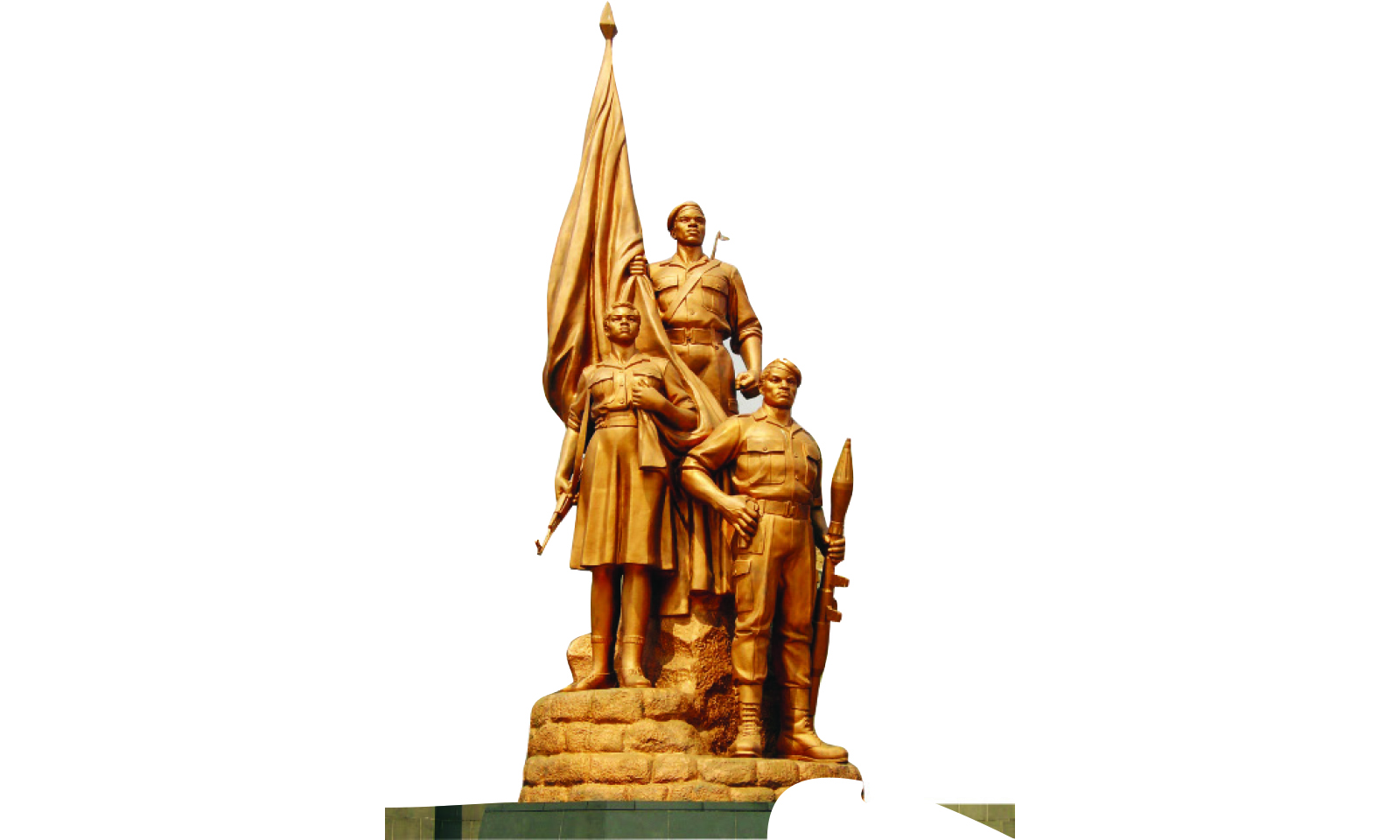
Gibson Nyikadzino
Zimpapers Politics Hub
AS Zimbabwe approaches Heroes Day in less than two weeks, it is an opportune moment to reflect on what truly defines a hero — and who deserves that revered status.
When a black man or woman in leadership speaks, yet the white establishment does not get nervous or is unmoved, the ultimate interpretation is that what that leader said has no impact. Leaders that speak or utter unsettling ideas and make decisions, interpreted as radical, usually for the betterment of their people’s lives are the ones who make the white establishment nervous.
Their courage and bravery get strong reactions that are coercive punishments to induce them to take a path that is deemed “reasonable” so that they should be satisfied with the status quo. But people do not make history by safety, nor can they change the world by negotiating.
People stand up against the odds and share their convictions which they are willing to die for. In the case of Zimbabwe, the conviction heroes and heroines carried sought to remedy colonial injustices through a radical political overhaul of the Rhodesian state.
At times instruments of rehabilitation of ‘offenders’ or liberation fighters like prison do or did not even break them when they challenged the foundations that sustained the supremacy of the Caucasian race or system. The white supremacist system reacted back then and even now with brutality using to silence black leaders and other potential struggle fighters.
Nationalists like the late Chairman Herbert Chitepo, George Silundika and Leopold endured threats and prison when they refused to be silenced. Globally, people like Malcolm X and Martin Luther King Jr had to be assassinated; while regionally other like Patrice Lumumba, Amilcar Cabral and Thomas Sankara had to be killed just to dim the flame against colonialism.
Such was the spirit revolutionary leaders possessed, to wield revolutionary and popular support through mobilising the masses to confront, fight and replace an illegitimate colonial regime with a just and egalitarian one.
Writing about colonialism in 1902, novelist Joseph Conrad described it as “a flabby, pretending, weak-eyed devil of a rapacious and pitiless folly”. He further said: ‘The conquest of the earth, which mostly means the taking it away from those who have a different complexion or slightly flatter noses than ourselves, is not a pretty thing when you look into it too much.”
This is what Zimbabwe’s heroes and heroines were facing and fighting against. However, the question remains: “Who is a Zimbabwean hero and heroine?”
There are at least three key aspects that may be of essence when describing, defining and characterising who a national hero or heroine is in Zimbabwe.
There should be no contestations in that regard. From the pre-independence to post-colonial times, there have been successive generations of national heroes and heroines, meaning getting ascribed the status of a hero is a process that metamorphosise in each historical epoch.
Firstly, Zimbabwe’s heroes and heroines are those people who function as cohesive elements that support national narratives and development, while at the same time national narratives are used to support the commemoration of these heroes and heroines.
Secondly, they are, without fear of contradiction, architects of national sovereignty and believers in national identity. Their political consciousness cannot be dented or diluted as it resonates with the struggle of the people and setting them free.
They are people who have remained faithful to the values and ethos of the struggle of independence and resent the colonial injustices that people endured.
Lastly, they advocate for the socio-economic rights and dignity of the poor and dispossessed, and go to lengths that challenge the dominion of the large powerful countries, defending their independence and sovereignty, and cultivating a culture in the defence of patriotic and national ideals. They are people who do not call for the imposition of sanctions against the state, nor the military invasion of the country just for the sake of attaining political power.
This is what makes a Zimbabwean hero or heroine. However, there are those who have made interesting counter arguments in this regard, but such arguments have not been and are not ultimately convincing.
In other instances, the counter-arguments have attacked the person of national heroes and heroines, with some making disparaging references to the architects of our national political, economic and social formulations.
What is not discounted is that the criteria for one to be such has to be generated from a source of constant inspiration where they encapsulate the characterisations of our national heroes.
Zimbabwe’s past and present heroes and heroines should be known as people who were and are symbols of resistance against all forms of colonial and imperial oppression and advocate or contribute to Zimbabwe’s national development in various disciplines.
Today, the nation is also in need of new typologies of heroes. The national development agenda that is rolling needs pragmatic leaders on all layers of society, as local heroes and heroines, who possess strategies that diverge from standard leadership typologies.
Since colonialism ended, the struggle against imperialism and self-sustenance requires a leadership style that is multi-layered, which is able to combine elements of closeness to the masses to achieve the collective society and national agenda.
These are the revolutionary people society is yearning for, who in their commitment to serve the country do not do so to disregard contributions by nationalist leaders during the armed struggle, but complement their acts of bravery with modern acts of heroism rooted in development.
Ahead of the goal for national development, no one who aspires to be a hero or heroine at any level of Zimbabwe’s society should be seen to be dropping the ideological toolkit that makes Zimbabwe what it is. It will be neither safe nor good to speak against such values.
In the end, this is good to set the pedestal of the promotion of decolonisation and developmental politics for the benefit of the people.