admin
admin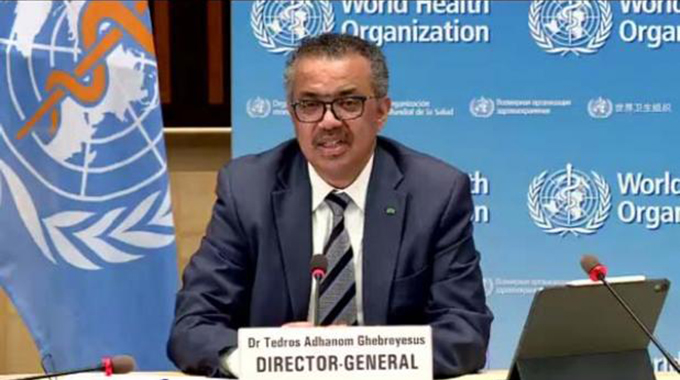
Grace Kuria
World Health Organization Director-General Dr. Tedros Adhanom Gebreyesus has reiterated that the global gap in vaccine supply is hugely uneven and inequitable.
“Some countries and regions are actually ordering millions of booster doses before other countries have had supplies to vaccinate their health workers and most vulnerable.” Dr. Gebreyesus said.
He added that data shows that vaccination offers long-lasting immunity against severe and deadly COVID-19, and instead of Moderna and Pfizer prioritizing the supply of vaccines as boosters to countries whose populations have relatively high coverage, he needed them ‘to go all out’ to channel supply to the COVAX global initiative, the Africa Vaccine Acquisition Task Team, and low-middle income countries.
While Dr. Gebreyesus recognized that tens of millions of donations of shots are starting to come through, he said that they needed to come faster, through an “all-out, no regrets accelerated building up of new vaccine manufacturing hubs”.
Calling it “enlightened self-interest,” he said that when a country shares vaccines, it is actually helping itself.
“The whole world is sick and tired, and everyone wants to open up, and ending the pandemic is key… when we have a pandemic everywhere, the virus will continue to circulate”. Dr. Gebreyesus said.
The WHO head also said it was “extremely disappointing” to see countries that had vaccinated most of their population with two doses, thinking about a third. “It actually makes no sense”, he underscored.
According to him, vaccine sharing does not necessarily mean giving vaccines for free.
“I have a list of countries that say they have money, they can pay, but there are no vaccines…The world has the means to increase production quickly, what we lack is global leadership,” he added.
The Director-General also said that pharmaceutical companies must share their licenses, know-how and technology.
“Do what AstraZeneca is doing” he said, which started in Europe but has production in India, Korea, Australia and Japan, with more expansion planned, explaining that this gives COVAX the green light to buy vaccines from additional facilities.
Dr. Tedros said there cannot be more talk about vaccinating low-income countries in 2023 while there are the tools to help them now.- AFRICA CGTN


 Online Reporter