Online Reporter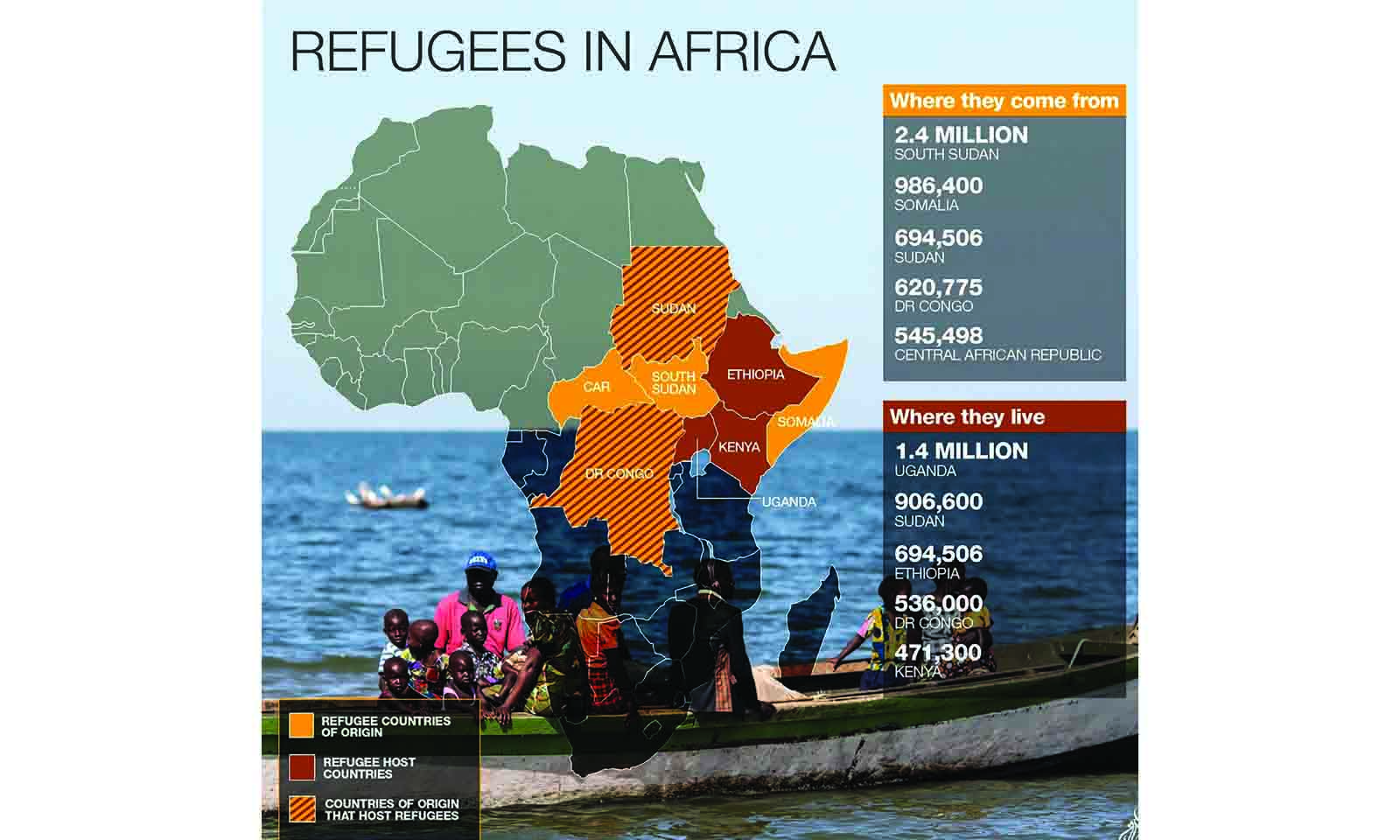
Norman Pinduka and Lucid Chirozva
ON June 20, the world celebrated World Refugee Day, a day dedicated yearly to honoring the lives of refugees — individuals who have been forced to leave their homes and are officially hosted in other countries.
While the eventful day was marked by numerous activities organised by the Government and other stakeholders, the term ‘refugee’ continues to be widely misused and misunderstood, despite its frequent usage.
In the mid-1980s, Andrew Shacknove, a prominent scholar in refugee studies, rightfully observed that the term ‘refugee’ conjures up a range of interpretations.
This term still brings to mind diverse images, many of which may not correctly personify a refugee.
The term refugee has been used interchangeably with terms such as asylum seeker, illegal immigrant, internally displaced person, statelessness, illegal migrant, economic migrant, economic refugee, climate refugee and undocumented migrant.
All of these terms have a place in the conversation about migration, but none of them accurately represent who a refugee is. Clarifying the meaning of a refugee is essential, given the growing number of refugees in Africa.
This also has substantial consequences for their protection.
The coordinated efforts of African nations to protect refugees deserve recognition. However, given the complicated nature of refugee protection, it is important to ensure that the term is clearer, even in everyday conversations.
To understand who a refugee is in Africa, it is fundamental to consider international, regional frameworks, sub-regional and national laws.
The United Nations (UN) Convention Relating to the Status of Refugees (1951) and its 1967 Additional Protocol — commonly referred to as the UN Geneva Convention — along with the Organisation of African Unity (OAU, now AU) Convention Governing the Specific Aspects of Refugee Problems in Africa (1969), known as the OAU Refugee Convention, provide key guidelines in this context.
These conventions are highlighted because they serve as the foundation for how states define refugees and determine their status.
Different states have also established their regulations to support these conventions, facilitating the protection and assistance of refugees.
Based on these conventions, a refugee is someone who has fled their country due to a well-founded fear of persecution based on race, religion, nationality, membership of a particular social group, or political opinion. These people are unable or unwilling to return to their country of origin because of this fear.
The OAU Convention further asserts that refugees are individuals compelled to leave their homes due to external aggression, occupation, foreign domination, or events that seriously disturb public order. A refugee is thus defined as a person who is outside their country of origin, having fled due to a well-founded fear of persecution, conflict, or alienation, and who has been granted a safe haven in another country or host state.
The definitions of refugees reflect the prevailing circumstances of the time when they were established, which probably necessitates conversations on the necessity to widen the definition of refugee.
Nonetheless, the definition in the foregoing distinguishes a refugee from an economic migrant, who seeks greener pastures mostly in another country and an undocumented migrant, who has moved to another country without the necessary legal documents.
It also differentiates refugees from stateless persons, who are not recognised as nationals by any state, which significantly impacts their citizenship status.
The definition also separates a refugee from an asylum seeker. The latter is a person who has been forced to move from his or her area of origin due to persecution, conflict, or alienation but is still seeking international protection by applying for asylum status. While terms such as “economic refugee” and “climate refugee” are increasingly used in discussions about forced displacement, they have not yet been formally recognised in international law.
Refugee protection is usually anchored on three options, often known as the durable solutions.
These are local integration, resettlement, or repatriation. While integration involves settling refugees into the host country, repatriation is when refugees volunteer to return to their home country when it is safe to do so, and resettlement is when refugees are relocated to a third country that agrees to accept them.
Knowing who qualifies as a refugee is crucial, as it forms the foundation for enhancing refugee protection.
One of the primary objectives of granting refugee status to forcibly displaced individuals is to improve their lives. Without a clear definition, the possibility of inadequate protection for refugees increases drastically, which negatively affects their lives. Refugee protection requires the collaboration of various stakeholders, including NGOs, government agencies, UN specialised organisations, and local communities.
Therefore, recognising the definition of a refugee is vital for safeguarding their rights under international, regional, sub-regional and national laws.
Additionally, because refugee protection involves a multiplicity of factors, knowing who a refugee is becomes pertinent to social advocacy, addressing their specific needs and the creation of policies that can assist them. This can lead to appropriate assistance and support. Well-supported refugees often contribute immensely and positively to host states socially and economically.
Lastly, once communities understand who refugees are, it can enhance integration by promoting social cohesion and fostering mutual understanding between refugees and local communities.
In Africa, we are at a juncture where refugees are on the increase and have become a permanent feature of the state.
This reality demands urgent attention and action from both state and non-state actors to ensure proper refugee identification—a critical step for their adequate protection and meaningful contribution to host states.
Norman Pinduka (PhD) is a lecturer of Politics and International Relations at Africa University and writes in his personal capacity. Email: [email protected] .
Lucid Chirozva is a lecturer of Politics and International Relations at Africa University and writes in his personal capacity. Email: [email protected]