Online Reporter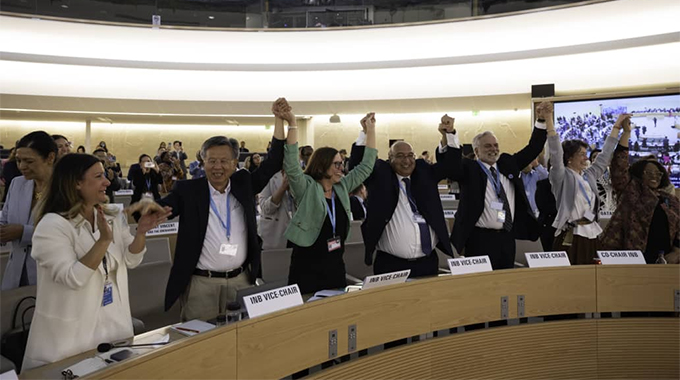
By Rumbidzayi Zinyuke in Geneva, Switzerland
WORLD Health Organisation (WHO) member states today adopted a landmark Pandemic Agreement aimed at making the world safer and more resilient against future global health crises.
The agreement, adopted under Article 19 of the WHO Constitution, marks the culmination of more than three years of intensive negotiations initiated during the Covid-19 pandemic. It seeks to close the gaps and address the inequities in global health systems that were starkly exposed by the pandemic.
The accord promotes stronger international collaboration, equitable access to medical resources, and improved coordination among countries, civil society, international organisations like WHO, the private sector, and other stakeholders. Its overarching goal is to prevent pandemics from occurring and to ensure a faster, more unified response when outbreaks do happen.
“The world is safer today thanks to the leadership, collaboration and commitment of our Member States to adopt the historic WHO Pandemic Agreement,” said Dr Tedros Ghebreyesus, WHO director-general..
“The agreement is a victory for public health, science and multilateral action. It will ensure we, collectively, can better protect the world from future pandemic threats.
“It is also a recognition by the international community that our citizens, societies and economies must not be left vulnerable to again suffer losses like those endured during Covid 19.”
Dr Teodoro Herbosa, secretary of the Philippines Department of Health, and President of this year’s World Health Assembly, who presided over the agreement’s adoption said: “Starting during the height of the Covid 19 pandemic, governments from all corners of the world acted with great purpose, dedication and urgency, and in doing so exercising their national sovereignty, to negotiate the historic WHO Pandemic Agreement that has been adopted today.
“Now that the agreement has been brought to life, we must all act with the same urgency to implement its critical elements, including systems to ensure equitable access to life-saving pandemic-related health products.
“As Covid was a once-in-a-lifetime emergency, the WHO Pandemic Agreement offers a once-in-a-lifetime opportunity to build on lessons learned from that crisis and ensure people worldwide are better protected if a future pandemic emerges.”
The Covid-19 pandemic left a devastating impact on health systems and economies across the globe, and Africa was no exception.
“Many African countries, including Zimbabwe, were caught unprepared, facing limited healthcare infrastructure, inadequate supplies of personal protective equipment, and delayed access to life-saving vaccines.”
The newly adopted Pandemic Agreement is seen as a critical step forward for African nations, offering a framework for equitable access to vaccines, medicines, and diagnostics in future pandemics, as well as the technical and financial support needed to strengthen public health systems.