Online Reporter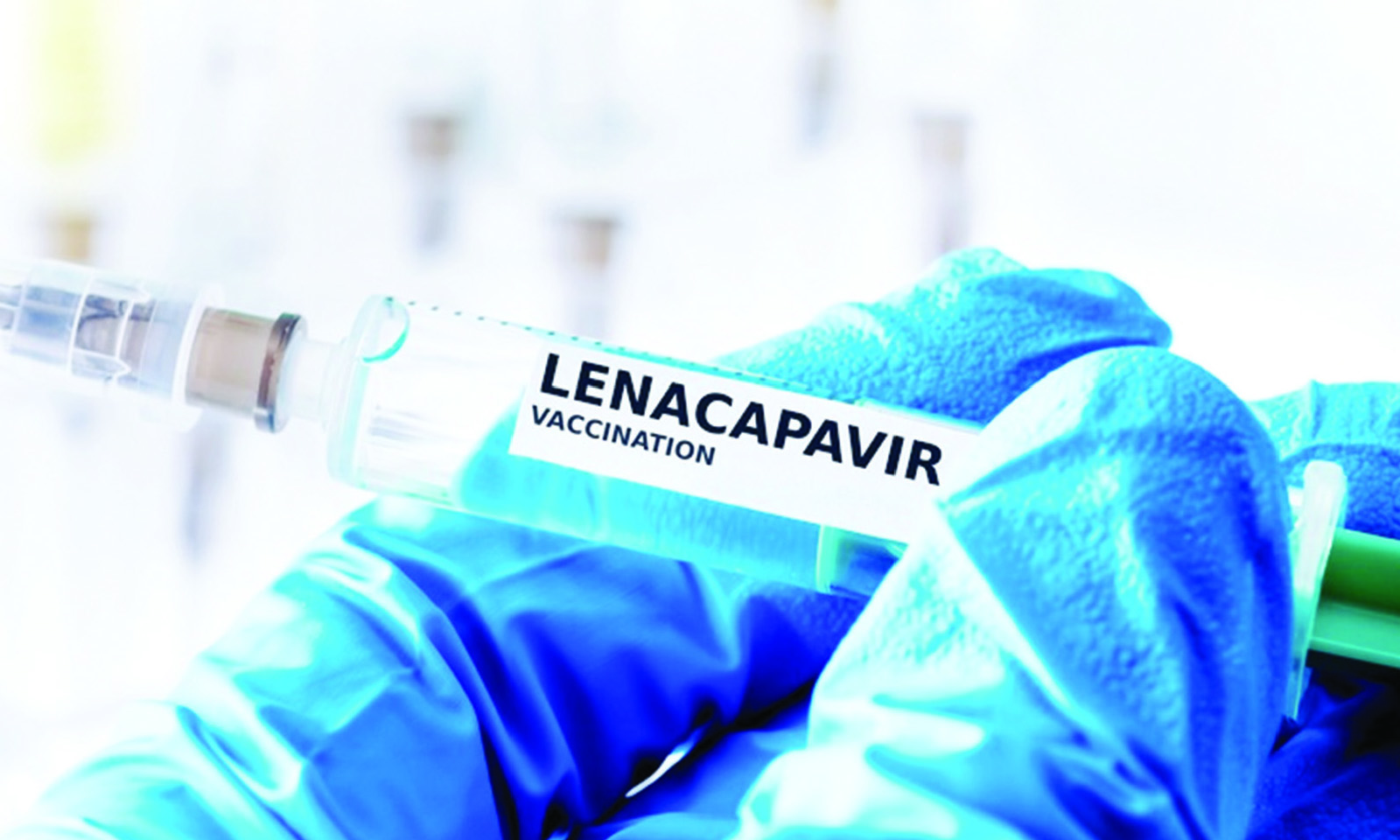
KIGALI. – The World Health Organisation is now recommending that countries include an HIV drug newly approved for prevention, lenacapavir, as a tool in their efforts to fight HIV infections – especially for groups most at risk and in areas where the burden of HIV remains high.
The global recommendation – issued at the International AIDS Conference in Kigali, Rwanda – comes about a month after the US Food and Drug Administration approved lenacapavir as a twice-yearly injection for the prevention of the human immunodeficiency virus or HIV.
Lenacapavir had been approved in 2022 to treat certain HIV infections and, in trials for prevention, it was found to dramatically reduce the risk of infection and provide almost total protection against HIV.
“These new recommendations are designed for real-world use. WHO is working closely with countries and partners to support the implementation,” Dr Meg Doherty, director of WHO’s Department of Global HIV, Hepatitis and Sexually Transmitted Infections Programmes, said in a news briefing.
“The first recommendation is that a long-acting injectable, lenacapavir, should be offered as an additional prevention choice for people at risk for HIV and as part of combination prevention. With that, we call it a strong recommendation with moderate to high certainty of the evidence.”
The second recommendation in the guidelines is that rapid diagnostic tests like at-home tests can be used to screen someone for HIV when they are starting, continuing or stopping long-acting medication to prevent infection – called pre-exposure prophylaxis, or PrEP.
PrEP has been used to prevent HIV infections for years.
In the United States, this may involve taking pills, such as a daily medication called Truvada, or getting injections, such as every two months of the medication Apretude.
But twice-yearly injections of lenacapavir, or LEN, have become another option in the prevention toolbox – not just for the United States but for the world.
“LEN is a six-monthly injectable option, and it may be particularly attractive for people who prefer fewer clinic visits or have challenges with daily oral PrEP. . . . It could improve adherence and reach more people who need HIV prevention and can be used in pregnant and breastfeeding women,” Doherty said.
“WHO is providing technical assistance to countries interested in adopting LEN and simplified testing strategies, in coordination with global partners like the Global Fund, UNAIDS and several other partners and donors,” she said.
“We call on governments, funders, implementers and civil society to work together for implementing and integrating LEN into the HIV programmes. And we believe time to act is now.”
There has been growing concern around funding for global HIV prevention efforts.
International assistance accounts for 80 percent of prevention programs in low- and middle-income countries, according to the United Nations.
But in the past six months, the United States has significantly withdrawn funding for much of its foreign assistance.
The Trump administration has dismantled the US Agency for International Development, or USAID, and reduced funding for the President’s Emergency Plan for AIDS Relief, or PEPFAR, which acts as the largest commitment by any nation to address a single disease in history.
The United Nations warned in a report released Thursday that millions more people could die from HIV-related causes by 2029 if funding for HIV programmes permanently disappears. – CNN