Online Reporter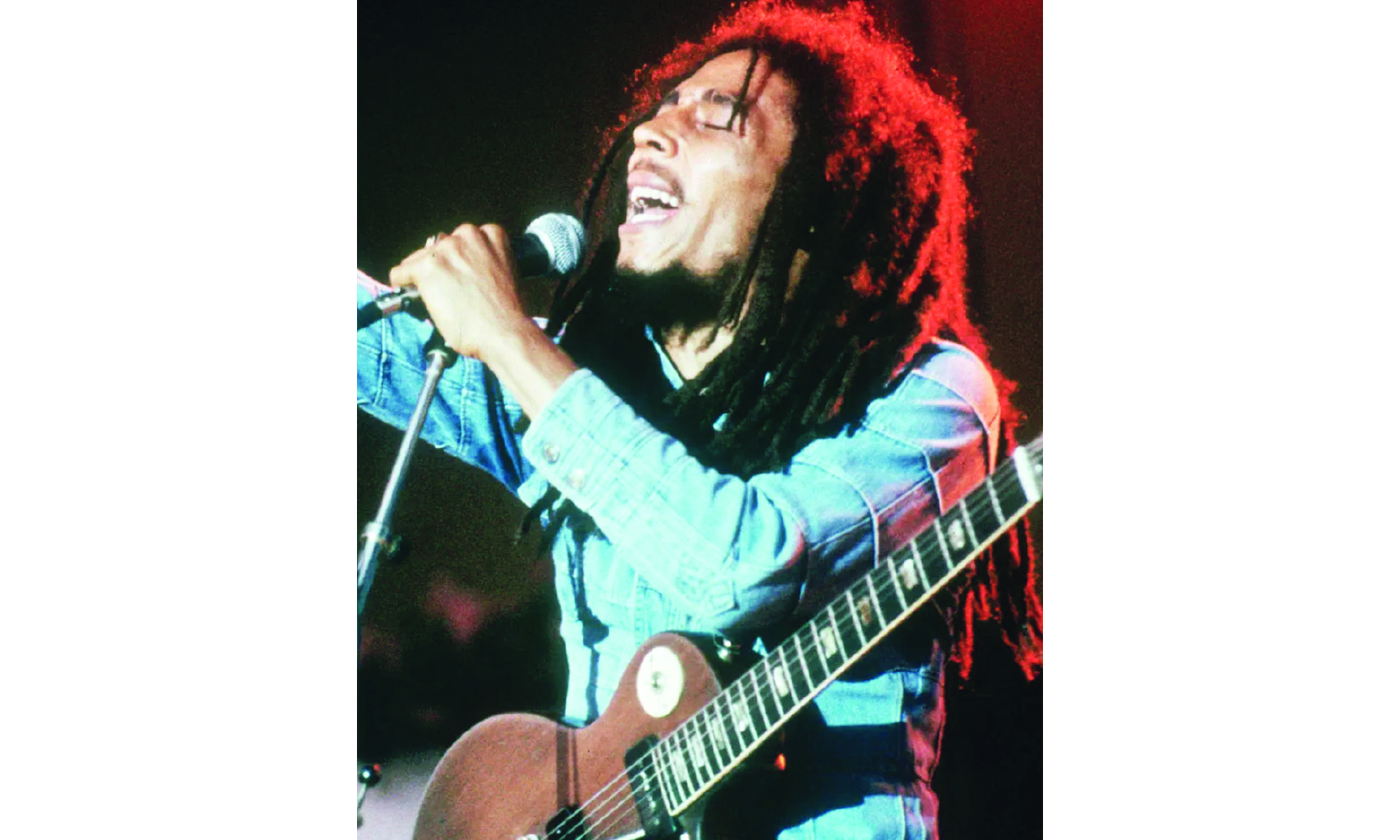
The late Bob Marley (pictured) made reggae famous around the world. The music genre’s messages of peace are more important today than ever.
When Bob Marley took to the stage in front of 8,000 people in the Cologne sports hall in June 1980, he was already struggling with the cancer that would eventually take his life. But he remained as charismatic as ever, captivating the audience as he sang “Redemption Song” and other favourite tunes.
Less than a year later, on May 11, 1981, Bob Marley died of complications related to melanoma. He would have turned 80 on February 6, 2025. Marley brought reggae and its messages to the world. He helped make the genre so famous that it was even added to UNESCO’s list of intangible Cultural Heritage.
The legacy of the beloved Jamaican singer was also celebrated in the 2024 movie “Bob Marley: One Love,” based on his life. The political and spiritual messages of his songs are just as pertinent in light of the social turmoils of today.
Reggae has been undeniably influenced by Rastafari, the religion and political movement Bob Marley began to explore when he was 22 years old. The relatively new religion developed in Jamaica when Haile Selassie I was crowned Emperor of Ethiopia on November 2, 1930. A few years earlier, Jamaican activist Marcus Garvey had predicted the coronation of a powerful black king in Africa who would bring black liberation.
The Rastafari movement takes its name from Selassie’s original name, Ras Tafari Makonnen. “Ras” means “prince” in Amharic, which is spoken in Ethiopia. Most believers saw Selassie as the second coming of Jesus Christ. Tenets of the religion include living a life as close to nature as possible, and espousing the principles of love and peace, justice, unity and equality.
Rastafari opposes all forms of political, cultural and religious subjugation of people and is a worldwide movement with followers of all races. Contrary to popular belief, smoking marijuana is not necessarily part of the Rastafarian religion, although many espouse it as a way to expand consciousness.
Bob Marley, who is considered the first international superstar from a country in the so-called Global South, also made reggae, the music of the Rastafarians, famous around the globe. Reggae music originated in Jamaica in the 1960s. Its focus on social justice, as well as Rastafarian spiritual themes, also resonated with other popular folk music around the world at the time, such as folk rock in the US.
Rastafarian spirituality is a reccurring theme in Bob Marley’s songs. But while his lyrics include religious references, they also depict the real-world struggles of discriminated minorities, and the history of slavery and injustice. It’s no surprise many of his songs have become associated with resistance and the fight against oppression around the globe.
“Get Up, Stand Up” was written after Bob Marley visited Haiti and was shocked by the poverty of the people living there under the Duvalier dictatorship (1957-1986). The lyrics call on people to fight for their rights and trust their own judgment. “Get Up, Stand Up” is considered the unofficial anthem of the NGO Amnesty International.
In the 1979 song “Zimbabwe,” Marley calls on Africans to liberate Zimbabwe, which had been under British colonial rule. Marley played the song live at Zimbabwe’s Independence celebrations in 1980 and it became the country’s unofficial national anthem. – dw.com