Sundaymail Editor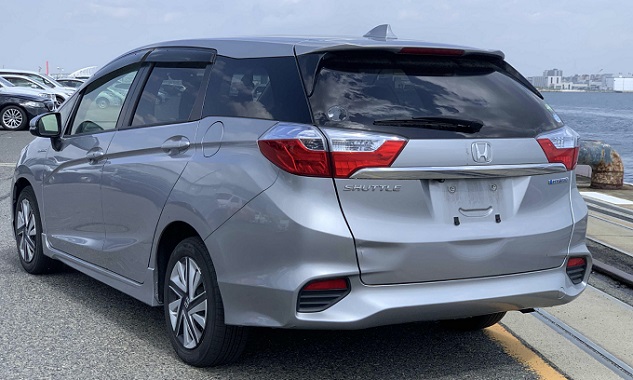
Ross Heritier
YOU may have asked yourself: “Are hybrid cars worth it?” The honest answer is yes; they are definitely worth it.
This is not going to be a spiel over which car platform is better because that really comes down to personal preference.
Instead, this is going to cover why hybrid cars are worth it and the reasons for this.
There are many advantages to owning a hybrid and like all the platforms, it will share many strengths along with some unique features. So, if you are still wondering by the end of this read, “Should I buy a hybrid car?” you can remind yourself that it seems like a safe bet.
In order to give you the most up-to-date and accurate information possible, the data used to compile this article was sourced from various manufacturer websites and other authoritative sources, including CarEdge, ConsumerReports and Cars.com.
Hybrid vehicles are becoming popular by the day and if you are looking to buy a used one, here are some things you need to take care of.
Going back to the overall idea of “What powertrain setup best suits me?” the hybrid makes a compelling case for why it will suit most people.
Many car brands have stated they plan to go fully electric by 2030. These are not some no-name car manufacturers, and switching to an electric vehicle from your internal combustion engine (ICE) car can be intimidating.
But, say you are trying to reduce your carbon emissions in the world and still want that traditional feel of a gasoline-powered engine, brands like Toyota that focus more on hybrids provide the best resale values.
Everyone loves to save money, or better yet, have their money not depreciate over time, and that is the case for a car brand that sits at the forefront of the automotive industry.
For a quick breakdown of Toyota’s current lineup, the Japanese car brand offers one electric vehicle (EV), one fuel-cell EV, two plug-in hybrids, 12 ICE vehicles and, lastly, 16 hybrid electric vehicles (HEVs). So, what is the point?
The top car brand with the best resale value after five years is Toyota. This is not saying to go out right now and buy a Toyota, which, if you did, is a good choice, but it is saying that the car brand that offers the most hybrids on the market somehow retains its value better.
Toyota just happens to be the current guinea pig, but the Toyota Prius came in with a remarkable five-year residual value of 68,92 percent, whereas the popular Model S held 43 percent of its value.
Compared to ICE, The Honda Fit came in at 80,1 percent for its five-year resale value, whereas the Prius C was 72,6 percent.
Statistics are statistics, and you can pull many numbers from various models from each platform, but most hybrid cars depreciate slower than ICE-powered and electric vehicles.
Hybrids are fairly reliable
For its sister brand, Toyota, it sits in second place for used and third for new cars. Now, this is not an ad for Lexus or Toyota but another obvious point: two automotive manufacturers practically leading the hybrid industry rank in the top spots for reliability.
Toyota is known for its bulletproof reliability, but cars from other brands help argue the case for hybrids being reliable.
Consumer Reports found that, on average, hybrids are 26 percent more reliable than vehicles with only an internal combustion engine. On top of this, they also found plug-in hybrids were 146 percent less reliable.
Consumers are seeking out dependable self-charging hybrids and over the previous decade, these 10 stood out for quality and reliability ratings.
Hybrids can be more cost-effective over time
Many of these overall points that answer the question “Are hybrid cars worth?” can be broken down into many areas. This can be seen when you discuss the money or cost-effectiveness of hybrids.
A car’s reliability is not just if it will get you from point A to point B safely; it also comes down to ownership costs such as maintenance and repairs.
Hybrids offer different cost-saving technologies and usually better fuel efficiency than their gas-powered counterpart, so cost-effectiveness does come into play.
Once again, this is not saying hybrids are better or ICE vehicles are better; it is just showing that hybrids can save you money.
You can lower some maintenance costs with systems such as regenerative braking
Similar to plug-in hybrids or EVs, since they can be seen as a “mutated” or prime example of evolution when looking at an ICE vehicle, they receive additional traits due to the battery on board.
Maintenance is a significant topic when discussing the strengths and weaknesses, and just one example of how a hybrid can save you on maintenance is its use of a regenerative braking system.
This system eliminates much of the wear on the brakes, making the pads last longer than your traditional ICE vehicle.
There are not many credible statistics or studies out there about which gasoline-powered platform offers the lowest maintenance costs. What was found is that EVs are the best platform when it comes to low maintenance costs.
You can expect optimal fuel efficiency and reduced emissions
For cars with some sort of combustion, plug-in hybrids tend to sit at the top for best fuel economy and range. Hybrids sit in the middle, whereas ICE vehicles come last.
This plays into other areas, such as hybrids being the safer bet, which act a lot like ICE, but come equipped with a battery to offer more range and fuel economy.
This goes back to one of the earlier questions: “Should I buy an electric SUV?” Its fuel economy is one of the number one reasons it is so popular.
No matter what, you will find several efficient cars with any platform, but it is a bonus that many hybrids are known for going the extra mile.
This may be a stretch with no backed-up sources, but a good point to make for a hybrid is that its battery acts independently.
You have noticed we go back and forth between platforms, and it is essential to compare ICE, plug-in hybrid electric vehicles (PHEVs), EVs and HEVs, but it should be boldly apparent that it is not because you are trying to uncover which one is the best.
For the last time, when you look between all platforms, possibly the most straightforward models are ICE and hybrids. This takes experience into account, with most people being used to gasoline-powered cars.
Of course, plugging in a car is pretty straightforward, but if you are not up for changes but want that bonus of better fuel economy and range, then hybrids are great because that battery operates all by itself.
One of the main points of a hybrid and its battery is that it self-charges.
Nissan’s international hybrid products would be a welcome addition to the American market.
Possibly, the best takeaway to the question of “Should I buy a hybrid car?” is that there are years and years of models that are prime candidates to pick up.
This does not include the first hybrid car in 1901, but if you recall the original statement that the hybrid industry started to kick it into drive in 2005, which gives around 20 years of models to explore.
If you are worried it does not compete with today’s cars or even hybrids, you would be surprised that models like the 2009 Prius demonstrate tank-like reliability that would compete with 2025 models and the modern-day fuel economy.
Whether you have a large pocket filled with cash or are on a budget, hybrid vehicles have so many perks and strengths that it is an incredible choice. — topspeed.com



 Online Reporter