

 onlinemedia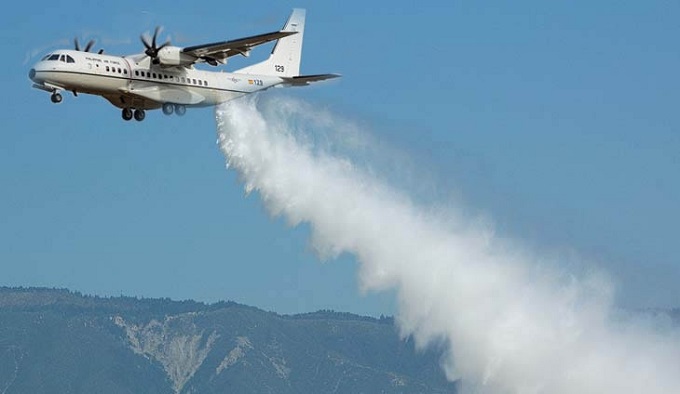
Obert Chifamba
Agri-Insight
ORDINARILY, rain formation or condensation processes are choreographed by nature but when the skies seem reluctant to do so, a little touch of human ingenuity might just be the missing spark needed to coax clouds into action.
And given that weather experts have since forecast a 2025/26 summer season starting dry in October and November with conditions expected to improve nationally from December going forward, this human intervention may come in handy.
Of course, this worrying outlook is heavily influenced by a developing weak La Nina and a negative Indian Ocean Dipole.
Suffice it to say therefore that the sight of aircraft, drones or ground-based generators, launching tiny particles into the atmosphere, much like seeding a garden must not come across as a source of surprise.
And as the tiny particles – most probably silver iodide or sodium chloride interact with the moisture-laden clouds, they act as nuclei around which water droplets can gather, coalesce and grow heavier until they can no longer resist the pull of gravity.
The process naturally gives birth to raindrops that will subsequently start cascading down to nourish parched lands, replenish rivers, and revitalise ecosystems, crops included.
This intriguing blend of science and artistry in which meteorological engineers have become modern-day alchemists who can coax nature into producing rain may be exactly what we need as a country for a season like the 2025/26 one in which the first half will be characterised by low levels of precipitation.
It is refreshing to observe that cabinet recently spoke unanimously on the need to deploy a drone alongside the regular aircraft that the country uses for cloud seeding so that the process gets underway in earnest to give impetus to the setting in of the rainy season.
It is not a secret that the vast expanse of the sky with its wispy clouds will just be waiting for the right brush strokes to transform it into a downpour.
This template of the country perennially lamenting being so near, yet so far from good yields and reclaiming its yesteryear bread basket of Africa status needs to be changed.
And this change must involve the human component interacting with the natural world and manipulating it for a good cause.
It is a fact that in this age where climate challenges loom large, cloud seeding is offering that glimpse of humanity’s ability to harness and collaborate with nature, transforming the whims of weather into a more predictable and beneficial phenomenon. It will be important for all the stakeholders involved in the successful roll out of the programme to effectively collaborate and make sure it flows flawlessly to bridge the period of barrenness that was forecast to stand between the first and last halves of the season.
One thing farmers must also do to demonstrate their appreciation of the clouds seeding efforts Government would have made is to harvest the water and not let it just run into the seas leaving no trace of its once-abundant past.
They should make water harvesting a culture so that in the event of a dry spell somewhere along the season, they will be able to turn to their reservoirs and irrigate crops or do ordinary watering for small acreages.
The current noises on the need to have dams and other forms of water reservoirs in all corners of the country must not die a natural death but should be turned into tangible things.
Meanwhile, that group of farmers fortunate enough to have access to irrigation facilities must make sure everything is in order and ensure they put the abundant heat units of the first half of the season to good use.
Crops do well when they have lavish access to heat units, something that is possible especially between the months of October and March.
Crops planted thereafter usually grow but will not have the same stamina with those grown during the October to March period that would have enjoyed unlimited access to heat units.
Government must also play its usual role of ensuring farmers get uninterrupted power supplies so that irrigation scheduling is not affected. In fact, it must pull out all stops to ensure the season does not have hiccups, ordinarily traceable to human sources.
On the one hand, distribution of inputs under various schemes in on-going and for those participating under the Pfumvudza/Intwasa programme, accessing the inputs is possible after agricultural extension officers inspect the plots and confirm the presence of the planting holes.
This is a sure way of checking on beneficiaries’ potential and commitment to doing the programme.
It may, however, be necessary for extension officers not to wait for the input-distribution process to start for them to begin checking on farmers to confirm their preparedness but to keep engaging them even after the conclusion of the preceding season.
The fact that conservation agriculture has in recent times proven to be one climate-proofed practice that has enabled farmers to salvage yields in difficult seasons, demonstrates why there should be strong emphasis on consolidating its adoption by most dryland farmers.
There is also this worrying trend in which service providers and input-suppliers alike, unilaterally raise prices for their services pushing them out of the reach of many.
This needs to be monitored if possible to ensure they charge realistic prices for their services and not frustrate production with atrocious charges like we have seen in some seasons.
Tillage service providers have in some cases made farming very difficult for most resource-constrained farmers who do not have draft power and need tractors, for instance. It is time Government avails more affordable tractors for leasing to farmers at affordable rates whether dry or wet.
Successful seasons are usually built on a strong foundation and this entails allowing farmers unrestricted access to both essential services and inputs.
It will not require a visitation from Mars for anyone to appreciate that farmers do not always restrict themselves to producing crops using only what the Government gives them under Pfumvudza/Intwasa but also do extra hectarages using their own inputs to broaden the revenue streams.
It is such farmers that are usually at the mercy of these profiteering service providers yet their produce remains critical towards keeping various value chains functional.
These farmers need policymakers to consider engaging industry and try to establish the dynamics behind these sudden price changes and how they can be reined in.
The current push is for agriculture to be effectively play its role as one of the important sectors on the economy that are expected to lay a strong foundation for the 2030 vision of an upper middle income economy.
In a way, the actions of service providers preying on defenceless farmers and making it difficult for them to play their part effectively are tantamount to acts of sabotage



 Online Reporter
 Bongani Ndlovu