

 admin
adminbig towns and cities across the country are playing and listening to hip hop and ragga music, wearing American or British jeans, eating fast food, drinking beer, dancing in discotheques and watching Hollywood films.
Nicknamed the “now kids”, they are throwing overboard age-old inhibitions and openly displaying rebellious attitudes towards traditionally-held social values.
‘’They want to look and act differently,” says Michael Watadza, a college teacher in central Harare.
“‘Even their parents have difficulty understanding them and their language.”
With these young people, being Western-minded is akin to being broad-minded and taking risks in life.
And when parents disapprove, these teenagers do not hesitate to speak out and even ask them to just ‘’leave us alone”.
To teens, old is jaded. Elders are derided as “old fashioned and rusty.”
“The generation gap was always there in Zimbabwean society,” says Munoda Chamunorwa, a 59-year-old executive, “but what is surfacing now is the widening “generation gap.”
Hailing from Zimbabwe’s growing urban class, this strong modern generation is the product of the colonial middle and upper class school system.
In the 1980s, these schools mushroomed in every town and city to cash in on the middle class craze for a better, English-language education for their children, then seen as key to enhanced job opportunities in life.
Even after 31 years of Zimbabwe’s independence today, Englsih is still the medium of instruction in all schools and professional colleges.
It is the principal language of big business and all legislators are expected to speak English.
The ability to speak English gives an elitist image to a person, the feel of being superior to those who don’t.
Today, the end products of English medium schools – have made it to the colleges and universities. It is they who are mostly embracing Western trends and culture.
Menard Chitando, a private college teacher in Harare, says, ”Being trendy and Westernised is the “in-thing” among college-going youth.
And “‘the weider, the better”– is the fashion password.”
Quickening the pace of Westernisation are the advertisements on television glorifying and glamouring Western lifestyles. Most commercial serials and advertisements on soft drinks and boots are aimed at teenagers.
Whatever inhibitions were left after the cultural music and dances, and township jazz music of the 1960s and 1970s, the new generation has shed them now.
Young men and women mingle in mixed groups and print and on-line media dating is becoming acceptable.
Take a peek into a typical teen scene: a “day party”, is in progress in a northern suburb of Bulawayo, the country’s second largest city.
Huddled together in a room are teenaged boys and girls listening to music with lyrics that would make their elders blush.
Jane (17) says nonchalantly that she has slept with her boyfriend countless times, even though, as she says, “I’m not sure he’s the right guy.”
She has no fear of sleeping with future boyfriends either and says she’s not hassled about not being a virgin, a prized thing in a traditional Zimbabwean bride.
‘Nor,” she says, “do I want my husband to be one.”
But, other teenagers do not want to risk confrontation with their parents.
This is understandable in a society with an abundance of “educated unemployed”.
Financial support from parents is a must for the survival of most teenagers.
Nevertheless, innocent affairs among teenagers, holding hands, kissing openly, whispering “sweet-nothings”, sitting lose in restaurants under dim lights – are familiar urban sights.
“‘Their Westernised look is deceptive,” says Abel Munjuza, a sociologist.
“Scratch a bit and you’ll find beneath a Zimbabwean mentality intact.”
There is no doubt, however, that today’s teenagers are a rebellious lot.
Take Dorcas Murota, a 16-year-old only child, for example.
Her mother wants her to wear loose-fitting trousers and a long shirt, but she refuses to oblige.
Instead, she wears high-waist skirts, clinging minis, skinny jeans, and dress tops. She polishes her nails, puts on artificial hairs – “weaves” and has four rings dangling from her ears.
Her parents fume and fret and yet let her have her way.
To cater to this culture generation, shops and joints with bizarre names are coming up in hundreds in big towns and cities. They are exclusive places where young people gather; shops which sell skinny and baggy jeans, T-shirts, Italian shoes and disco-wear; food restaurants selling hamburgers, pizzas, fish and chips; and discotheques.
For the design and fashion conscious rich teenagers, some shops can get them the latest fashion from the West in days – but always at a price. For those who can not afford that, the suppliers arrange Zimbabwean-made copies of these, at almost half the price.
Some people dismiss the Westernisation among teenagers as superficial. Dr Paradzai Bongo, a sociologist and development consultant based in Bulawayo, says wearing Western dresses or outlandish attire does not signify an inward change in young people.
“Beneath their clothes,” he says, ”they can’t get away from Zimbabwean values. It’s a passing phase which may last another decade or two.”
Others don’t agree.
Dr Vimbai Chivaura, of the University of Zimbabwe, is on record as saying the onslaught of satellite and cable television and other new media technologies is going to fuel the Westernisation of teenagers even more.
“They are a rootless generation,” Dr Chivaura has been quoted as saying several times in the local media. ‘’Neither do they have roots in Western values nor in the traditional Zimbabwean culture.”
There are as many theories about teenagers becoming Westernised as there are experts. “I’m certain of only one thing,” says Tatenda Marowa, a teenager.
“We are the most ‘named’ generation. We’ve been called ‘now generation’, ‘gyrating generation’, ‘salad generation’ and ‘lost generation’, to name a few.”
He looks up and adds: “Perhaps we’re all rolled into one: the ‘confused generation.”
[email protected]


Bongani Ndlovu
- Chronicle , Herald , SundayMail , SundayNews
- September 9, 2026
- 7 views
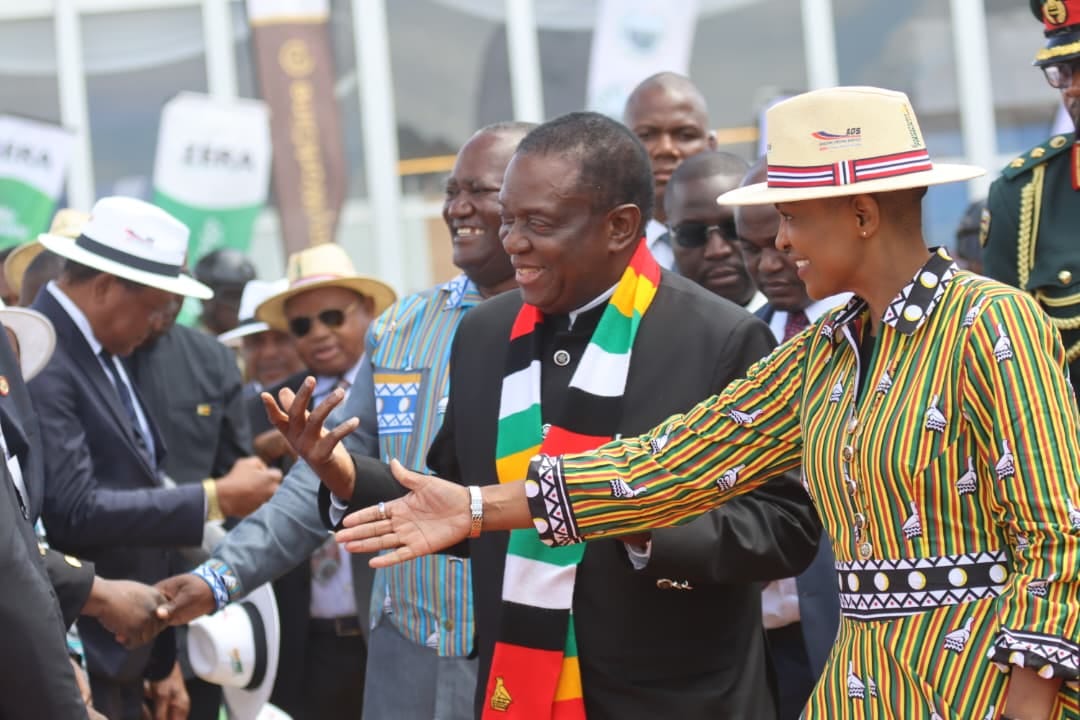
President Mnangagwa arrives at Sanganai Expo in Masvingo
Nqobile Bhebhe in Masvingo President Mnangagwa has arrived to officially open the 19th edition of the Sanganai/Hlanganani/Dzimbahwe World Tourism Expo in Masvingo. The high-profile showcase provides the country with a…
 Online Reporter