Online Reporter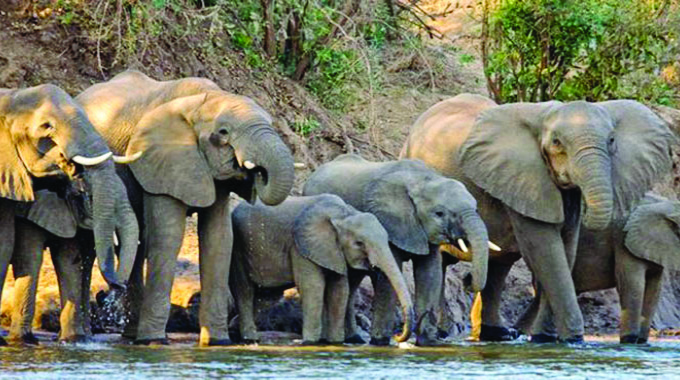
Anashe Mpamombe
Zimbabwe has once again demonstrated bold leadership in conservation, making a difficult but necessary decision to safeguard the integrity of its ecosystems.
The Zimbabwe Parks and Wildlife Management Authority (ZimParks) has authorised the removal of 50 elephants from Save Valley Conservancy, an action that has sparked debate but is rooted firmly in science, sustainability, and the long-term health of our environment.
With an elephant population exceeding 2 500, more than triple the conservancy’s estimated ecological carrying capacity of 800, Save Valley has reached a tipping point.
Left unmanaged, such overpopulation threatens to devastate fragile vegetation, dry up water sources, and ultimately harm the very wildlife Zimbabwe is celebrated for protecting.
ZimParks’ decision reflects not only an understanding of ecological balance but also a commitment to intergenerational environmental stewardship.
Contrary to emotive narratives that suggest the decision is motivated by profit or convenience, this is a scientifically informed and strategically planned exercise.
ZimParks spokesperson, Tinashe Farawo, confirmed that the authority has spent years attempting non-lethal measures to manage the herd, including translocating over 200 elephants to areas such as Hurungwe and Sapi.
The population continues to grow at an unsustainable rate. ZimParks remains committed to the responsible, sustainable management of wildlife resources for the benefit of present and future generations.
This action is not unprecedented. Wildlife managers across Africa face similar challenges. Botswana, South Africa, Namibia, and Zambia have all grappled with elephant overpopulation, and some have resorted to more drastic measures.
Zimbabwe’s approach, by contrast, is measured and humanely focused, not on eradication, but on restoring ecological balance. It is rooted in the principle that conservation must serve both wildlife and the people who live alongside it.
Elephants, for all their majesty, are not immune to the laws of ecology. A single adult elephant consumes up to 300kg of vegetation and drinks over 200 litres of water daily.
When their numbers spiral out of control in confined spaces, they deplete woodlands, destroy riverine systems, and crowd out other species, both flora and fauna.
The damage is not theoretical; it is visible on the ground in Save Valley, where entire tree species are being pushed toward local extinction and vital grazing land is being lost to overbrowsing.
ZimParks has been clear that the elephant management operation is being carried out under strict conservation protocols. The decision has undergone ecological assessment, and the permits issued are lawful.
This is not an ad hoc or emotional response; it is policy informed by years of research, satellite imagery, aerial surveys, and field experience.
Equally important is the fact that no part of the animal will go to waste. In line with Zimbabwe’s conservation ethics, the meat from the operation will be distributed to surrounding communities, bringing a direct benefit to local people who live with the risks of human-wildlife conflict daily.
Ivory and other by-products, meanwhile, will be surrendered to the State and secured by ZimParks. This responsible and transparent approach exemplifies how conservation and community development can go hand-in-hand.
Too often, conservation debates are dominated by foreign voices that do not understand the realities on the ground.
Well-meaning international critics may balk at the idea of elephant management, but they rarely offer viable alternatives.
Those who live in proximity to these majestic giants, however, know that coexistence requires hard decisions. Villagers cannot wait for donor sympathy or academic debate while their crops are trampled and their boreholes run dry.
Zimbabwe must not apologise for putting the health of its ecosystems and the welfare of its people first. We are a sovereign nation with a proud track record in wildlife management.
We pioneered community-based conservation through initiatives like the Communal Areas Management Programme for Indigenous Resources (CAMPFIRE). Our translocation of rhinos and elephants has been emulated across the continent. We have refused to bow to foreign pressure against ivory trade, arguing instead for a regulated, ethical market that benefits conservation directly. In this context, the Save Valley elephant management operation is part of a continuum of rational, science-based conservation.
It is also worth noting that Save Valley Conservancy is a model of public-private partnership. It brings together landowners, ecologists, state officials, and communities in a shared commitment to conservation.
Decisions made in this context are not taken lightly. They are the result of co-ordination and consensus, not coercion. The conservancy’s land managers have raised the alarm for years.
They have watched waterholes dry, observed elephant corridors degrade into deserts, and seen wildlife migration patterns disrupted. When they call for intervention, they are not acting out of panic — they are responding to years of accumulated evidence.
Furthermore, this decision highlights a crucial but often overlooked truth: conservation is not just about protecting animals; it is about protecting balance as well.
A healthy ecosystem is one where species do not outcompete each other to the point of collapse. It is one where plant life, insect life, predators, prey, and human activity can coexist. When any one species, however beloved, threatens that equilibrium, responsible action must be taken. Letting nature take its course, in this instance, would not be an act of kindness; it would be ecological negligence.
It is also encouraging to see that the benefits of this management operation are being shared equitably. The meat will feed rural households. Jobs are being created through the logistics and security required for such an operation.
Communities are being brought into the process, and their consent and welfare are being prioritised. This is conservation with a human face — a model that the rest of the world would do well to emulate.
The decision also speaks to a broader philosophy of conservation that Zimbabwe must continue to champion: the idea that African problems require African solutions.
We do not need to import ideologies or policies from Western institutions to know what works for our landscapes. What we need is support for science-led, community-driven management approaches backed by strong institutions like ZimParks, which have the expertise and mandate to act decisively.
As climate change accelerates and populations grow, these kinds of decisions will become even more urgent. Water scarcity, land degradation, and food insecurity will all worsen if we do not act now to protect the resilience of our ecosystems.
The time for philosophical debates is over. The time for action guided by science, implemented with care, and justified by ecological necessity is now.
Zimbabweans should feel proud that our conservation authorities are making courageous decisions in defence of our natural heritage. These are not easy choices, but they are necessary ones.
ZimParks has shown that it is willing to put the long-term health of our ecosystems above short-term popularity. In doing so, it has reaffirmed Zimbabwe’s place as a leader in African conservation.
Rather than condemning this decision, we should support it. We should amplify the voices of our ecologists, our park rangers, and our rural communities, who understand the stakes better than anyone else.
We should invest in expanding protected areas, in rewilding landscapes, in creating more corridors and conservancies that can support larger herds over wider areas. And, we must never allow emotional sensationalism to cloud sound conservation judgment.
The story of Save Valley Conservancy is not one of tragedy but of responsibility. It is a story of a nation that is willing to make hard decisions to ensure that its grandchildren will one day walk through miombo woodlands and see elephants, not as relics of a vanished past, but as thriving icons of a well-managed present.