admin
admin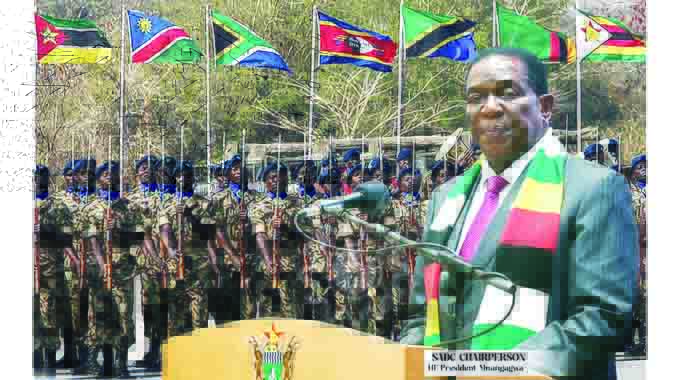
Ranga Mataire
Zimpapers Politics Hub
The Southern African Development Community (SADC) met yesterday in Harare for the Extraordinary Heads of State and Government Summit, which started on Sunday to primarily address the security situation in the Republic of Congo (DRC) and review the SADC Mission in the DRC (SAMIDRC).
The summit ends today.
The reason why the DRC issue is of greater importance to SADC is because its mission’s mandate in that country is ending this December.
The regional body’s SAMIDRC was deployed on December 15, 2023 to support the government of the DRC to restore peace and stability caused by the resurgence of armed groups.
The deployment of the SAMIDRC was approved by the extraordinary SADC Summit of Heads of State and Government held in Windhoek, Namibia on May 8, 2023 as a regional response to address the unstable and deteriorating security situation prevailing in the Eastern DRC.
As part of the SAMIDRC, a regional force from Malawi, South Africa and Tanzania together with some elements of the DRC armed forces have been working with the Congolese Army, the Forces Armees de la Republic Democratique du Congo (FARDC), in fighting armed groups operating in the Eastern DRC.
SADC’s commitment to peace
The presence of the SAMIDRC demonstrates the commitment of SADC Member States to supporting the DRC in its efforts to achieve lasting peace and stability and, ultimately, create an enabling environment for sustainable development and prosperity.
The deployment of the SAMIDRC is in accordance with the principle of collective self-defence and collective action outlined in the SADC Mutual Defence Pact (2003).
The pact emphasises that; “Any armed attack perpetrated against one of the States Parties shall be considered a threat to regional peace and security and shall be met with immediate collective action.”
So the Extraordinary Summit in Harare was prompted by the need to assess the security situation in the eastern part of the DRC, where instability and conflict have been ongoing concerns.
By evaluating SAMIDRC’s progress and challenges, SADC leaders can identify effective strategies to promote peace and stability in the region.
Humanitarian situation
The humanitarian situation obtaining in DRC’s region is a cause of concern to regional leaders.
The DRC is one of the world’s largest internal displacement crises, with an estimated 7 million people displaced. This year experienced unprecedented levels of displacement due to a surge in violent conflict.
The escalation of conflict has impacted people’s access to health care, food, and other basic needs, triggering mass waves of displacement and raising the risk of disease outbreaks. Last year, the DRC had its biggest cholera outbreak in six years.
The conflict in the DRC is mainly centred in the east of the country, where more than 100 armed groups are vying for territory and control. The fighting has intensified, causing mass casualties and displace.
Violence has escalated and its characterised by the deliberate targeting of civilians, displacement camps, hospitals and schools.
Children are killed, maimed, abducted, and recruited into armed groups.
The Luanda Process
Besides sending a stabilisation force, SADC has played a critical diplomatic role in trying to bring the contending parties to the negotiation table. The latest such efforts resulted in the Luanda Process that was established as part of the 2022 Luanda Roadmap, aimed at defusing tensions between Rwanda and the DRC.
While cessation of hostilities thawed for some time in 2022, the situation changed in October 2023 when fighting between M23 and the Armed Forces of the DRC (FARDC) escalated.
The peace process was relaunched in early this year under Angolan President Joao Lourenco’s mediation, and on July 30, a permanent ceasefire was agreed between the two countries- Rwanda and DRC.
Rwanda’s concerns are that remnants of the Hutu militias involved in the 1994 genocide fled to eastern DRC (FDLR) and still harbour inclinations to come back to Rwanda.
There have been several rounds of negotiations between Rwanda and DRC foreign ministers including their intelligence service heads in Rubavu, Rwanda, on August 29 and 30 did not yield much progress.
The Rubavu agreement revolves around three main points: neutralising the FDLR and possibly involving Rwanda’s forces in the military operation against FDLR.
The Angolan mediators are still working on a detailed operational plan to resolve the DRC and Rwandan governments’ concerns. The successful implementation of the Rubavu agreement will depend on resolving several major political and security challenges.
Renewing the mandate
If SADC leaders decide to renew and extend the mandate of their SAMIDRC, analysts believe it may need to be reconfigured and bolstered by armed forces from other countries in the region.
It could have a new mandate centred on neutralising FDLR and the cantonment of M23.
What remains a sticking point is the funding aspect, which the SADC Executive Secretary Dr Elias Magosi said member states needed to contribute resources towards the successful implementation of the SAMIDRC’s mandate.
But the SAMIDRC is not the only mission/group in the DRC.
There is also MONUSCO, the United Nations Organisation Stabilisation Mission in the Democratic Republic of Congo, an acronym based on its French name.
Both the UN’s MONUSCO and SADC’s SAMIDRC’s mandates are ending in December.
MONUSCO’s mandate is expected to end on December 15, while that of SAMIDRC is expected to end on December 20 this year.
With the current escalation of the conflict in the DRC, withdrawal of the two missions does not appear feasible.



 Online Reporter