Online Reporter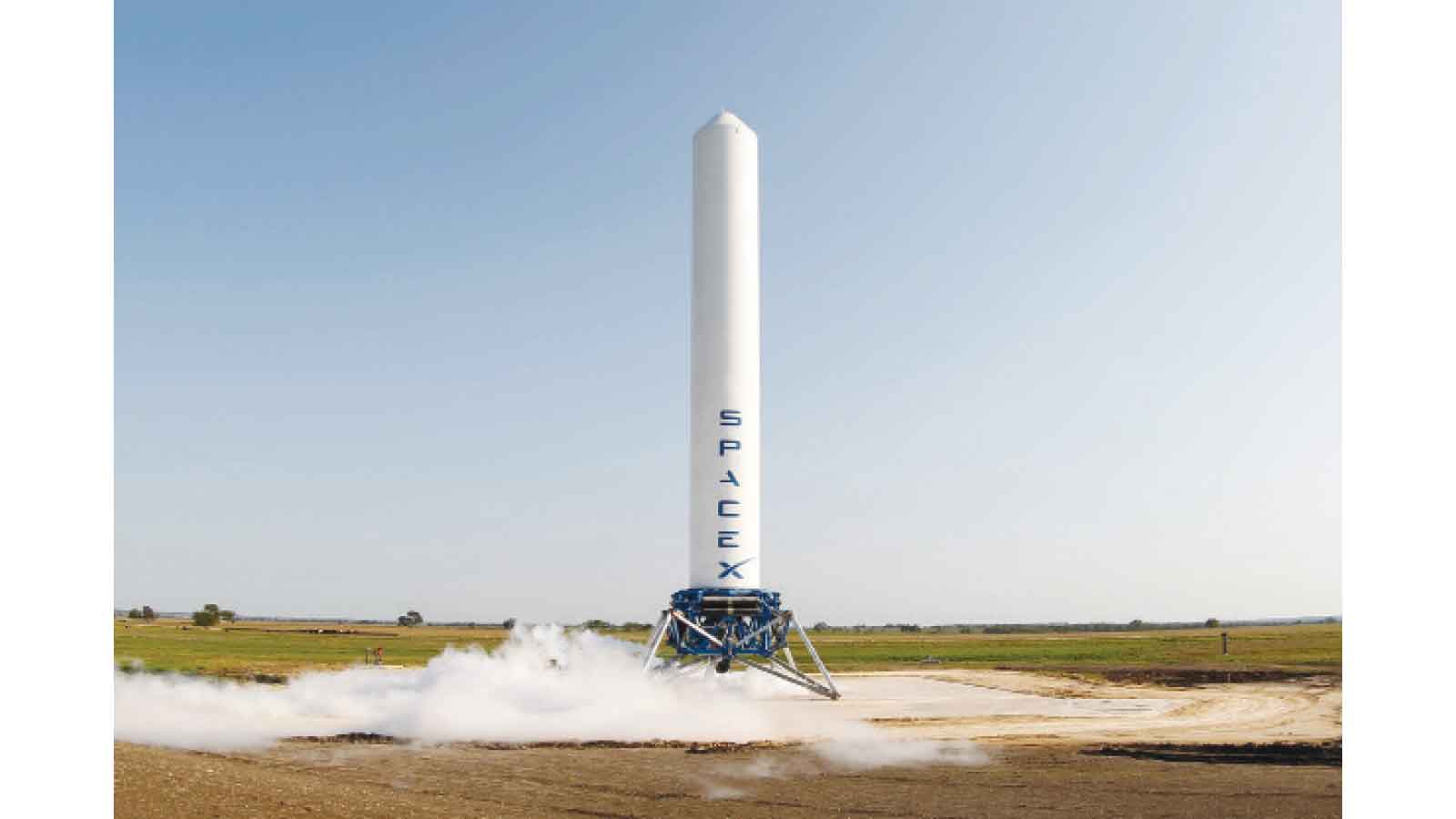
Arthur Marara-Point Blank
The archerfish has perfected its shot. It has mastered refraction, calibrated its force, and executed the C-start with precision. But then the wind comes.
A sudden gust ruffles the surface of the water. Air currents shift the trajectory of its jet. The insect, once an easy target, now dances unpredictably.
The fish’s first shot misses. Its second shot misses again. Any other creature might abandon the hunt, frustrated by forces beyond its control. But the archerfish does not give up, nor does it simply try harder. It adapts.
Over a series of trials, the archerfish demonstrates what scientists call motor adaptation. It does not repeat the same failed action with greater intensity. Instead, it measures the error, recalculates the variables, and adjusts its aim.
It learns to account for the wind, the turbulence, the new perturbation. Shot by shot, its accuracy returns to its original high level. The archerfish does not just try harder; it tries differently. This is the essence of resilience: not stubborn persistence, but intelligent adaptation.
For leaders, the lesson is vital. A strategy that worked yesterday may fail today due to a change in the “wind.”
Markets shift, competitors emerge, technologies disrupt, and unforeseen turbulence upends the best-laid plans. In such moments, resilience is not about doubling down on a failing approach out of pride or conviction. It is about treating the miss as data, learning from the perturbation, and adapting until the new variable becomes a predictable part of your strategy.
The Trap of Stubborn Persistence
There is a fine line between perseverance and stubbornness. Perseverance is the commitment to a goal despite obstacles. Stubbornness is the refusal to change the method even when evidence proves it is failing. Too often, organisations fall into the trap of stubborn persistence.
A product launch fails to gain traction, so they double down on the same marketing spend. A new process creates friction, so they mandate it more forcefully. A strategy begins to falter, so they push harder, hoping that sheer effort will overcome the flaw.
The archerfish reveals the flaw in this approach. If the fish simply shot harder when the wind interfered, it would miss by an even greater margin. The problem is not insufficient force; it is a misalignment with the new reality. Trying harder without adapting is not resilience; it is waste. True resilience requires the humility to acknowledge that the environment has changed and the discipline to adjust your aim accordingly.
Building Rapid Feedback Loops
The archerfish’s adaptation depends on a critical mechanism: rapid feedback. After each shot, the fish processes the outcome—the angle of miss, the effect of the wind, the distance from the target—and uses that information to recalibrate the next shot. It does not wait for a quarterly review or a post-mortem report. It adapts in real time.
Organisations that master resilience build similar feedback loops. They create systems that capture data quickly, surface errors honestly, and enable rapid iteration. When a product launch fails, they do not hide the results or blame external factors. They ask: What was the “wind” we failed to account for? Was it a competitor’s unexpected move? A shift in customer preferences? A flaw in our assumptions? They measure the error, adjust their aim, and launch again.
This requires a culture that treats failure not as a shameful event to be concealed, but as a valuable data point to be analysed. When leaders punish failure, they incentivise concealment. When they celebrate learning—even from failed attempts—they create the psychological safety necessary for rapid adaptation. The archerfish does not judge itself for missing the first shot; it simply uses the miss to make the next shot better. Organisations must do the same.
SpaceX: Adapting to the Wind of Failure
No modern organisation embodies this principle more vividly than SpaceX. When Elon Musk founded the company in 2002, the aerospace industry was dominated by a “get-it-perfect-the-first-time” model. Traditional players like Boeing and Lockheed Martin operated on massive government contracts, with years of planning, exhaustive testing, and a culture that treated failure as unacceptable. Rockets were designed to be flawless because they were built to be expendable.
SpaceX rejected this model. From the beginning, Musk embraced a philosophy of rapid iteration. The goal was not to avoid failure, but to fail fast, learn, and adapt. In the early days, the Falcon 1 rocket launched three times. Three times, it failed. The first failure was a fuel leak. The second was a sloshing issue that caused the engine to cut off early. The third, after reaching space, failed on separation. Each failure was not a disaster to be hidden; it was a perturbation—a piece of data. Each miss taught the engineers something they could not have learned in a simulation.
Instead of retreating to a slower, more secretive approach, SpaceX leaned into adaptation. They built rapid feedback loops. After each failure, they measured the error, corrected their aim, and launched again. The fourth launch of Falcon 1 succeeded, making SpaceX the first private company to send a liquid-fuelled rocket into orbit. They applied the same adaptive approach to the Falcon 9, the Dragon capsule, and eventually the Starship.
The results are now legendary. SpaceX achieved what traditional aerospace companies deemed impossible: reusable rockets that land themselves, dramatically reducing the cost of space access. They became the dominant player in global launch services, won contracts that once belonged exclusively to government-backed giants, and began launching private astronaut missions. They adapted to the “wind” of failure and turned it into the wind at their back.
Intelligent Adaptation as Competitive Advantage
The archerfish teaches us that resilience is not about never missing; it is about correcting faster than your competitors. In a world of constant change, the ability to adapt is a competitive advantage. Organisations that treat every setback as a data point, that build rapid feedback loops, and that have the humility to change course when the wind shifts will outlast those that cling stubbornly to what once worked.
SpaceX succeeded not because they avoided failure, but because they institutionalized adaptation. They understood that in a complex, uncertain environment, the first shot rarely hits the target. The victory goes not to the one who never misses, but to the one who learns fastest.
As a leader, ask yourself: When the wind shifts, do you double down or adapt? Do you hide your misses or analyse them? Do you punish failure or learn from it? The archerfish reminds us that the only real failure is the failure to adapt.
Arthur Marara is a corporate law attorney, keynote speaker, peak performance, and corporate strategy speaker. With his delightful humour, raw energy, and wealth of life experiences, he captivates audiences and inspires them to unlock their full potential. Through his engaging talks and workshops, he imparts invaluable insights and practical strategies that empower individuals to lead with confidence and make a lasting impact. Arthur is the author of “Toys for Adults,” a thought-provoking book on entrepreneurship, and “No One is Coming,” a book that seeks to equip leaders to take charge. Send your feedback to bookings@arthurmararaattorneys.
com, visit his website www.arthurmarara.
com, or contact him at +263772467255.