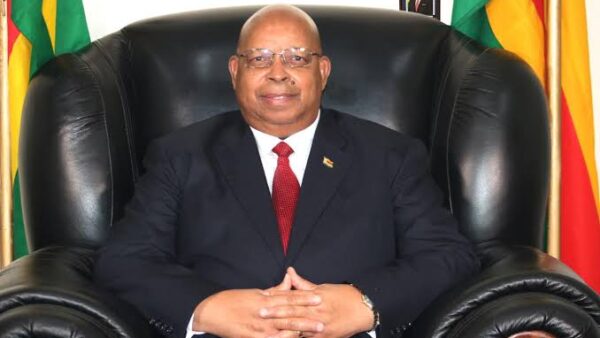

Lovemore Chikova
Development Dialogue
Zimbabwe’s admission into the New Development Bank (NDB), widely known as the BRICS Bank, marks one of the most significant economic and diplomatic milestones in the country’s post-independence history.
Beyond simply joining another international financial institution, the development opens a new pathway for long-term infrastructure financing, industrialisation and sustainable economic transformation at a time when the country is pursuing Vision 2030.
The vision envisages Zimbabwe becoming an upper-middle income economy by 2030.
For more than two decades, Zimbabwe has operated under severe financing constraints after access to concessional funding from traditional Bretton Woods institutions, principally the International Monetary Fund (IMF) and the World Bank, became extremely limited.
Although the official reasons have centred on arrears, governance concerns and lending policies, Zimbabwe has consistently argued that the country’s isolation has also reflected political considerations and the impact of Western sanctions, which have complicated efforts to normalise relations with international financial institutions.
Against this background, membership of the BRICS Bank represents far more than access to new credit lines.
It signals Zimbabwe’s integration into an emerging global financial architecture that seeks to provide developing countries with alternative sources of development finance based on greater equality, mutual respect and national ownership of development priorities.
A breakthrough for Zimbabwe
Announcing Zimbabwe’s admission during the Zimbabwe Industrialisation Conference and Expo 2026 last week, Finance, Economic Development and Investment Promotion Minister, Professor Mthuli Ncube, described the development as a major achievement.
“Yesterday we were admitted… we are now a member of the BRICS Bank. So, you can now access capital from the BRICS Bank. We will make a formal announcement properly later,” he said.
His announcement immediately positioned Zimbabwe among a growing list of developing nations seeking alternative development financing outside the traditional Western-dominated financial system.
Professor Ncube said the new membership would significantly expand financing options for industrial development.
“These credit facilities are going to grow, and they are also a source of financing for industry,” he said.
The timing could not be more appropriate.
Zimbabwe is aggressively pursuing industrialisation through value addition, infrastructure rehabilitation, energy expansion, mining beneficiation, agricultural modernisation and manufacturing revival.
All these sectors require billions of dollars in long-term financing that commercial banks are generally unable or unwilling to provide because of the lengthy repayment periods involved.
Zimbabwe’s National Development Strategy and Vision 2030 both place industrialisation at the centre of economic transformation.
Achieving these ambitions requires substantial investment in areas such as energy generation and transmission, road and railway rehabilitation, water infrastructure and manufacturing.
The other areas that need investment are mining value addition and beneficiation, digital infrastructure, agriculture and irrigation, pharmaceutical production and Special Economic Zones.
Membership of the BRICS Bank significantly improves Zimbabwe’s ability to mobilise financing towards these priority sectors.
Professor Ncube highlighted that the Government is already implementing complementary financing initiatives through the Industrial Development Fund, the National Venture Fund and the Reserve Bank of Zimbabwe concessionary facilities.
The BRICS Bank now provides an additional layer of financing capable of supporting larger strategic investments.
Supporting private sector growth
One of the major advantages of the BRICS Bank membership is that the benefits extend beyond Government.
Improved access to development finance can stimulate lending across the banking sector, allowing industries, manufacturers and entrepreneurs to access more affordable capital.
This aligns with Government efforts to deepen capital markets through the Zimbabwe Stock Exchange, the Victoria Falls Stock Exchange and the planned Small and Medium Enterprises Stock Exchange in Bulawayo.
Greater investment in productive industries should ultimately translate into increased employment, higher exports, improved competitiveness and broader economic growth.
Zimbabwe’s membership of the BRICS Bank comes at a time when the global financial system is undergoing profound change.
Developing countries are increasingly seeking alternatives to traditional Western-dominated financial institutions that have historically controlled much of the world’s development finance.
For Zimbabwe, joining the bank is not simply about obtaining loans.
It is about gaining access to an institution whose development philosophy is closely aligned with the priorities of emerging economies.
The bank was established to finance infrastructure and sustainable development without imposing rigid economic policy prescriptions that many developing countries have long argued have constrained growth rather than accelerated it.
BRICS Bank has already financed hundreds of infrastructure projects across its member countries covering renewable energy, transport networks, water supply systems, ports, digital infrastructure, urban development and climate resilience.
These are precisely the sectors Zimbabwe requires substantial investment in if it is to realise Vision 2030.
Zimbabwe’s development agenda identifies infrastructure as the backbone of industrialisation.
BRICS Bank could play an instrumental role in supporting the ongoing infrastructure drive cited above, which include dam construction, power generation and transmission projects, railway rehabilitation, modernisation of border posts, expansion of digital connectivity, urban renewal programmes, industrial parks, mining beneficiation and climate-resilient agriculture.
Modern roads lower transport costs for farmers and manufacturers. Efficient railways improve exports. Reliable electricity attracts investment.
Expanded irrigation strengthens food security, while modern hospitals and water infrastructure improve public health and productivity.
Every dollar invested in quality infrastructure creates multiplier effects throughout the economy by stimulating production, employment and private sector investment.
Instead of exporting raw minerals and agricultural commodities, Zimbabwe could invest more aggressively in value addition industries that generate higher export earnings, create skilled employment and retain more wealth within the domestic economy.
Another significant opportunity lies in regional integration.
Zimbabwe occupies a strategic geographical position linking Southern Africa with central and east Africa.
Investment in transport corridors, logistics hubs and border infrastructure financed through BRICS Bank could transform the country into a regional trade and investment gateway under the African Continental Free Trade Area (AfCFTA).
The BRICS Bank also places considerable emphasis on sustainable development.
Financing for renewable energy, climate adaptation, green industries and environmental resilience aligns with Zimbabwe’s own transition towards cleaner sources of energy and climate-smart agriculture.
Long-standing concerns over global financial system
The establishment of BRICS Bank reflects broader dissatisfaction among developing countries with the structure of the post-Second World War international financial architecture.
For decades, governments across Africa, Asia and Latin America have argued that institutions such as the IMF and the World Bank have not adequately reflected the interests of developing nations despite them accounting for the majority of the world’s population.
One of the principal criticisms concerns governance.
Voting power within both the IMF and the World Bank is largely determined by members’ financial contributions, giving advanced economies, particularly the United States and Western European countries, significant influence over major decisions.
As a result, many emerging economies have argued that these institutions no longer reflect the realities of a multipolar global economy.
Another criticism relates to lending conditions.
IMF-supported programmes have frequently required governments facing financial crises to implement fiscal austerity measures, reduce public spending, liberalise markets and undertake structural reforms as conditions for financial assistance.
While the IMF argues that such measures are necessary to restore macroeconomic stability, critics contend that, in most cases, these programmes have reduced governments’ ability to invest in healthcare, education, infrastructure and industrial development during periods when such investments were most needed.
These criticisms have contributed to growing support for alternative development finance institutions such as the BRICS Bank and the Asian Infrastructure Investment Bank, which seek to expand financing options for emerging economies.
Strengthening South-South cooperation
Zimbabwe’s admission also reinforces its “Friends to All and Enemy to None” foreign policy by strengthening cooperation with major emerging economies.
BRICS countries account for a substantial share of global economic output, population and trade.
Membership of their development bank creates opportunities not only for financing, but also for technology transfer, industrial partnerships, skills development and investment promotion.
Zimbabwe’s admission into the BRICS Bank thus represents more than a financial achievement.
It reflects the country’s growing integration into an evolving international economic order where developing nations are creating institutions designed to address their own development priorities.
A different philosophy of development
The significance of the BRICS Bank extends beyond the money it lends.
Since its establishment, the institution has sought to demonstrate that development financing can be conducted differently.
Speaking at various international forums, BRICS Bank president, Ms Dilma Rousseff, has consistently emphasised that the institution was created to respond to the aspirations of developing countries.
She has described the bank as “a bank by the Global South for the Global South”, stressing that its objective is to support member countries’ own development priorities rather than prescribe uniform policy solutions.
Ms Rousseff has emphasised that the bank respects national sovereignty and seeks to provide financing without imposing the extensive policy conditionalities that have historically accompanied some international lending programmes.
This philosophy has resonated strongly with many developing countries that have argued for reforms in global financial governance.
The BRICS Bank seeks to complement, rather than replace, existing institutions while giving emerging economies greater influence in determining development priorities.
Lovemore Chikova is the Deputy Editor of The Sunday Mail with qualifications in media studies, strategic communication and development studies