

 admin
admin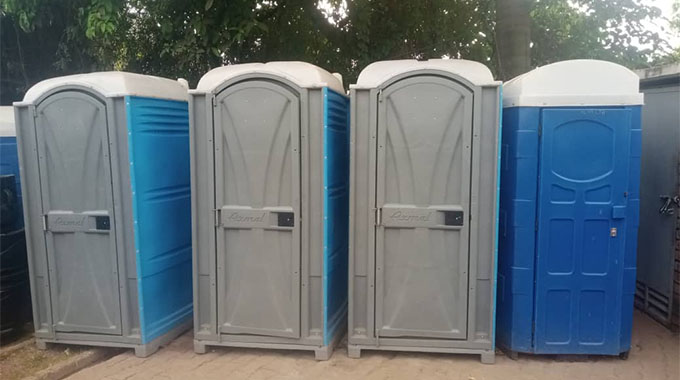
Blessings Chidakwa, Herald Reporter
The lack or shortage of sanitation at some large public gatherings has seen the Government calling for the widespread use of mobile toilets.
However, while some residents welcome the move, others argue that it is a band-aid solution to a much deeper problem, the collapse of public ablution facilities, particularly in Harare.
In a letter to Permanent Secretary for Local Government and Public Works Dr John Basera, Health and Child Care Permanent Secretary Dr Aspect Maunganidze stressed the urgent need for mobile sanitation facilities.
“The use of mobile toilets should be adopted as an alternative to the provision of sanitation and hygiene at all strategic places, including meetings, funerals, church gatherings, and public events,” he said.
Dr Maunganidze acknowledged that mobile toilets alone would not solve the sanitation crisis, but emphasised their importance in preventing disease outbreaks.
“While we continue improving infrastructure, mobile toilets provide an immediate solution to sanitation challenges at large gatherings. Their use must be closely monitored to ensure compliance with hygiene standards,” he said.
Some residents and event organisers have praised the move, saying mobile toilets have already made a difference at large public gatherings.
Event organiser Mrs Tarisai Nyengu, who recently hosted a church conference in Kuwadzana, said mobile toilets helped ease pressure on limited ablution facilities.
“We had over 600 congregants, and without mobile toilets, the situation would have been unbearable. They helped maintain hygiene and prevented people from using open spaces,” she said.
A Mbare vendor Mr Kennias Maudze also welcomed the initiative, saying it should be extended to all crowded marketplaces countrywide.
“At Mupedzanhamo, we sometimes go for days without functioning toilets, forcing us to relieve ourselves in nearby alleys. Mobile toilets are a game-changer which should be encouraged,” he said.
Zimbabwe Mobile Sanitation Association president Mr Boston Muteya also hailed the Government’s stance, calling it a proactive step in disease prevention.
“This move shows that authorities are serious about eliminating future outbreaks of cholera and other water-borne diseases. We urge mobile toilet operators to join forces with the Government in promoting sanitation,” he said.
Mr Muteya said locally they are pushing for the manufacturing of mobile toilets while joining the entire world in upgrading the sanitary sector.
“We also want to encourage new players who want to join to improve the area of sanitation while also creating employment,” he said.
However, for many urban dwellers, particularly in Harare’s high-density suburbs, the introduction of mobile toilets feels like a temporary solution to a failing public sanitation system.
A Mufakose resident Ms Agnes Dzova said ablution facilities were a nightmare in the city and the local authority should focus on revamping dilapidated public toilets instead.
“Most public toilets in Harare are either permanently locked, have no running water, or are filthy beyond use. Mobile toilets are fine for events, but what about daily life? We need sustainable, permanent solutions,” she said.
A Budiriro resident, Mr Oscar Mazarura, whose area has been a cholera hotspot, echoed similar concerns.
“During the last cholera outbreak, we relied on unsafe water sources because most of our toilets were blocked. Mobile toilets won’t fix that. The relevant authorities must address the root cause which is our broken sewage system,” he said.
A public health expert who preferred anonymity said mobile toilets should not be seen as a substitute for proper sanitation infrastructure.
“They are useful in emergencies and large gatherings, but cities need to invest in long-term solutions like modern sewer systems and public toilets with reliable water supply,” he said.
In Harare City Centre shortages of ablution facilities have been a major concern with many now being pay toilets. At the private Ximex parking area, dealers, mostly illegal money changers who conduct their business on the street corners, said they used alleys, pavement, and post office walls to relieve themselves.
“We are here in town to make money, not to spend money. I cannot pay US$0,50 every time I want to visit the toilet. For me that is a lot of money. So the city council should fulfil its duties by providing free toilets. To save my money, I use those pavements and buildings as toilets,” one said on condition of anonymity.
Another female dealer who also requested to remain anonymous, said it was difficult for women to relieve themselves in the open so they ended up using the only pay toilet at Africa Unity Square.
“However, even when we pay, there is a long queue which means you have to wait a long time to access the toilet. Sometimes the council closes the toilets because there is no running water so this becomes a problem for us,” she said.



 Online Reporter