

 admin
admin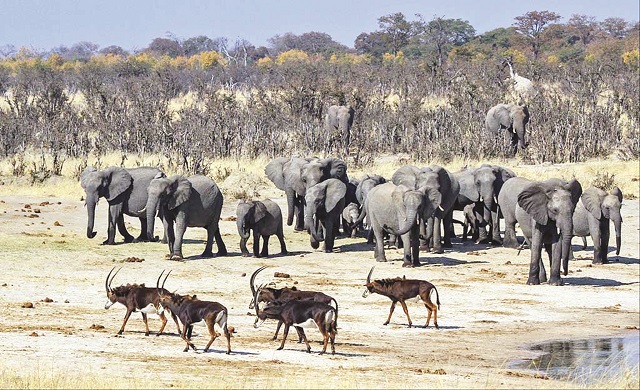

Emmanuel Koro
African rural communities have joined calls for the replacement of the outgoing Secretary-General of the United Nations Convention on International Trade in Endangered Species of Fauna and Flora (Cites) with a qualified African candidate.
Amid passionate appeals to have an African head, the Geneva-based Cites Secretariat for the first time since its establishment in 1975, issues of Cites racist and colonial wildlife management attitudes have begun to surface.
“I’m not a racist to support the need for the appointment of an African Secretary-General,” said Chief Mvuthu.
“I do so in view of the Cites 43-year failure to listen to African people’s wildlife conservation needs. Cites failed to consider the option for sustainable use of wildlife through legal trade in, for example, ivory and rhino horn. Instead, Cites opted for ivory trade and rhino horn trade bans and lately senselessly shutting down ivory markets worldwide. This approach has not and will never solve African’s wildlife management problems such as poaching. Therefore, I support the call to replace the outgoing Cites Secretary-General by a qualified African. We want a Cites-Secretary General who can seriously consider sustainable use of wildlife products as a solution to Africa’s wildlife conservation problems.”
There are growing concerns and fears that without an African head of Cites, there will be a continuation of what some have described as “racist and colonial wildlife management approaches that do not benefit elephant and rhino conservation in Africa.”
“The Cites Secretariat has been led from its outset by white men from rich countries, some of whom acted like the famous European colonialists of the 19th century,” said the managing director of the United States of America-based Ivory Education Institute (IEI) Mr Godfrey Harris.
Mr Harris said Cites continues to be influenced by Western elites who attempt to fool the world that trade bans in such wildlife products as ivory and rhino horns would help save elephants and rhinos from destruction. Sadly, Cites does not admit that such trade bans promote, instead of stopping, poaching. To hide its failure, “Cites tells the media that it did not fail, just lacked the right mix and amount of resources (cash) to succeed. Fortunately, we are at the stage when no one is going to be fooled by Cites anymore.
“The animal rights NGOs, in consent with major Western countries, see all wild animals of Africa in danger and their habitats being destroyed. On the other hand, the African people yearn for a way to improve their dire economic condition through sustainable use of their wildlife. An African Secretary General of Cites will see this problem, feel the frustration and be motivated to solve it with new and different ideas,” said Mr Harris.
The world’s largest rhino breeder, South Africa-based Mr John Hume has thrown his support behind the worldwide calls for a qualified African Cites Secretary General.
Mr Hume’s 1 540 white rhinos are more than the entire rhino population of Kenya and that of Uganda.
“I certainly think that this is essential (appointment of a qualified African Cites Secretary General) for African wildlife as well as possibly for the future of Cites because as we know there are quite a few African countries that are unhappy with Cites and I don’t think that the purpose of Cites would be furthered by the revolt of certain African countries.”
The Southern African elephant populations particularly those in Botswana, Namibia, Zimbabwe and South Africa have grown to unprecedented levels, threatening to collapse both their ecosystem and die en masse. Southern African countries have more than enough elephants for the available habitat.
Therefore, the ongoing Cites animal rights-sponsored ban on ivory trade is as unjustified as it is unscientific. It is insensitive to the needs of poor African countries and their rural communities.
Meanwhile, human-wildlife conflict has impacted negatively on Southern African communities’ socio-economic wellbeing. Without benefits from the elephant, poor African rural communities regard it as a nuisance and are forced to collaborate with poachers to kill it for meat and small bonuses that they get for working with poachers.
“Any ban has simply created a monopoly for criminals and it is important that we reverse this effect and let communities and honest people gain from our wildlife,” said Mr Hume who has over 6 000 stockpiled rhino horns that he cannot trade because of the ongoing Cites rhino horn trade ban. “Natural mortalities in elephants across Africa alone could supply a substantial income for rural Africa if they were allowed to trade in ivory legally and it would certainly not affect poaching adversely as at the moment we have handed the poachers a monopoly in the trade of ivory. Similarly with rhino, the horn from natural mortalities as well as private rhino owners regularly trimming their rhinos’ horns (which is at any rate essential to protect them against poachers) could supply a sustainable income and hopefully in the future spread rhino ownership and income to our rural communities in Africa.”
Ecologist, Mr Xolelani Ncube, said that an African Cites Secretary-General is needed in order “to understand all the dynamics and act in a manner that benefits communities in Africa in a sustainable manner.”
Mr Ncube said, “Anything for us (Africans) without us is not for us. We truly believe and know that the world is now a Global village but management and conservation of a natural resource base starts with those who are in touch or in the interface with the said resource.”
Despite Cites’s need to find a quick replacement for the outgoing Australian-born Scanlon, the Cites Secretariat has yet to advertise on the Cites Secretariat website as of February 25. A former employee of UNEP who spoke on condition of anonymity alleged that judging by what happened in the past, the Cites Secretary-General job advert would be just a formality to sanitise the appointment process.
“By the time they post the advert on the Cites Secretariat website, UNEP, that is responsible for the appointment, would have already shortlisted its three preferred candidates,” said the source, dampening the public expectations that the hiring process would be fair.
Mr Hume thinks that if Cites does not for the first time ever after 43 years since its establishment, heed the call to appoint an African Cites Secretary-General “it would exacerbate the unhappiness of certain African countries in their dealings with Cites. “
-Emmanuel Koro is an international award-winning environmental journalist who has written extensively on environment and development issues in Africa.



 derick.khumalo
 Online Reporter