Online Reporter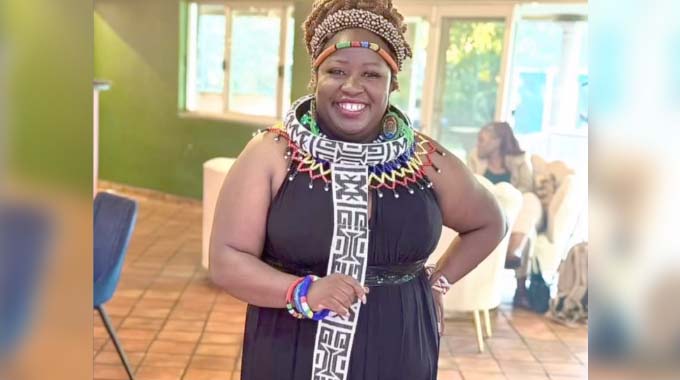
Bruce Ndlovu, Sunday Life Reporter
THE type of footwear required for a Master of Ceremonies (MC) at an event can determine whether a woman can be hired or not.
At least, that is the story according to broadcaster Farie Jules, born Farai Juliet Magada.
When audiences at a major function see an MC, all they see is a person in charge. They see a figure of authority, an individual blessed with the gift of garb and the ability to balance the interests of all parties in attendance.
If there is a deal that has been struck between two corporate entities, the MC is meant to be able to make both parties feel that they are not getting the raw end of a deal when all is said and done.
If it’s a wedding, the MC is supposed to pull two families together, encouraging them to forgo their petty jealousies and focus on a union that is meant to solidify their coming together.
Whether a female MC can do this depends on their shoes. At least that is the story according to Farie Jules, who feels that this little titbit has meant that female MCs are not as regularly as their male counterparts.
“We don’t get as many gigs as our male colleagues. I feel like there’s a feeling within the industry that the guys are not as demanding as the females. Generally, as women, we have to wear heels for such events, and it’s just uncomfortable when one has to put those on for a long time. That is the reason why a lot of women don’t do weddings, because it means that we have to stand for a long time,” she told Sunday Life.
As the world moves toward gender parity across various fields, Jules said she felt that MCing was still a minefield for many who wanted to showcase their gifts in the trade.
“We are also a bit more creative than our male counterparts. This is all very expensive, and so the feeling among clients is that we are overcharging because we have to factor in what we are charging for our clothes, shoes, and hair.
For example, a good wig will set you back over US$100 or more. Having your nails done will cost you money, and you have to have a photographer on site. You also can’t repeat clothes, no matter the context. A guy can repeat clothes, but as women, we can’t afford to do that. So, we are at a disadvantage because people already think you are expensive,” she said.
According to Farie Jules, age-old sexist stereotypes still apply in this industry, with some still harbouring thoughts that female MCs have to sleep around to secure lucrative gigs.
“People just generally have an attitude towards females in the industry. There are some people who just generally think that as a woman, you have to be ‘loose’ sexually for you to make it. They don’t believe that you can just make it to the top organically. There’s a lot of gate-keeping in the industry, in the sense that when some people box you in, it’s difficult to break out of that. Someone will decide that these are the MCs for corporate events, these are the MCs for weddings, and these are for NGOs. In this industry, if you’re not going to have any gigs. For example, I am always booked in Bulawayo but in Harare, I have not had many gigs since I moved this side,” she said.
Fellow MC, Zandile “Zaza” Ndlovu said after over two decades in the industry, she had found that she still had to scrap and fight for gigs with her male colleagues. A contributing factor, she said, was the poor marketing that female MCs were afforded.
“I think it comes down to a few combinations of things. Most of us as female MCs do not have video footage of our work in action. So you find most male MCs go to events with a full team of videographers, and they create video reels seen online. Most female MCs do not have those resources, and it is unfortunate that when we ask for clips from the event videographers, they don’t record when MCs are speaking. They only start when speeches are being done or the bridal team arrives. So those key moments when we are revving the audience go uncaptured. Also, our MCing styles are very different. Some MCs rely on humour and comedy, others rely on facts and depth of knowledge, others are dancers, and a few can do all those things. So the comical MCs tend to stand out more, and most of these are men. So my analysis is that it is a very uneven playing field. I have more than 22 years’ experience, but every year I still have to fight and compete for my events and space as an MC,” she said.
While the job might appear glamorous, Zaza said that they usually had to contend with clients who wanted to short-change them at any given opportunity.
“Being an MC is one of the hardest jobs because it is a dog-eat-dog world out there. We fight for the very few well-paying jobs. Whether male or female. And nowadays, you find clients will try to get you to drop your fee or get you to do work for free using the excuse of ‘this event will give you exposure’. But no one eats exposure. It does not pay bills.
And on top of all that, I have witnessed MCs who will deliberately go for your gigs and try to undercut your fee and say they are cheaper, and even go as far as to undermine you. When that happens, I normally say to the client that they should feel free to use that MC. But when they fail to deliver on your expectations and the event becomes about them as the MC and not about the event itself, if you come back seeking my services, I won’t be negotiating on my fee. Because now you know my true value,” she said.
While veteran MCs faced a lot of hardships, Zaza said the situation was worse for those starting out.
“At the beginning of my MCing career, one of the biggest challenges I faced was having that credibility of being known. I was still new on the radio and television side, so people were not as convinced about my abilities. It is only when my friends, the Matsikas from Megafest Holdings who were my classmates at Solusi University, took a chance on me with their then-new project of Megafest Awards, did I start to make traction in the MCing world.
“My first-ever MCing gig was for my nephew at his wedding in Bulawayo. I did all my work in SiNdebele. I remember being very nervous but having to be courageous as the guests were all family members from my mother’s side, the Jubanes. Family members are your best critics, and they propelled me to do well,” she said.