Online Reporter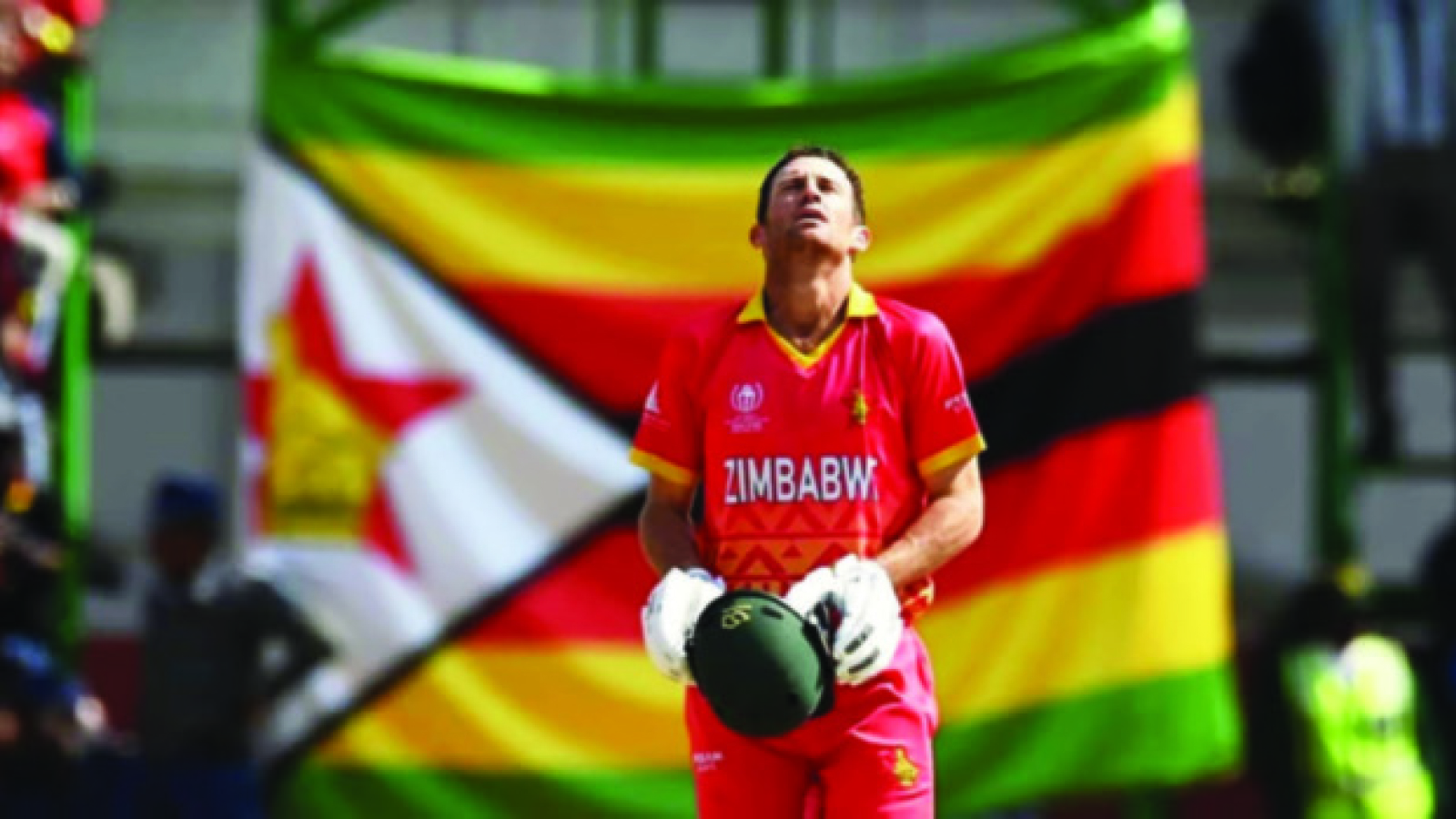
WHEN Sean Williams made his international cricket debut for Zimbabwe on February 25, 2005, precisely one T20 international had been played up to that point.
Twenty years later Williams will be in action on the day the 6 000th T20I, across men’s and women’s cricket, will be played.
It will also be his 39th birthday, as he continues his run as the world’s longest-serving active international cricketer.
Since his debut, only two players, Hamilton Masakadza and Sikandar Raza, have been capped more times for Zimbabwe and only one, Brendan Taylor, has scored more runs.
Williams has played against 28 international teams in 17 countries.
Only two other players — Collins Obuya and Paul Stirling — have been up against more opposition. When Williams says he has “seen the full cycle”, you have to believe him.
He is currently part of the Zimbabwe T20I squad that will compete in the Africa regional qualifiers in their quest to reach the 2026 World Cup.
Cricket is completely different to what it was two decades ago, when he received his maiden international call-up.
“I was playing a first-class game at BAC (Bulawayo Athletic Club) and my dad was throwing balls to me on the side of the nets. He was throwing from quite a wide angle and I didn’t understand why. I was actually getting quite frustrated,” Williams says. “About 10 or 15 minutes later I got a phone call from the national team manager to say I’d been selected against South Africa. And my old man told me he was doing that to prepare me for Makhaya (Ntini). It was quite stunning, I remember that very clearly.”
Williams didn’t face Ntini in any of the three ODIs he played in South Africa in his debut series but he did get a taste of the big time. South Africa’s team included Graeme Smith, Herschelle Gibbs, Mark Boucher, Albie Morkel and Ntini.
In contrast, the Zimbabwe squad had one recognisable name — Tatenda Taibu —and a group of youngsters who were trying to rebuild after the 2004 white-player walkout. Williams was too young to be involved in that rebellion, and he did not entirely grasp how significant the issues in the game were at the time, but even as a newcomer he could tell something was off.
“It was difficult,” he says. “I’ll never forget walking through the Sandton Towers (hotel in Johannesburg) and we were going to our team meeting room and when we walked past people, they were like, “Where’s (Andy) Flower? Where’s (Heath) Streak? Who are you people?” It was quite something to walk past.”
Flower had left Zimbabwe the year before, and his brother Grant was part of the group of 13 who protested then-captain Streak’s sacking.
Streak, of course, was also not around. Zimbabwe was a mess, in cricket and more generally.
The accelerated land-reform programme that sought to redistribute farms from white to black ownership was in full swing, inflation was high (though it would get worse) and so was unemployment.
A ban was placed on dual citizenship and many who had the opportunity to take up another nationality, especially that of the United Kingdom, did so.
Williams himself did not qualify to apply for a British passport but he flirted with moving there after he did a stint in England, with a club cricket team in Newcastle.
The late Kevin Curran, then involved in the coaching structures in Zimbabwe, urged him to return, and it was what Williams wanted anyway.
“I enjoy being at home,” he says. “And I ended up wanting to play for Zimbabwe no matter what.”
Even when Zimbabwe’s results became so poor that they opted out of Test cricket for six years between 2006 and 2011.
One consequence of that was that Williams, who averaged over 40 in first-class cricket in five of the seven years between 2006 and 2012, ended up waiting until 2013 to get his Test cap.
From an international perspective, he concentrated on ODIs (he played one T20I in 2006 and his next one in 2013) and in particular on how Zimbabwe could perform on the global stage.
He was part of the squad in the 2007 ODI World Cup, where they didn’t win a game, and then the 2011 tournament, where they won two out of six matches, against lower-ranked opposition.
“It was an absolute struggle when we got to those World Cups,” he says. “I felt very nervous when I played, and also that quite often you could predict the outcome of our games.”
The only outlier in that time was Zimbabwe’s stunning win over Australia in the 2007 T20 World Cup in Cape Town (and Williams was not part of the playing group then).
It took them seven years and two more tournaments before they won another match at the T20 World Cup — against Netherlands in 2014.
By then Williams was playing across all formats and Zimbabwe were stabilising.
They made a Test comeback in 2011, when they also had a stable coaching structure with Alan Butcher in charge and Grant Flower and Streak in specialist roles as batting and bowling coaches.
Those three were not involved as the 2015 World Cup loomed, but experienced coach Dav Whatmore was put in charge.
Williams rated him highly and praised the environment he created which led to that tournament being a high-water mark for him.
“In my book, it was the No. 1 tour I’ve ever been on for Zimbabwe,” Williams says. “The guys were pretty awe-some with each other, we got on well, had honest chats, understood each other’s roles, understood our own personal roles and just got on with it. We really felt the World Cup vibe, and we had first-class treatment. It was quite special, actually, and probably the happiest I’ve ever been in the changing room. And then we also had multiple people contributing, Brendan scoring hundreds, I was chipping in and there were other guys around.”
Taylor was the fourth-highest run-scorer overall at the tournament, and Williams was 13th.
Zimbabwe only won one match but came close against Pakistan and closer against Ireland, in a game Williams could have successfully finished.
Zimbabwe were 300 for 6 in the 47th over, chasing 332, and Williams was on 96 when he hit Kevin O’ Brien to John Mooney on the midwicket boundary.
Mooney appeared to be on the boundary cushion but Williams was walking off and had stepped out of the field of play as the check was happening.
“It was quite sad in the end, even though it goes down as one of my best tournaments,” he says. “That game against Ireland, obviously it was a heartbreaker and there was all that controversy with my catch (with Mooney) standing on a rope. You can actually hear the umpire on the audio saying, ‘Please stop the batter, stop the batter.’”
Had Williams waited for the third-umpire check, not only might he have been able to continue batting, he would probably have also got his first ODI hundred. Instead, it was the end of Zimbabwe’s campaign.
On Williams’ return, he married his partner, Chantelle, who was in attendance when he finally reached that first century, in the decider of a five-match series against Afghanistan, which Zimbabwe ultimately lost.
“It was a really strange feeling because Afghanistan annihilated us in that game. We were 172 all out (chasing 246) and it was a very difficult game. But I was in Bulawayo, which was quite nice. I had my wife there, and her sister.” That his milestone came amid strife was representative of what was going on in Zimbabwe Cricket.
The time between the 2015 World Cup and the country’s suspension from the ICC in the second half of 2019 was fraught. Zimbabwe shuffled between coaches and battled poor results.
Between November 2015 and July 2019, they played six Test series and lost five, 16 ODI series and lost 14, and eight T20I series and lost five, with the other three drawn.
The nadir came in March 2018, when they lost to the UAE at the ODI World Cup Qualifiers for the 2019 tournament.
In a rain-affected match Zimbabwe had to chase 230 in 40 overs and were looking good on 206 for 5 in the 37th when Williams was dismissed on 80 and the tail was unable to finish the job.
“That was awful,” Williams says. “I knew the moment that happened that the coaching staff was done. That was inevitable. And I wasn’t sure about the next coaches because when you have (Lance)Klusener and Streaky and guys like that in your changing room, with that type of experience, I didn’t know if (we were) going to be able to get better than that. Especially Lance. We went through hell again for quite a while. There were a lot of issues internally with our team trying to recover from that.”
Streak and his staff were sacked and Streak was later banned for eight years for breaching the ICC’s anti-corruption code. Zimbabwe’s suspension meant they were unable to participate in qualification for the 2020 T20 World Cup (which was moved to 2021 because of Covid) and their cricketing structures were hanging on by a thread. Williams, who by then had a daughter, considered walking away but with the pandemic came an opportunity to pause and reframe his ideas about how he wanted to play in the last phase of his career.
“I thought about how we as Zimbabwe played, throughout my time, and I realised we approached games as though we always needed to save face,” he says. “We’d say things like, ‘We need to make sure we bat 50 overs’ or “We need to make sure we play five days.’ When you try to play like that, it’s mentally exhausting, it’s physically exhausting. And you end up having meetings and just saying the right things and not actually doing anything but just playing cautiously and negatively and always on the back foot. I didn’t enjoy playing like that at all.
“My dad used to always tell me, ‘You’re better than you think you are. Stop taking so long. Just hit the ball.’ And that’s when I thought, let me change this and try to be a little bit more dynamic, a little bit more free and a little bit more expressive. And that way, you start playing a little bit more exciting cricket. It gave me quite a clear understanding of what I needed to do and wanted to do at the time. Then I started to train that way.”
The post-Covid period has been a boon for Williams. In the last five years he has scored four of his six Test hundreds and averages 58.80 in the format.
In ODIs he has made five of his eight centuries in this time and averages 53.77. He plays with the fearlessness of someone with nothing to lose, in part because he has already lost so much.
In April 2022, his father, Collin Ray, died, and in September 2023, Streak, a long-time mentor of Williams, also passed away. In that same period, Williams welcomed his second daughter. — ESPNcricinfo



 Bongani Ndlovu