Online Reporter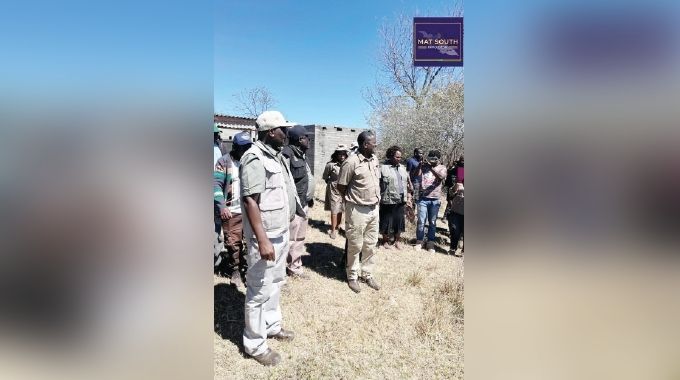
Nothando Zondo [email protected]
MATABELELAND South Minister of State for Provincial Affairs and Devolution, Albert Nguluvhe, has commended Willow Spring Farm in Ward 18, Insiza District, for showing how agriculture can be harnessed to drive rural industrialisation and uplift livelihoods.
The Minister made the remarks last Thursday during the Willow Spring Farm Integrated Livestock and Crop Systems Field Day, which brought together farmers, Government departments, local authorities and other agricultural stakeholders. The event was not only a showcase of farming innovation but also a demonstration of how agriculture can anchor community development.
The 464‑hectare property, acquired by the Dube family in 2017, has steadily grown into a diversified agricultural enterprise. It combines livestock production, irrigated cropping and community initiatives, positioning itself as a model of integrated farming in the province.
Following the death of Mr Dube in 2020, his widow, Mrs Dube, assumed responsibility for the farm. Her leadership has ensured continuity and expansion, earning praise from Minister Nguluvhe for exemplifying the role women can play in agriculture and rural economic transformation.
“Agriculture remains one of the key drivers of our national transformation. We must produce not only for household consumption, but also for markets, value addition and the growth of our rural economies,” said Minister Nguluvhe.
His words underscored the importance of moving beyond subsistence farming towards commercial production and value addition, a shift that Willow Spring Farm has embraced.
At the heart of the farm’s activities is a 159‑megalitre dam, a vital resource that provides water for irrigation and opens opportunities for intensified crop production. This infrastructure has enabled the farm to diversify its operations and reduce reliance on rainfall, a critical advantage in a region often affected by drought.
The farm’s livestock enterprise is equally impressive. It boasts 241 cattle of various breeds, 21 dairy cows, 196 goats, 81 sheep and 97 pigs. Its poultry section is extensive, with 4 500 broilers, 751 layers and 540 Sasso chickens. This mix of livestock ensures resilience, spreads risk and creates multiple income streams.
On the cropping side, Willow Spring Farm grows onions, lucerne and cabbages under irrigation.
The integration of crops and livestock maximises resource use, with fodder crops supporting animal production and manure enriching soils. It is a system designed for sustainability and profitability.
Minister Nguluvhe urged farmers to go beyond producing raw commodities and venture into processing, packaging and marketing to derive greater returns.
“We must produce not only for household consumption, but also for markets, value addition and the growth of our rural economies,” he reiterated.
He also emphasised the need for climate‑smart farming methods and stronger farm management practices. With climate change posing increasing challenges, adopting resilient techniques is essential for sustainable production. Improving productivity, he said, would contribute towards the attainment of Vision 2030 through enhanced food and nutrition security, job creation, import substitution and rural industrialisation.
Beyond production, Willow Spring Farm is contributing to the local economy through employment.
The enterprise currently employs 43 people, mainly youths and members of surrounding communities. This not only provides income but also builds skills and reduces rural unemployment.
The farm has also established a church, reflecting Mrs Dube’s commitment to community wellbeing. Such initiatives highlight how agricultural enterprises can extend their impact beyond economics to social and spiritual development.
Despite its progress, the farm faces challenges in fully utilising its irrigation potential. Stakeholders noted a shortage of technical expertise to install suitable irrigation equipment. Mrs Dube was encouraged to engage relevant agricultural technical departments for assistance, while Minister Nguluvhe called for stronger extension support to ensure farmers receive timely technical guidance.
With the onset of the fire season, the Minister also urged farmers and surrounding communities to take precautionary measures against veld fires, which threaten livestock, crops and infrastructure.
Fire management, he stressed, is critical to safeguarding investments and livelihoods.
Willow Spring Farm is not limiting its vision to agriculture. Plans are underway to establish a youth vocational training centre aimed at equipping young people with practical and entrepreneurial skills.
The centre is expected to play a role in addressing drug and substance abuse among youths, offering constructive alternatives and opportunities.
Further plans include constructing a school and clinic to improve access to education and healthcare for surrounding communities. These facilities would reduce the distances residents currently travel to access essential services, enhancing quality of life and strengthening rural development.
Minister Nguluvhe welcomed these plans, noting that agricultural enterprises could become drivers of wider rural transformation when linked to community development. He said Government would continue supporting productive farmers and enterprises contributing to food security, employment creation, youth and women empowerment and rural industrialisation.
The field day illustrated how the integration of livestock, crop production, employment creation and planned community infrastructure can transform agricultural land into a broader economic and social development hub. Willow Spring Farm is not only producing food; it is producing opportunities, hope and a vision of what rural Zimbabwe can achieve.