Chronicle Editor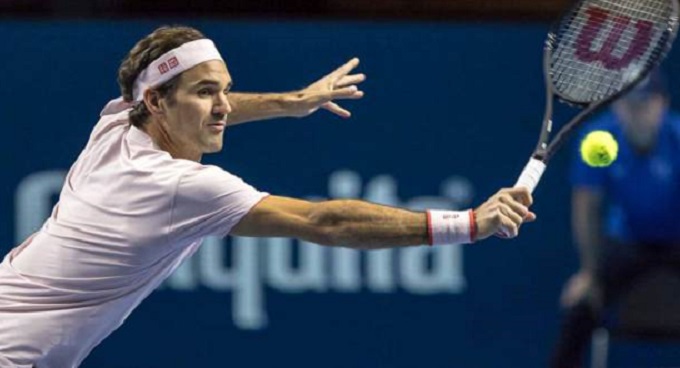
LONDON — Roger Federer would probably make tennis look easy on a court of broken glass so grass definitely holds no fears, as his 18 career titles on the greensward illustrate.
Such is Federer’s ease on the surface that had “lawn tennis” remained loyal to its roots and the sport was still played extensively on grass then it’s likely he would have accumulated more than his 100 titles.
Eight-time Wimbledon champion Federer is a one-off though.
The vast majority of players on Tour do not possess his sleight of hand or his powers of improvisation and for them grass remains a conundrum, especially when opportunities to master the surface are rare.
Of the 58 ATP Tour events in 2019, a player can play a maximum of four on grass.
Since the US Open switched from grass to hard in 1975 and the Australian Open followed suit in 1988, Wimbledon remains the only Grand Slam played on lawns.
It is a similar story on the WTA Tour which offers only five grasscourt tournaments in a three-week block before Wimbledon.
For international juniors opportunities are even more scarce, which is why the All England Club, in collaboration with the Lawn Tennis Association, is acting to protect and promote grasscourt tennis and ensure “the future is green”.
This year, a new ITF junior grass international event will be hosted in Nottingham, the week before a similar event in Roehampton which until now had been the only lead-in tournament for players heading to the Wimbledon junior championships.
“It’s a really exciting development for junior tennis,” Leon Smith, Britain’s Davis Cup-winning captain and former coach of twice Wimbledon champion Andy Murray, told Reuters at the All England Club.
“It’s a big step forward in giving more players the opportunity to learn the nuances of grasscourt tennis.”
From 2022 a new event for under 14s will be staged at the All England Club during the second week of the Championships.
Also, the Road to Wimbledon, a mass-participation grassroots event played since 2002 by thousands of youngsters in parks, schools and local clubs and culminating at the All England Club, has been expanded to Hong Kong, India, China and Japan.
It is all about keeping grasscourt skills alive in a world full of baseline bashers, says Smith, and ensuring Wimbledon remains the pinnacle of world tennis, not an anomaly.
—Reuters.



 Online Reporter