Online Reporter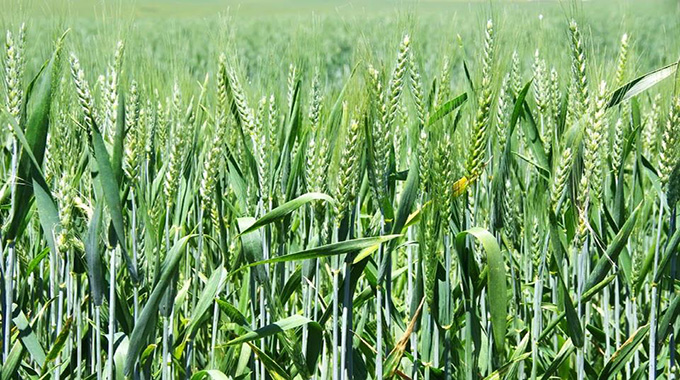
Lovemore Kadzura
Post Reporter
MANICALAND is intensifying preparations for the upcoming winter cropping season as the summer harvest nears completion in all districts, with farmers having begun land preparation, irrigation system repairs, and seed procurement for winter crops like wheat, barley, and an assortment of horticultural produce.
The province has set a target of 15 000 hectares for the winter wheat – a critical cereal crop that relies on irrigation due to limited rainfall – targeting a yield of 4,5 tonnes per hectare to produce at least 58 500 tonnes to boost national food supplies and stabilize incomes.
This follows assurances from the Zimbabwe National Water Authority (ZINWA) that the major water reservoirs in the province have enough water to sustain the irrigation of the cereal crop.
Wheat is highly sensitive to moisture deficits, especially during the critical phases of heading, flowering and early grain-fill, hence the wide usage of irrigation in its production.
Manicaland Provincial Agricultural and Rural Development Advisory Services (ARDS) acting director, Mrs Bessy Masvanhise said 24 000 hectares, mainly in irrigation schemes and commercial farms, are now free from summer crops following the ongoing harvesting.
She expressed optimism that the winter season will be successful, as dams have enough water to meet irrigation demands.
She added that the bulky of the crop will be under the National Enhanced Agricultural Productivity Scheme, CBZ and AFC Agro-Yield, ARDA, the Food Crop Contractors Association, self-sponsored and Pfumvudza, among others.
“The target for the 2026 winter wheat crop in Manicaland is 15 000ha. The majority of the contracting is expected to come from the Presidential Input Package Individual (54 percent), self-sponsored farmers (20 percent), ARDA Presidential Input Package (20 percent), with CBZ, AFC, Food Crop Contractors Association, and other joint ventures contributing six percent. The hectarage is expected to rise by the time planting begins. The province has so far harvested 22 percent of its summer maize, 32 percent of the sorghum, 38 percent of millet, and six percent of finger millet. Harvesting began in April 2026, delayed by incessant rains throughout the province. The dry and sunny weather has allowed farmers to speed up harvesting, expedited by the mechanisation team with 21 combine harvesters in place.
“The total maize planted was 248 253 hectares, with 24 825 hectares harvested, mainly from early-planted crops in irrigation schemes and commercial farms. The area harvested will be planted wheat.
The transition from summer to winter cropping is expected to be successful, with enough land ready for wheat and sufficient water in dams, ranging from 75 to 100 percent capacity,” she said.
ARDA chief executive officer, Mr Tinotenda Mhiko said they aim to plant 12 000 hectares in Manicaland through various schemes, and are finalising plans to start large-scale wheat production at Chiduku Irrigation Scheme in Makoni.
“We are targeting to establish 11 571ha of winter wheat in Manicaland – which is an 18 percent contribution to our national target of 65 000ha.
‘‘The wheat will be established across four sets of farmers – ARDA Estates, ARDA-managed irrigation scheme business units under the V30 Accelerator Model, ARDA Joint Venture A1 and A2 farmers, and ARDA Clustered Smallholder Farmers. We will also work with the recently refurbished Chiduku Irrigation Scheme Business Unit (formerly Romsely Irrigation Scheme) to establish a significant hectarage,” said Mr Mhiko.
Farmers in Manicaland are showing increased interest in winter farming this year, driven by relatively stable dam levels following a good rainy season. In districts such as Makoni, Chipinge, and Chimanimani, irrigation schemes are being rehabilitated, with some farmers pooling resources to repair canals and secure fuel for water pumps.
However, challenges remain, including the high cost of inputs such as seed, fertilisers, and electricity for irrigation. The recent fuel price hike is also likely to impact production costs.
Headlands farmer, Mr Tedious Nyikayaramba, of Choko Farm, said they have completed harvesting tobacco and maize, and are now mobilising resources for winter farming, targeting wheat.
“We completed harvesting our summer crops and received very good rains, ensuring better water availability than previous years. Our dam is spilling, and rivers are flowing. Early harvesting has given us an advantage in preparing for winter farming. We have prepared 30 hectares and await the official planting date of 1 May 2025. The fuel price increase will raise production costs, as we use tractors and combine harvesters. We need the Grain Marketing Board and private buyers to review the producer price to ensure viability. Personally, we’ve stocked fuel before the price increase. We have had stable electricity for two months, and we hope it continues, so we can power irrigation systems. Running irrigation systems on fuel will be extremely expensive,” said Mr Nyikayaramba.