daniel chigunwe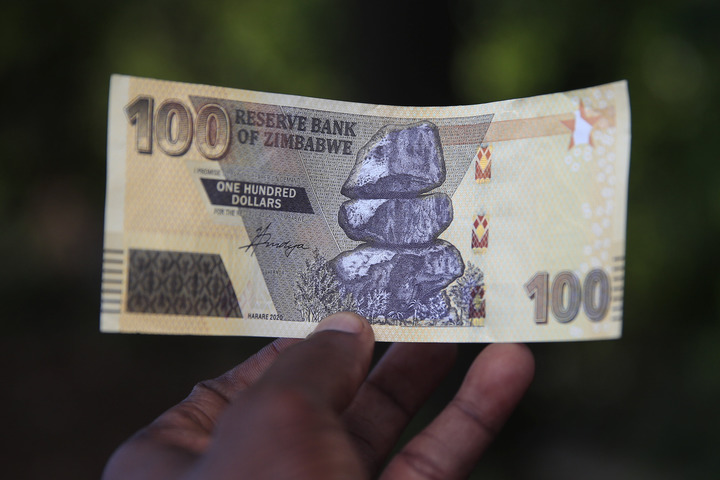
Business Writer
ALTHOUGH the Government remains adamant that the Zimbabwe dollar is here to stay, the reality on the ground tells a different story and in fact, paints a bleak future for the domestic unit if no major action is taken to correct this.
The prevailing situation mirrors findings of the Zimbabwe National Statistics Agency (ZimStat) late last year, whose survey determined that on average 76 percent of transactions were now done in foreign currency.
And the proportion of the Zimbabwe dollar in local transactions and bank deposits continues to decrease. In its mid-term monetary policy statement, the Reserve Bank of Zimbabwe said foreign currency now constitutes only 80 percent of total deposits and about 94 percent of bank loans.
The Government still believes it is within its capacity to make the domestic currency the bedrock of the country’s growth and development going forward, going by President Mnangagwa’s assertions during his inauguration speech on September 7, 2023 following his August 2023 election victory.
“The past five years have delivered valuable lessons on our intricate economy, especially the fact that a national currency that is supported by a vibrant productive sector is indispensable to sustainable development.
“No country has ever developed without its own currency. Further, we can only develop and grow the economy based on our own internal resources,” he said. But questions linger as to how long it will take for the domestic currency to reclaim a dominant role in the local economy.
Zimbabwe’s largest industrial lobby, the Confederation of Zimbabwe Industries (CZI), said the Zimbabwe dollar experienced accelerated currency depreciation in the first half of 2023, which prompted the government to introduce measures to curtail currency erosion.
The measures had a significant positive impact after managing to stop the volatility and depreciation of the local currency, which not long after resulted in continual appreciation on both the parallel and official markets.
In its last report, titled “Inflation and Currency Developments”, CZI said the exchange rate was relatively stable in the months of August and September, on the parallel market, despite a marginal appreciation on the official exchange market.
Notably, the stability in the exchange rate has seen registered businesses start to accept more readily payments in local currency while large retailers have more or less aligned their prices to the official exchange rate.
The appreciation of the exchange rate on the official exchange market while the parallel market rate was responding only sluggishly resulted in the exchange rate premium increasing from 31 percent in July 2023 to 41 percent in August 2023.
The acute shortages of the local currency and the availability of foreign currency on the official market have reduced the reliance on the parallel market and given the domestic currency, some much-needed relief and a window to regain its footing in the economy.
The local currency was given a lifeline by the measures that the government implemented in June 2023.
“However, the acute shortage of (Zimbabwe dollars) in the market has also been received with mixed sentiments, with some stakeholders viewing this as a positive and welcomed development as inflation has subsided while others point at the impact of the liquidity squeeze on reducing demand from economic agents that rely on the local currency.
“Although the measures managed to enhance stability, the economy has become more dollarised due to the liquidity squeeze on the Zimbabwe dollar,” CZI said.
It is against this background that the central bank noted in its 2023 midterm monetary policy statement that foreign currency deposits constituted 80 percent of total deposits while foreign currency-denominated loans constituted 94 percent of the banking sector loan book.
“Thus, it is now imperative for the government to determine the optimal (Zimbabwe dollar) liquidity that is enough to prevent the economy from full dollarisation by default,” CZI said.
What can be done?
Economist Eddie Cross, said to normalise the situation, authorities must do a number of things, including allowing the interbank market to operate freely and let supply and demand determine the exchange rate without interference.
“The weekly auction should be closed down as it no longer serves any purpose and the forced conversion of foreign exchange earnings at an artificial exchange rate should be scrapped.
“The next budget should include a clear programme to make all statutory charges and taxes payable in local currency.
“The Reserve Bank should be instructed to issue a new local currency and we should take three noughts off the present dollar. The bank ensures that at least 15 percent of all currency on issue is in the form of paper currency printed for this purpose with a coinage for change,” he said.
Cross said the Government should allow the use of the US dollar in local markets but indicated that within a set period of time, the greenback would be demonetised for local transactions.
He also said the Government should provide protection for hard currency accounts in both corporate and personal hands and allow these accounts to continue to operate indefinitely while it should scrap exchange control on all current account transactions.
Further, he said there was need to set a floor price for hard currencies being traded with the Reserve Bank buying in the currency for reserve purposes and keeping the local currency from becoming too strong to support exports and discourage imports.
“Anyone requiring hard currency for whatever purpose, including the State, to buy their needs on the interbank market. You do that and this country would change overnight. It’s time for courage,” Cross said.
Meanwhile, the industrial lobby group believes the measures that were implemented by the government managed to tame inflation. It said the economy was now in deflation and that there was fragile stability in the parallel market.
“What is of paramount importance now is exchange rate stability rooted in the convergence of the parallel market and the official rate, which would give an assurance of sustainable stability. If there is no sudden injection of liquidity into the market, the month-on-month inflation figures for September 2023 will likely continue to be in negative territory.”


 Online Reporter