

 admin
admin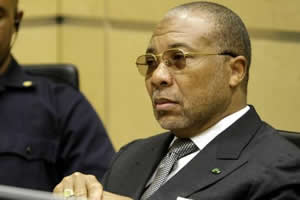
Taylor questioned why former US president George W. Bush, who he said had admitted to ordering torture, was not being brought before the war crimes court, and asked, “Is he (George W. Bush) above the law?”
In his address, Taylor also accused the US and other powers involved in military actions in Africa and the Middle East of using the war crimes court to pursue colonial agendas against smaller countries.
He said one such policy being used is illegal regime change.
“Regime change in Liberia became a policy of the US government,” he said.
“I never stood a chance. Only time will tell how many other African leaders of states will be destroyed.”
Taylor also questioned the way his trial had been funded, arguing that there was rampant corruption in the system.
“The prosecution received millions of dollars from the United States government outside of the official funding process to the court administration.
“The prosecution has never fully accounted for how those monies were spent . . . who received how much and for what purpose or purposes?”
Taylor said he condemned atrocities across the world, and had the “deepest sympathy” for victims in Sierra Leone.
Later, he asked the court to consider his age when making their decision. “I’m a father of many children, grandchildren and great-grandchildren. I say with respect: Reconciliation and healing, not retribution, should be the guiding principles in your honours’ task.”
At the end of his address, Taylor also congratulated one of the judges, Julia Sebutinde of Uganda, the first African woman to sit at the International Court of Justice.
The prosecution has called for Taylor to serve jail terms amounting to 80 years, arguing that his position as president, his level of education and the duration of the conflict are aggravating circumstances.
They also argued that Taylor’s ill health and age, or the fact that he has a family, should have no impact on the sentence.
In written filings, prosecutors said a sentence of 80 years would reflect the severity of the crimes and the central role that Taylor had in facilitating them.
“The purposely cruel and savage crimes committed included public executions and amputations of civilians, the display of decapitated heads at checkpoints . . . public rapes of women and girls, and people burned alive in their homes,” wrote prosecutor Brenda Hollis.
But Taylor’s lawyers said the recommended sentence was “manifestly disproportionate and excessive”, and that Taylor had only been found guilty of an indirect role — aiding the rebels, rather than leading them.
They argued that their client should not be made to shoulder the blame alone for what happened in Sierra Leone’s war.
The sentence is due to be handed down on May 30, and, Taylor is widely expected to appeal against any prison sentence and the hearing could continue for several more months.
Under a special arrangement with the international court, any prison term Taylor does receive will be served in Britain. – bbc.co.uk/Reuters/The Herald.



 Online Reporter