Online Reporter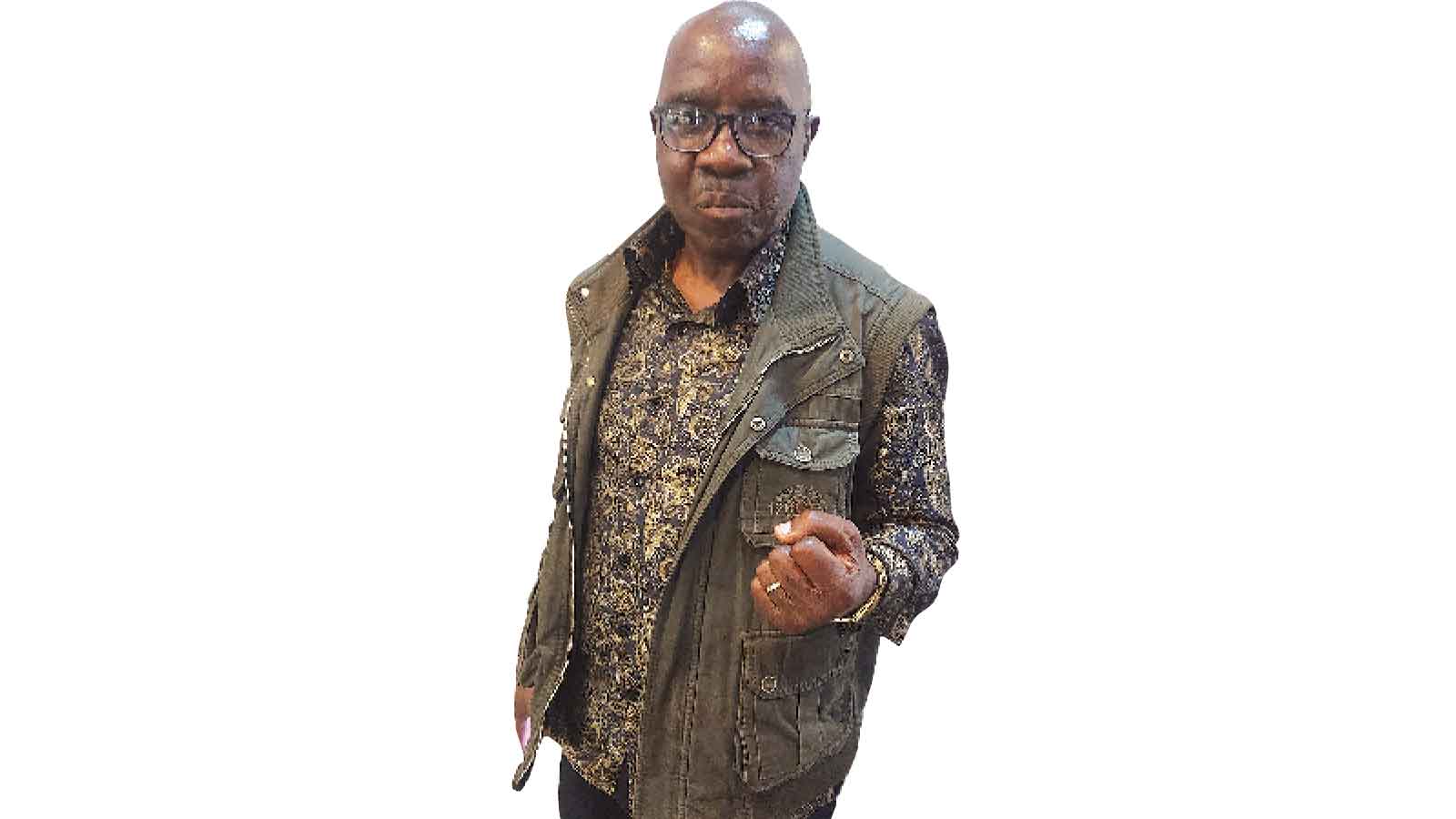
Chronicles from the 2nd Chimurenga
CDE HUMPHREY MAKUYANA, whose nom de guerre was Kidd Kanyau, played a unique and pivotal role during Zimbabwe’s liberation struggle. Driven by an unwavering desire to end colonial rule and a natural talent for mastering complex training concepts, he became an indispensable asset to the movement. He begins his chronicles by sharing his journey with our Society Editor PRINCE MUSHAWEVATO, recounting his transition from a new recruit to a highly respected military instructor.
************
Q: To begin with, could you please introduce yourself and provide a brief overview of your background?
A: My name is Lieutenant-Colonel Humphrey Makuyana (Retired). I was born 66 years ago in Negwari village, Bikita, within Masvingo province. I grew up in Negwari like any other village boy, herding cattle before I began my formal education.
I started school in 1967 at Negwari Primary, attending Grade One through to Grade Five. Since the school did not offer Grades Six and Seven at the time, I moved to Nebarwe Primary School — about 12 kilometres from our village — to complete my primary education between 1972 and 1973. For secondary school, the only option was Silveira Mission, a Roman Catholic high school located 40 kilometres away. I was accepted for boarding, but my father could not afford the fees.
We were a large family of 13 children — five boys and eight girls. Sadly, three of my siblings have since passed away, leaving 10 of us today. Because of our financial situation, I was unable to continue with school in 1973. Instead, I travelled to Chipinge to find work on tea estates.
Q: What was your plan?
A: At the time, the estates offered a unique opportunity to work and study simultaneously. The schedule was rigorous — we worked in the fields from 5am to 12pm, plucking tea, pruning or weeding. From midday to 1pm, we would bath and eat lunch before attending classes from 2pm to 5pm. After a short break, we returned to the classroom from 7pm to 8.30pm for supervised studies before retiring to bed. That was how I managed to begin Form One in 1974.
Q: How were you first introduced to African nationalism?
A: In 1975, while I was in Form Two, Mozambique had just gained its independence. At that time, Radio Zambia beamed ‘Radio Zimbabwe’ every Saturday around 10pm. As young secondary school learners, we would huddle around the radio to listen. The Zimbabwe African National Union (ZANU) and the Zimbabwe African Peoples’ Union (ZAPU) were using those broadcasts to encourage young men to join the liberation struggle.
Witnessing Mozambique attain its independence was a turning point for us. At our age, we were old enough to read the situation and understand the stakes. Furthermore, the harsh reality of my daily life — waking up at 5am to pluck, prune or weed the tea fields — fuelled my desire for change. We had no holidays; during school breaks, we became full-time labourers. That was the pact. Our labour paid for our tuition and boarding. That was the only way I could afford an education.
Q: Can you tell us how you eventually left school to cross into Mozambique and how that fit with your childhood ambitions?
A: I had a dream. I wanted to stay in school and become someone influential in society. I knew I was a brilliant learner — I was very good and I believed I could achieve great things. Like most children then, we were raised with the expectation that once we grew up, we would take care of our parents, siblings and extended family. I truly wanted to fulfil that responsibility.
However, as the war intensified, joining the struggle became the only viable path; it was the in-thing. We would hear news of learners from Jersey Secondary and Mount Selinda crossing into Mozambique to join the armed struggle. Geographically, we were only about five kilometres from the border. If you visit Ratelshoek Tea Estate, you will see how close it is; Mozambicans would even come to the local shops there to buy supplies. The “noise” of the revolution was everywhere and loud.
Q: So, in a way, your proximity to the border was a major factor in your recruitment?
A: It was definitely a driving force. We could not just sit by and watch our peers cross the border for such a worthy cause. The politicisation from Radio Zimbabwe via Zambia was powerful; it called on every able-bodied young man and woman to join the fight for liberation. The atmosphere was incredibly tense — it was edgy.
Q: You can carry on.
A: I should mention that I crossed from my school into Mozambique in July 1975, entering through Espungabera. During my time there, I stayed at three different camps, namely Chibawawa, Posto Machazie and Toronga, though Chibawawa was my final base.
A great deal happened about a year later, around July 1976. That was when we encountered the late former President Robert Mugabe and the late Edgar Tekere after they escaped Rhodesia. At the time, we were under the care of the Zimbabwe African National Liberation Army (ZANLA) General Staff members, including the former Vice President Joice Mujuru and Cde Mark Dube, known then as Misihayirambwi. The two — Mujuru and Dube — were responsible for the Chibawawa refugee and transit camp.
I have immense respect for Cde Dube; I was only 16 at the time, and he initially insisted on only taking the older recruits for training. I was part of the Red Guards — a battalion for those of school-going age. We were grouped together so we could be looked after, and we sometimes received priority for food and supplies.
Q: Given that age wasn’t on your side and there were huge numbers in the camps, how were you eventually selected?
A: Cde Dube announced that he would only take two young people from our group. Because I held a leadership role as the battalion’s security officer and my colleague Bothwell Bandama, who I believe is still alive, was the political commissar (PC), we were the only two permitted to board the trucks headed for training.
We were transported from Chibawawa to Beira, and from there, we travelled either by sea or air to Tanzania. We arrived in Tanzania in October 1976. There were no formal barracks available at first; FRELIMO had recently vacated the area following Mozambique’s independence.
Historically, the Nachingwea camp had been used to train FRELIMO, the ANC, MPLA and UNITA; even Samora Machel had stayed there. The camp was handed over to the Patriotic Front. While the original plan was to train ZANLA and Zimbabwe People’s Revolutionary Army (ZIPRA) together, there was hesitation due to previous tragic scuffles between the two groups at Morogoro and Mgagao.
Nachingwea was a massive establishment with five camps, each capable of holding a thousand recruits, with a goal of training 5 000 at once. However, because there was no ready accommodation, we spent October through December building makeshift barracks out of bamboo, mud and grass. Our actual military training did not begin until late January.
Next week, Cde Makuyana will recount his experiences during the rigorous training phase in Tanzania, highlighting the immense challenges faced during the initial stages of setting the training programme in motion.