admin
admin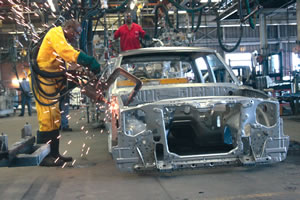
Government it contends it has the mandate to supply.
CMED floated a tender for the supply and delivery of 200 double-cab 4×4 and 4×2 Isuzu vehicles. WMMI claimed this violated Government policy.
The State-owned vehicle assembler said CMED’s plans were in violation of Govern-ment policy to support the growth of local industry.
WMMI managing director Engineer Dawson Mareya said CMED’s actions were in breach of a Presidential Order passed in 2002 and the provisions of the Indigenisation Act.
But CMED managing director Mr Davi-son Mhaka said they had not violated any rules. He said the process had gone through the State Procurement Board.
“The fact that we flighted the tender implies that we did not violate any tender rules,” he said. “The cars are determined by specific orders we receive from Govern-ment.
“Some of the cars are determined by the (service) conditions of senior officials. Directors and permanent secretaries are entitled to certain types of vehicles.
“We float tenders according to vehicles wanted by our clients and WMMI do not have these. For utility vehicles we certainly buy from them.”
He said where conditions of service specify certain types of vehicles for senior civil servants the CMED can obtain Cabinet approval to import such vehicles.
But the motor vehicle assembler argues that some of the vehicles required by CMED – such as the Ford Ranger – fall into the same class as the Mazda BT50s made by WMMI.
“This goes against a Presidential decree, which says all Government departments must buy from local producers and in the event that locals cannot supply, then they can apply Cabinet exemption and go to tender,” he said.
The order reads: “His Excellency, the President has directed that with immediate effect all purchase of vehicles by public institutions and their members should be done through local assembly plants. Specifications of motor vehicles should be tailor-made to meet locally-assembled models.”
The position is also supported by Part 2 Section 3 of the Indigenisation and Economic Empowerment Act, which compels Government entities to procure at least 50 percent of their goods and services from indigenous firms.
WMMI said it was still within the cusp of a possible collapse due to the incessant influx of low-cost imported vehicles.
Things became worse for WMMI after Finance Minister Tendai Biti reduced vehicle import duty in 2009 as part of measures to bring down the cost of vehicles.
The minister reviewed duty for passenger buses with capacity for 20 people from between 80-25 percent to the current range of 20-25 percent.
Vehicles with engine capacity of up to 1 500cc now pay 20 percent duty while those with engine capacity of less than 2 500cc pay import duty of 40 percent.
The influx of imports has seen WMMI’s capacity utilisation plunge from 40 percent in the 1990s to about 15 percent, as hundreds of its vehicles lie in stock.
The firm says its future continues to hang in the balance as low demand for its vehicle translate into fewer sales and the firm has struggled to at least break even.
Eng Mareya said the major source of its problems was South Africa’s Motor Industry Development Programme.
The MIDP entitles South African vehicle manufacturers to as much as 46 percent rebate on exported vehicles, enabling the exporters to sell at low prices.
“We call upon the Government to reduce duty to levels prevailing prior to July 2009,” sid Eng Mareya.
“We also want Government bodies to observe the Presidential Order (2002) as that would help us to increase our production volumes.”
The number of new completely built vehicle units imported from South increased by 69 percent from 2 236 in 2000 to about 3 286 in 2010.
Eng Mareya said South African suppliers sold the vehicles on the local market at the local firm’s production cost, creating grossly unfair competition.
He said South Africa wanted the local vehicles industry to collapse and when that happened it would scrap the rebate it gives to its producers.
“When Willowvale and Quest are gone the prices will go up because they (South Africa) will have no reason for rebates (on motor vehicle imports,” he said.
South African producers enjoy a 46 percent rebate on vehicle exports and can afford to sell their vehicles at low prices, but still make profits.
For instance, the Ford Ranger 4×4 Double Cab (2,5L) (Mazda BT50 equivalent) is sold in South Africa for US$47 600, but retails in Zimbabwe at US$37 000.
The Ford Ranger 2,2L (petrol) single cab is sold in South Africa at US$25 697, but is sold at US$23 500 in Zimbabwe while its local equivalent sells at US$26 600.
“We want local vehicles to be slightly cheaper – at least 20 percent cheaper – to bring the factor of duty into play. From 1998 duty was between 90 and 100 percent, but has come down to between 25 and 40 percent,” said Eng Mareya.
He added that WMMI had written to the Ministry of Finance for a review of vehicle import duty.
He said if import duty on vehicles was cut to levels that prevailed before July 2009, WMMI would be able to raise volumes and fend off external competition from imports.
The firm said Zimbabwe should learn from the experiences of other countries such as China, India, Thailand, Malaysia, Taiwan and South Africa. The countries charge duty on imported vehicles of up to 300 percent for passenger vehicles and up to 100 percent for commercial vehicles. WMMI has proposed a motor industry roadmap.


 Online Reporter