Online Reporter
Stanford Chiwanga, Quality Editor
THERE are years that rearrange reputations. This was Zimbabwe’s — an unblushing, world-facing season in which the country was named Forbes’ best place to visit in 2025, welcomed travellers with ceremony at its borders, and cut the cost of doing business in tourism with a surgeon’s precision. Orchestrating it all with verve and velocity was Barbara Rwodzi, a minister who understands that the journey to a destination begins long before a traveller sees a waterfall or orders a coffee; it begins with trust, pricing, and the warmth of a first hello.
Rwodzi’s year unfolded like a well-paced travelogue: a prologue of intent, a middle rich with movement, and a finale that felt like vindication. When Forbes declared Zimbabwe the Best Country to Visit in 2025, the cheer that went up across the sector was more than patriotic relief; it was the sound of years of groundwork snapping into focus. Rwodzi called it an endorsement of “Brand Zimbabwe,” but the subtext was clear: policy had met perception, and perception — at last — had blinked first. International plaudits followed, including reporting that Victoria Falls features among the world’s must see places and that Zimbabwe’s inclusion in Pan Am’s ultra-luxury “Sky to Safari” itinerary signalled the airline’s glamorous return to Africa after three decades. In the language of travel, this is momentum; in the calculus of statecraft, it is soft power with a ticket and a timetable.
Recognition on the global stage found a structural echo in governance. Zimbabwe secured a seat in the UN Tourism system and Rwodzi herself was appointed Vice-President of the UN Tourism General Assembly, a position that trades in influence rather than ceremony. It placed a Zimbabwean at the fulcrum of global tourism debates: sustainability, inclusivity, digital transformation, and the fair distribution of tourism’s dividends. In a world hungry for credible voices from the Global South, Rwodzi’s voice mattered — and she used it.
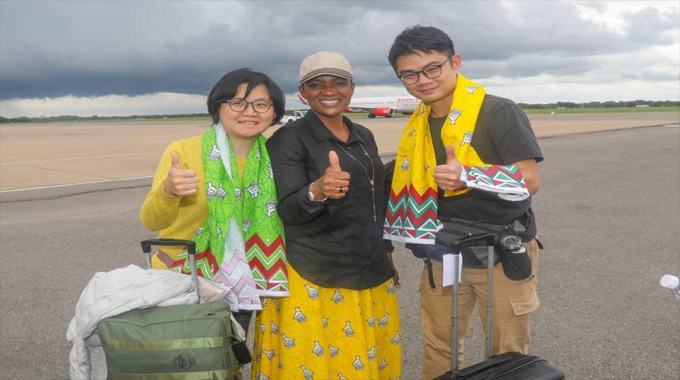
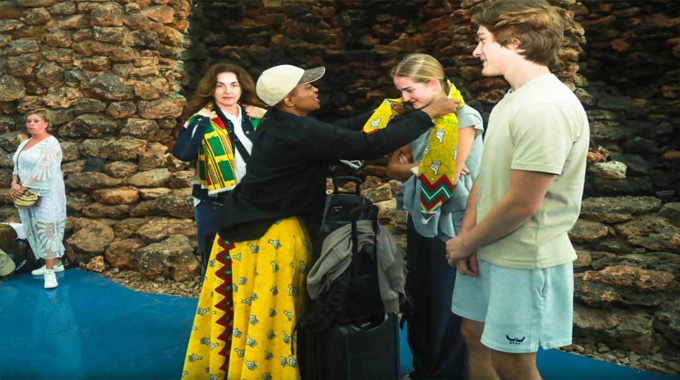
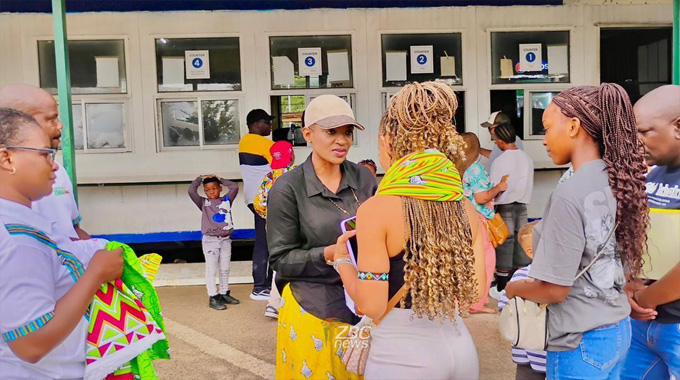
Yet the magic of this year was not written only in communiqués and conference halls. It was inscribed at Zimbabwe’s borders, where the minister did something deceptively simple and profoundly disarming: she showed up. At Beitbridge, newly streamlined and humming with the efficiency of e-gates and separated traffic lanes, Rwodzi led “meet and greet” initiatives, pressing flesh with diasporans and tourists, distributing national fabric and brochures like emissaries of welcome, and reminding officials — by presence as much as by policy — that hospitality begins at the threshold. “Everyone entering Zimbabwe is a tourist,” she said, “and their first encounter influences their overall stay.” It was choreography with a purpose, and the travellers felt it.
Those border scenes read like micro stories of a nation remembering its manners and renewing its promise. A family in a South Africa-registered SUV, dusted by a long drive, shepherded through immigration in minutes rather than hours. A returning nurse from the UK, wrapped in national cloth, laughing at the surprise of officialdom behaving like a welcome party. A tour group bound for Matusadona, leafing through glossy brochures as if skimming a personal invitation. It was choreography, yes, but also character. Zimbabwe’s.
If the theatre of hospitality set the tone, the arithmetic of reform sealed the deal. For years, the sector complained of choking fees — licences, permits, levies — sprawled across agencies that rarely spoke to each other. This year, Rwodzi shoved the boulder downhill. Cabinet approved a sweeping review that cut many charges by 25-50 percent and scrapped others entirely, a purge aligned to the state’s ease-of-doing-business mandate. The reform targeted precisely the places where tourism bleeds: accommodation, catering, guides, boating, and vehicle rentals. The symbolism was as striking as the savings: a Government telling operators, “We see you; we want you; grow.” Industry bodies applauded; sceptics exhaled; some simply smiled and sent their accountants updated spreadsheets.
The numbers have begun to respond to the therapy. International arrivals rose by around nine percent, domestic travel by 20,9 percent, and sector earnings reached US$922 million in the first three quarters — up 10 percent year on year — evidence that when pricing, access, and confidence align, tourism moves. In a striking pivot, tourism is now cited as the leading contributor to Zimbabwe’s GDP, eclipsing even mining and agriculture, the old titans of the economy. For a country with world class natural capital but a reputation that needed re stitching, the turn is as material as it is moral.
Culture threaded itself through this year like a motif. Under a heritage based tourism approach, Rwodzi’s ministry urged development in all ten provinces, empowering community based projects so that tourism’s dividend does not vanish at highway turn-offs. In Victoria Falls, Zimbabwe hosted the first UN Regional Forum on African Gastronomy Tourism, elevating food from a footnote to a front of house experience and giving women, young people and marginalised groups a stake not just in serving visitors, but in shaping the stories visitors carry home. It was smart policy disguised as a dinner invitation, and it worked.
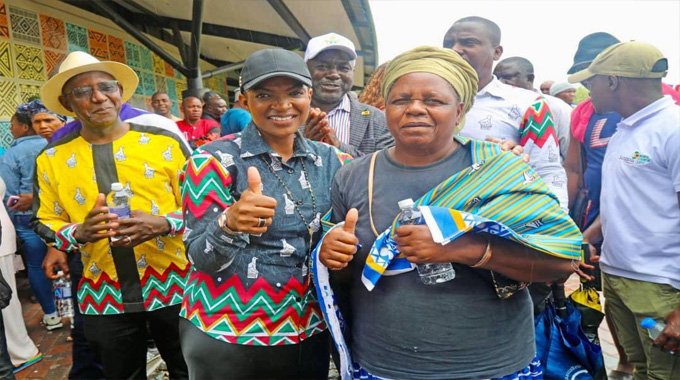
What makes Rwodzi’s slate of achievements feel cohesive is not only the list of outcomes but the philosophy binding them. The upgrades at Beitbridge are not simply infrastructure; they are a guarantee that time — the most precious commodity in travel — will not be squandered in queues. The fee reductions are not merely benevolence; they are an investment in competitiveness, signalling to investors that Zimbabwe is a rational market. The global honours — Forbes, the UN roles, and the international itineraries — are not just plaques on a wall; they are trust transferred from sceptical travellers to a destination with renewed poise.
There were, of course, whispers and quibbles along the way — the necessary friction of an industry relearning its stride. Operators, ever practical, asked how quickly the fee cuts would translate into statutory instruments; travellers wanted to know if a welcoming smile would be matched by consistent service at 2am when a bus arrives in the rain. The point is that these questions are now asked in a climate of earned optimism rather than fatalism. It is easier to be exacting when you sense that someone, somewhere, is actually listening — and acting.
The minister’s year was peppered with small moments that say as much as the big ones. A line of schoolchildren at the Falls, shrieking as mist kissed their faces, their teacher explaining why visitors cross oceans to see what they can reach by kombi. A lodge owner in Hwange telling a young guide that, yes, with fees falling and arrivals rising, this is the moment to specialise in birding. A diaspora couple planning a wedding in Nyanga because, for the first time in years, the logistics feel friendly and the numbers add up. Tourism, at its best, is infrastructure carrying the weight of aspiration — and in Zimbabwe this year, you could feel the beam flex but not fail.
In the end, what distinguishes Rwodzi’s tenure is not only the what — the awards, the appointments, the arithmetic — but the how. She behaves as if tourism is a national language in which every official should be fluent and every citizen conversant. She behaves as if a border is not a barrier but a foyer. And she behaves as if a reputation is not inherited but earned, again and again, one traveller at a time. If 2025 is the year the world came to Zimbabwe with renewed curiosity, it was because someone met them at the gate, looked them in the eye, and said, simply, “Welcome.”