Online Reporter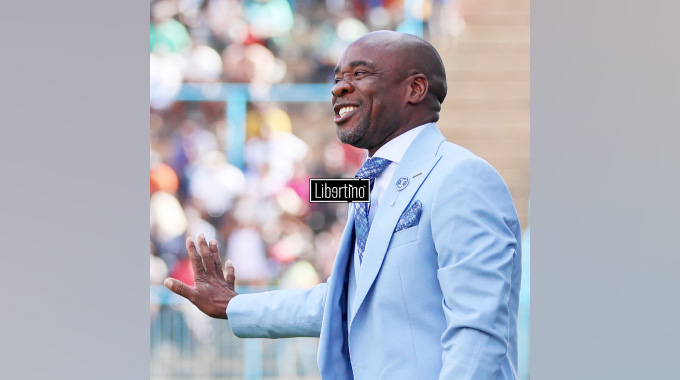
Stanford Chiwanga, Quality Editor
SOME seasons redraw the contours of a man’s career. For Kelvin Kaindu, 2025 was that season — a year that began in the shadows of dismissal and ended in the glow of redemption. He started as the coach Highlanders no longer wanted, and finished as the man who saved Dynamos from the abyss, lifted silverware, and walked into a future paved with promise at Hardrock. It was a journey stitched with drama, resilience, and a touch of poetry.
The opening act was brutal. Highlanders, frustrated by a run of limp performances — one win in seven matches, a slide to mid-table mediocrity — cut ties with Kaindu in June. His second stint at Bosso ended not with applause but with a press release, the kind that closes doors without ceremony.
For many, it looked like the curtain call on a storied coaching chapter. The numbers were stark: five wins, eight draws, and four losses from 17 matches. In Bulawayo, whispers grew louder — had Kaindu lost his magic?
But football, like fate, thrives on reversals. In July, Dynamos came calling — not with fanfare, but with desperation.
The Harare giants were staring down relegation, their season bleeding hope. Kaindu signed a six-month pact, a survival mission with no guarantees. Eleven games to rewrite a narrative.
Eleven games to prove that pedigree bends but does not break.
And rewrite it he did. Under Kaindu’s stewardship, Dynamos found their spine. They stitched together an unbeaten run that felt like defiance — a sequence of gritty draws and decisive wins that dragged them from the brink to safety.
The final whistle of the league season was not just relief; it was resurrection. Fans who had cursed their luck now sang his name. The terraces at Rufaro, once heavy with gloom, pulsed with gratitude.
Then came the flourish. The Chibuku Super Cup final at Gibbo Stadium was a stage set for drama, and Kaindu’s men delivered. A solitary strike in the 80th minute sealed a 1-0 victory over Triangle United, handing Dynamos their third consecutive Cup triumph. It was a win soaked in symbolism: a coach once cast aside now hoisting silverware, his players roaring like men reborn. Even a late kick-off dispute and PSL fines could not dull the gleam of that moment.
For Kaindu, the Cup was more than a trophy — it was vindication, a punctuation mark on a season that had begun with doubt and ended with glory.
And then, as if scripted by a romantic, Kaindu walked away. His mission complete, he left Dynamos with survival secured and a trophy in the cabinet. “Not an easy decision,” he said, but his eyes were already on the horizon. That horizon bore the name Hardrock — a newly promoted side with ambition in its veins and a two-year contract waiting on the table. Kaindu signed, not as a firefighter this time, but as an architect, tasked with building a fortress and a legacy.
What makes Kaindu’s year remarkable is not just the arithmetic of wins and losses, but the artistry of reinvention. He turned rejection into resolve, pressure into performance, and a season of chaos into a story of triumph. In the theatre of Zimbabwean football, 2025 belonged to Kelvin Kaindu — a man who proved that sometimes, the sunset is only the prologue to a brighter dawn.
His departure from Dynamos was peppered with small, telling moments. A handshake with a veteran fan who whispered, “You saved us.”
A quiet smile as he packed his office, leaving behind a wall of match notes and tactical sketches. A promise to his players: “Keep believing.” These fragments speak louder than statistics — they tell of a leader who understands that football is not just a game of goals, but a game of hearts.
Now, at Hardrock, Kaindu faces a different kind of challenge. No relegation fears, no survival mandates — just the blank canvas of possibility.
The club’s vision is audacious: to turn a provincial outfit into a competitive force, to make Chahwanda Stadium a fortress, and to write a new chapter in the annals of Zimbabwean football.
For Kaindu, it is a chance to build, not rescue; to create, not salvage. And if his past year is any indication, he will approach it with the same blend of tactical acumen and human touch that made him the story of 2025.
In the end, what distinguishes Kaindu’s journey is not only the what — the unbeaten run, the Cup triumph, the Hardrock contract — but the how. He behaves as if football is a language spoken in courage and conviction. He behaves as if a dugout is not a bunker but a pulpit.
And he behaves as if reputation is not inherited but earned, again and again, one match at a time.
If 2025 was the year Kaindu reclaimed his narrative, then 2026 is the year he writes it in bold.