admin
admin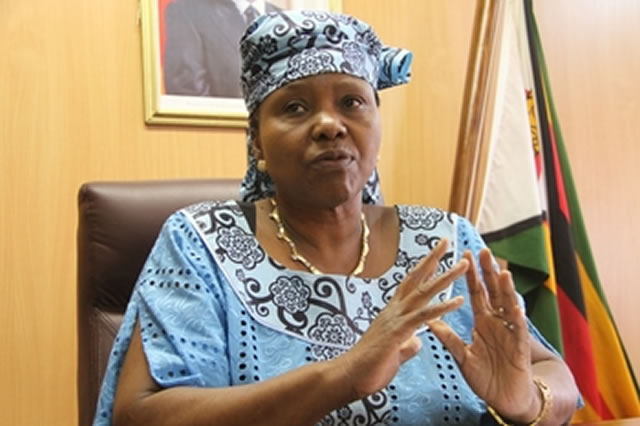
Factmore Dzobo Senior Reporter
WOMEN account for approximately 51 percent of the country’s population and contribute about 70 percent in food production through agricultural labour, however despite the critical role they play in society, they still remain poor, lacking not only in income but also access to resources, services, and job opportunities in most key sectors of the economy.
In Zimbabwe, the limited participation or exclusion of women in the mining sector among other male-dominated sectors of the economy, has increased further abuse and oppression of women.
While acknowledging the fact that women can contribute more to the growth of the country’s economy, few women are in the mining sector’s top echelons. This also demands the government to rethink whenever it talks about the issues of gender equality and women empowerment.
Zimbabwe has achieved a lot in terms of gender mainstreaming and women empowerment in various sectors including education, agriculture and in informal trade, but more needs to be done to integrate more women in the exploration and exploitation of the country’s rich mineral resources.
Since women are often responsible for subsistence activities, as farmers, herders, and agriculturists, they are also unfavourably affected by some negative environmental consequences of mining. Furthermore, most women face not only the burden of reduced subsistence production on land degraded by mining developments, but women are also deprived of their agricultural land by mining activities.
“As women, we tend to bear an unbalanced share of the social costs and receive inadequate share of benefits of the mining activities. As women, we are more often spouses of mine employees, and we are therefore passive recipients of the benefits and the destructive mining activities in our area. We are also deprived of our agricultural land for mining activities with not much benefit for women,” said Sitshengisile Ndlovu of Novell Mine situated along Nyankuni Range, in Esigodini, Matabeleland South province.
However, popular assumptions by many women activists that support and advocate for gender balance and women empowerment, said participation of women in the mining sector is generally distorted and dogged by some stereotypes and misrepresentations.
Women in Business (WIB) advisory board member, Naomi Chimbetete said participation of women in mining was generally distorted with some stereotypes based on women’s natural creation and reproduction.
“There are few job opportunities for women in mining communities. Mining remains a male-dominated sector, despite government’s call for a 50-50 women representation in all the spheres of the economy, this is in part due to some stereotypes prohibiting women from working underground, a belief based on contested evidence that such work endangers women’s health and reproductive system.
“There is a lot of bias against women going down in mines. Some women get pregnant and are not comfortable working in the mines because it is regarded as a labour-intensive profession which demands masculinity,” said Chimbetete.
Ironically, most women are reportedly involved in illegal gold panning activities and most of the women said they are willing to join the formal mining sector if government formalised illegal mining activities.
“We are willing to venture into the mining sector and that is the reason you find many of us women involved in illegal gold panning. We only need to be supported and registered as miners who can contribute to the growth of the economy,” said a woman who declined to be named, one of the illegal gold panners in Hope Fountain, Matabeleland North province.
Women’s Affairs, Gender and Community Development Minister Cde Oppah Muchinguri said since women often play an important role in reducing poverty at the household and community level, they also deserve the right to equality. She noted that women can become empowered through their participation in a number of male-dominated key sectors of the economy such as mining, politics and agriculture.
Cde Muchinguri said land in Zimbabwe is usually inherited along the male line, the criteria basically excluded single women and widows, despite the fact that women are largely responsible for food security.
“Only few women in Zimbabwe and in Africa at large are in control of the land. Women need to secure land tenure as part of empowering them and for them to become stewards of their land and environment, this in particular scheme would have more impact on poverty alleviation if more women had plots of land where they can practise mining and various agricultural activities,” said Cde Muchinguri.
Cde Muchinguri also recognised the participation of women in mining and land issues as a potentially powerful and influential vehicle which could speed up the development and emancipation of women, not only in motivating and awakening them to their demands for a better life but also in advancing their quest for social justice and equitable participation in socio-economic progress.
Zimbabwe Artisanal and Small Scale for Sustainable Mining Council (ZASMC) president Wellington Takavarasha said there are quite a number of women who are venturing into the mining sector, though they are still few as a result of some challenges.
“We understand that there is a very low number of women involved in mining and even at the School of Mines there is a small number of women studying Mining Engineering and we are expressing our disappointment that women are not being promoted in the mining sector
“However, we are trying to promote women in mining through training and provision of equipment. We now have quite a number of women who are into small-scale mining and we have introduced an annual competition for the best woman award in the production of gold under small-scale miners and this will encourage and attract more women into the sector,” said Takavarasha.
Recently, the Women in Mining Association said they were courting local and foreign investors for assistance in exploiting diamonds at its 15,000-hectare diamond claim in Chiadzwa in Manicaland province, a move aimed to boost their mineral exploration and mining.
Women in Mining Association are in partnership with the Zimbabwe Mining Development Council (ZMDC).
Bulawayo’s Provincial Development Officer in the Ministry of Women Affairs, Gender and Community Development, Vaida Mashangwa, said lack of job opportunities for women in mines is aggravated by other limiting factors, including the absence of capital to buy mining equipment, lack of credit facilities, and insecure tenure, with the provision of homes and land often being dependent on the employment and title deeds of their spouses.
Mashangwa noted the introduction of Broad Base Women Economic Empowerment Framework (BBEEF) launched by President Mugabe sometime in 2012 as a right step set to improve the participation of women in all key sectors of the economy such as agriculture, mining, manufacturing, among others.



 Online Reporter