Sundaymail Editor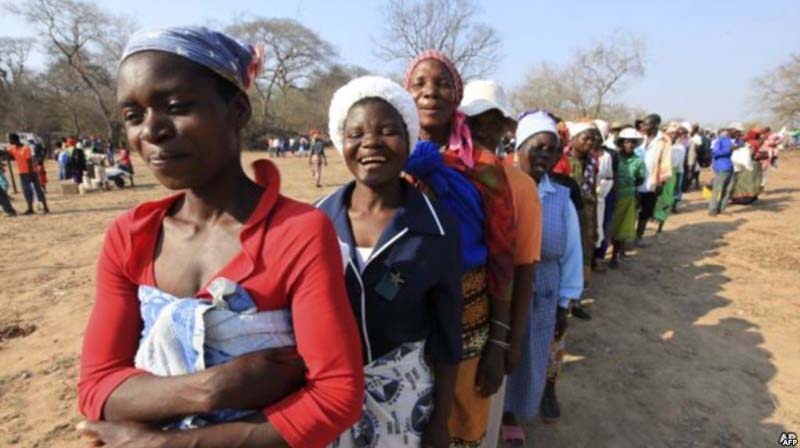
Tanyaradzwa Rusike
When President Mnangagwa proclaimed March 26 as the date for by-elections to fill vacant seats in the National Assembly and various local authorities countrywide, there was palpable excitement in political circles.
Cde Zalerah Makari (ZANU PF), who is the former National Assembly representative for Epworth, knew she wanted to run.
Having represented Epworth between 2015 and 2018 after winning a by-election, she felt she had unfinished business in the constituency.
In 2018, she stood as an independent candidate and gave a good account of herself, coming third in a closely contested poll in which she garnered over 10 000 votes.
The Epworth seat was left vacant again in 2020 following the recall of Etheridge Kureva (MDC Alliance).
So when the by-elections were proclaimed, Cde Makari knew she had to pull all stops to be elected the ZANU PF candidate.
She undertook intense lobbying with the party’s hierarchy asking for a shot in the primary election until she was given the green light to contest at the eleventh hour.
By the time she was given the go-ahead to contest, ballot papers for the ZANU PF primary elections had already been printed.
Her name was not on the ballot.
Suddenly her options were limited: She could either sit out the election or take a leap of faith and contest regardless.
The party leadership ruled that she could contest, but her supporters would have to write her name at the bottom of the ballot paper, signalling that they had voted for her.
To many people’s surprise, she prevailed.
She told The Sunday Mail last week that the ruling party should start counting the constituency among the seats it has won because she was assured of romping to victory.
“It feels good to be back doing work for the party. ZANU PF is my home,” she said.
“I love the party and I am willing to do my part to ensure that it wins this by-election and that President Mnangagwa wins the 2023 harmonised elections.”
She already has a plan in place for the 125 000 Epworth residents.
“When it comes to Epworth, there is no reinventing the wheel,” she said assuredly.
“Our story is development. We are going to be pursuing development in Epworth.
“When I was in office, we brought the Registrar General’s Office to Epworth, two schools were opened and we managed to push for the establishment of a second police station.”
It is that connection with the community she hopes will carry her through on March 26.
Domination
It was through sheer courage and the will to fight that Cde Makari found herself as one of the few female candidates running in the forthcoming by-elections.
Many politicians who share her gender have not been as lucky.
Zimbabwe elections have traditionally been dominated by male candidates, and the March 26 plebiscite will be no different.
In Bulawayo province, where 12 candidates will vie for two vacant National Assembly seats, only one candidate — Mahlangu Sichelesile of the Citizens Coalition for Change — is a woman.
In Harare, where there are 12 vacant seats and 51 candidates will slog it out for a seat in Parliament, only eight candidates are of the fairer sex.
Likewise, only one female candidate will compete in Manicaland province where two seats are vacant. Eight men will be contesting.
In Mashonaland East, the entire cast of 12 candidates is male for the three seats that are there for the taking.
Mrs Faith Chuma, who will represent the Patriotic Zimbabweans party in Chivi South constituency, will be the only female candidate for the two seats available in Masvingo province.
In Matabeleland North, where two seats are vacant, two female candidates will pit themselves against a troupe of nine male candidates.
Lastly, in Midlands province, where two seats are up for the taking, only two women have thrown their names into the hat compared to 18 men who have signalled their intention to contest.
Overall, out of the 118 candidates who will run for National Assembly seats, only 16 are women.
According to the Zimbabwe Electoral Commission, over 52 percent of registered voters in the country are women, but this key statistic does not reflect when it comes to election candidacy.
Illustratively, in 2018, 1 176 women contested the local council elections, representing 17 percent of the total candidates.
For the National Assembly, 243 women contested, accounting for 15 percent.
Four women stood for the Presidential election out of the 23 candidates.
Only 26 women won direct election into the National Assembly, representing a 2 percent decline from 2013.
According to Gender Links, a local women rights lobby group, representation of women at the Local Government level has been declining.
In the 2008 elections, the representation of women at the local level stood at 18 percent.
In 2013, it had dropped to 16 percent before plummeting to 14 percent in the last election.
Barriers
In most instances, experts say, women are forced to contest as independent candidates, which almost certainly leads to defeat because Zimbabweans generally vote along party lines.
Zimbabwe Electoral Commission (ZEC) commissioner responsible for gender mainstreaming Ms Netsai Mushonga said there is need to expedite constitutional provisions to institutionalise gender equality.
“We have gender equality clauses in the Constitution, but they are yet to be incorporated into the Electoral Act,” she said.
“The commission will continue to work with the Zimbabwe Gender Commission and other relevant organisations to encourage women who are already in power to train those who intend to participate on what it means to be a candidate.”
Mrs Linda Musarira, who will represent the Labour, Economists and African Democrats (LEAD) party in Harare Central constituency on March 26, said; “Patriarchal dominance, misogyny and lack of funding are the major reasons for the low participation of women in politics and electoral processes in Zimbabwe,” she said.
“Marriage, on the other hand, is a major inhibitor for women to successfully achieve their political aspirations, as husbands often make women choose between politics and marriage.”
Quotas
In an effort to encourage the participation of more women in elections, the Government last year amended the Constitution by inserting a women quota provision in local authorities.
At least 30 percent of seats in local authority elections are now exclusively reserved for women in terms of the amendment.
This followed intense lobbying by women organisations and councillors who met with President Mnangagwa during the inaugural Zimbabwe Local Government Association of Zimbabwe Women Councillors’ indaba in Victoria Falls in December 2020.
The President then committed himself to making sure that women representation in councils was increased.
In addition, the constitutional provision for proportional representation in the National Assembly, which reserved 60 seats for women, was extended indefinitely.
It was set to lapse this current term.
Zimbabwe Gender Commission chief executive officer Mrs Virginia Muwanigwa said it was now time for women to demand equality.
“The challenges faced by women include the perpetuation of the gender imbalances where women’s voices, choices and control over their destiny is compromised by their absence from the decision-making arena,” said Mrs Muwanigwa.
“Women need to demand representation in leadership. Political parties need to conform to constitutional benchmarks on equal representation. Their constitutions, structures, processes and outcomes need to be modelled around accountability to the national Constitution.”
Work in progress
Deputy Minister of Women Affairs, Community, Small and Medium Enterprise Development Ms Jennifer Mhlanga said there was need for dialogue to encourage the participation of women in electoral processes.
“Let us continue to bring ourselves together as women and fight for our space,” she said.
“It is also time for us to stop thinking that the NGO sector and civic society are the only avenues that can bring the emancipation that we need. The interventions must come from Government through us making a lot of noise about women involvement and also crafting programmes and actions that will allow women to take part.”
Women’s Academy Leadership in Political Excellence (WALPE) executive director Ms Stabile Dewa said the media must give women candidates adequate coverage.
“There is the issue of outstanding electoral reforms, where, for example, women are not getting 50/50 coverage in the media.” she said.


 Online Reporter