admin
admin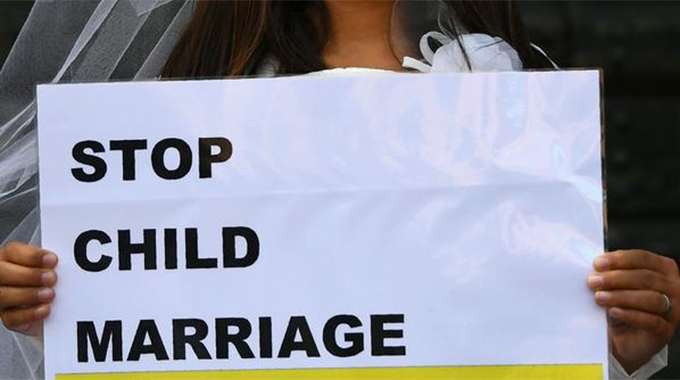
Indian-administered Kashmir — Twenty-nine-year-old Nazima Begum* sits cross-legged on the floor of her dark room, the windows covered with tarpaulin. On her lap is her youngest son, five-month-old Taufiq*, who plays with his mother’s face as she talks.
Occasionally, she stops to plant a kiss on his head.
Nazima lives in this single room in Srinagar with Taufiq and her two older children, aged seven and 10.
Her husband died from heart disease four months ago and although there is sadness in her voice, she says she tries to appear strong for her children.
Hers was neither a love marriage nor an arranged one.
Nazima was kidnapped from her home state of West Bengal and transported 1 600km to Kashmir, where she was forced to marry a man 20 years her senior who had paid her traffickers $250 for a bride.
With his death, Nazima has been left to support her children alone as she contemplates an uncertain future.
“We were all terrified”
So when, in the summer of 2012, a friend from Nazima’s village told her she’d heard that an NGO was looking to offer women and girls from poor backgrounds jobs in West Bengal’s capital, Kolkata, she decided to take the six-hour train journey to the city.
It was a sweltering afternoon when she arrived at her destination — a large glass building. There were a few men and many women — some her age, others older — she recalls.
One of the men served her tea. All these years later, she still remembers how it smelled of cardamom. And how, soon after drinking it, she found she could no longer talk. Unable to protest, she was led by two men to a car that was waiting outside.
There had been no NGO, no jobs for poor women and girls, no route out of the crippling poverty that had defined Nazima’s life — only traffickers waiting to exploit her. She was driven to a railway station, where four men waited with four other women. On the train, the women were not allowed to make eye contact with each other, use the bathroom or eat.
“The men looked scary,” Nazima says. “I did not understand what was happening.” After 20 hours on the train, they reached Delhi. But their journey wasn’t over. The women were put on another train for the 13-hour journey to Jammu, a city in the south of Indian-administered Kashmir.
There, the traffickers handed them over to two Kashmiri men.
“We were all terrified,” she says. “We could not do anything as we were frightened that we might be harmed.”
Hungry and tired, the women were put in a cab and driven through treacherous mountain passes and along unpaved roads in the dark.
“In Jammu, I felt in a completely strange place, the language was completely different,” she says. “It looked like a different world.”
“An overwhelming fear”
It was 6am when they finally reached Pattan, a picturesque village surrounded by apple orchards and paddy fields, in north Kashmir’s Baramulla district, 274km (170 miles) from Jammu.
They were taken to the home of one of the traffickers, where they were made to change out of the clothes they had by now been wearing for days.
Nazima says the new outfits they were told to wear “were not very nice”.
“It seemed they were not even new,” she adds. As they changed, the women were able to talk to each other for the first time. But they didn’t have long. They would soon be taken one by one and handed over to the men they were to marry.
When Nazima’s turn came, she cried. But she says nobody cared.
“There was an old man who kept a hand on my head and I was introduced to my husband,” she says. “I was not able to understand what they were saying. There was an overwhelming fear in me.”
Then the old man announced that she was married.
“The traffickers ruined my life”
Nazima’s husband took her back to the single-room home he had shared with his 10-year-old son since his first wife’s death in an accident.
In those first weeks, she cried often. “The night was the most difficult time. I missed my people. I missed the food, the rice did not taste as it did at home. I felt like I belonged to nowhere.” She tried to escape many times, but would only get as far as the cab station before returning.
“I did not want to live here but I was not able to understand what to do,” she says. “The language was the biggest barrier. I was only able to speak Bengali.”
Nazima says her husband treated her well. “He promised me that he would allow me to visit my home because he saw that I was miserable,” she says.
For seven months, she had no contact with her family, who had searched nearby villages for her before eventually concluding that she must have been killed.
So when her husband took her to visit them in West Bengal, they were overjoyed but confused. “They did not know the man accompanying me was my husband,” Nazima explains.
She desperately wanted to stay with her family but was already pregnant with her first child so reluctantly returned to Kashmir with her husband.
Since his death, she has considered returning to West Bengal but says: “I have three children. I don’t know what to do, where to go.”
She is worried that she will add to her family’s financial woes — worsened by her father’s death three months ago — if she returns.
“The traffickers ruined my life. I cannot think of going back,” she concludes, tearfully.
“Trafficking camouflaged as marriage”
India’s National Crime Records Bureau (NCRB) recorded more than 1,700 cases of human trafficking in 2020. This includes adults and children trafficked into marriage, slavery and prostitution. But experts say this is just the tip of the iceberg.
“Trafficking is gravely underreported in India,” explains Tarushika Sarvesh, an assistant professor of sociology at the Aligarh Muslim University (AMU), in the Indian state of Uttar Pradesh. There are multiple reasons for this.
“Sometimes the families of women and children who are recovered and brought back don’t want to acknowledge the fact that they were trafficked, as trafficking in popular perception is mostly understood as sexual exploitation,” she says, adding that there is a huge stigma attached to this. — Al-Jazeera



 Online Reporter