admin
admin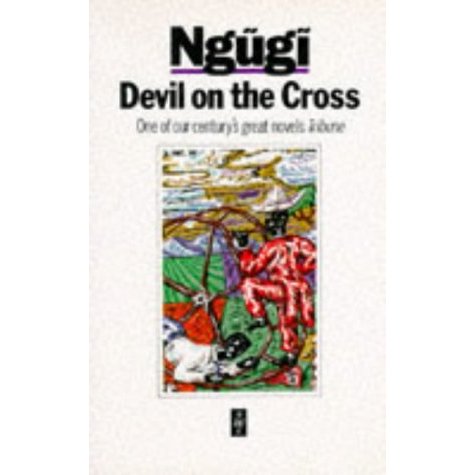
Elliot Ziwira @The Bookstore
WOMEN play a significant role in African literature, as both objects and agents of familial, societal and national healing, especially in the aftermath of colonialism.
African societies that for long have been weighed under the yoke of colonial oppression and hegemony, struggle to keep pace with the resultant cultural imperialism and post-colonial oppression, which usually place women at the receiving end.
Ngugi waThiong’o’s “Devil on the Cross” (1982), exposes the devil in all his many faces, through the heroine Jacinta Wariinga.
She is depicted as an epitome of the struggle against cultural imperialism and the decadence of African culture in the wake of colonialism, and the subsequent struggle against it.
WaThiong’o adeptly exploits the developmental traits in the heroine’s travails in the face of adversity.
As a woman, she is conscious of her twofold role as both an agent and object, culminating from the vulnerability of her sex.
As an object, culture burdens her because she is expected to perform according to the norm – in a patriarchal society which is both oppressive and insensitive to the needs of the fairer sex.
Poverty exacerbates women’s plight, as the struggle to keep body and soul intact intensifies.
On the other hand, however, Wariinga’s portrayal as a round character, cements her role as an agent of both cultural congruence and compromise.
Cultural imperialism or colonisation of the African mind in “Devil on the Cross” is purveyed through the Jacinta Wariinga of the first chapters.
She is neither proud nor satisfied with her identity as an African woman, as is illustrated thus: “She was convinced that her appearance was the root cause of all her problems”.
As is the foible of many an African, the protagonist loathes her “blackness” and envies the “whiteness” of the erstwhile colonisers. Her warped idea of beauty is that which is defined along Western lines. To her, the aesthetics of beauty is indiscernible in the absence of the white component.
In her quest to reach Nirvana, Jacinta bleaches her skin with Ambi and Snowfire, to the detriment of the same. Instead of enhancing her beauty, the bleaching creams disfigure and caricature her.
It is worth noting here, that as she seeks beauty in bleaching her skin, she also exposes herself as a cultural object – her success remains steeped in the whims of men – the objects of her desires, and the Devil incarnates.
On the flip-side, however, she awakens to her pivotal role in the fight against cultural imperialism.
She realises that beauty is in the eyes of the beholder, and that one’s own identity is always the numero uno. She discards all her misconstrued beliefs in the essence of beauty as premised on Western trends. It dawns on her that Africans and their culture are at the same wavelength with any other alien culture, if not better.
The writer’s main thrust in portraying Jacinta as a developing character is to highlight the predicament that Africans find themselves trapped in. It is ironic that in their battle to shrug off physical oppression, they remain anchored in mental and/or psychological fetters.
They are up in arms against their languages, culture and skin colour. They are also as oppressive to each other as the whites were to them.
Ngugi waThiong’o advocates the decolonisation of the African mind in “Devil on the Cross” in the same way he does in “Decolonising the Mind” (1986) and “The River Between” (1965).
The heroine, as an agent of transition, embodies the restoration of African identity and culture, as she becomes conscious of the beauty of African dress and skin.
Oppression starts from the mind, so it is the mindset that has to be changed first.
It is also through Jacinta that the talents suppressed in women are surfaced. Through its patriarchal inclinations, society relegates women to measly household shores, thus killing their talents. The artist is contemptuous of this devious trait in men, and therefore, lambasts sexism, and all forces of exploitation that reduce women to mere objects of pleasure without rights to protection, through Wariinga’s emancipation and resilience.
The likes of Boss Kihara and the Rich Old Man from Ngorika stifle women’s dreams by crouching on the horizon of their hope. Their material possessions, gotten by either hook or crook, place them at a pedestal which lures the poverty stricken girls and women they prey on.
Their control of the means of production play havoc on women’s dreams of making it to the upper rungs of both the economic and social echelons without having to satisfy men’s carnal egos.
Impregnated and rejected, women’s dreams are set ablaze. Physically exploited and psychologically imprisoned, most women contemplate suicide, as they are unable to think of any better vents to make it along the narrow aisles of life. Wariinga attempts suicide twice as her world crumbles.
In the end however, she refuses to be subdued by the Devil, which gives hope to her sex. There is no triumph in death, none whatsoever, she reasons.
The morass of capitalistic tendencies and male chauvinism is laid bare at the Devil’s Feast, as men scramble to outdo each other in their boasting of the number of women they possess.
To them, indeed to most African men, the number of women that one controls or “possesses” determines one’s wealth and social standing.
Sadly women are willing to be used as pawns in these mind games, thus pampering men’s egos.
Another form of exploitation depicted through Wariinga, is that which obtains in employment fields. There are some professions which are believed to be the prerogative of men.
Careers in engineering, medicine, transport and aviation among a host of others, have for long excluded women.
Wariinga defies such cultural norms that relegate women to second class citizens. She is a champion of Mathematics, a martial artist and a mechanic. She leaves her male colleagues aghast at Mwihotori Kiwanjani Garage when instead of teaching her, they find themselves at the receiving end of tutorials in engineering.
Women can be whoever they decide to become if they are given the platform to showcase their talents.
They should empower themselves instead of being satiated with mediocrity, either as wives or mistresses.
There is a worrisome womanly trait though, which even the heroine is not fully redeemed from – stoic acceptance of their suffering.
Silence which they believe to be a weapon against oppression in all its forms, usually aggravates women’s suffering, instead of mitigating it.
When Jacinta is evicted by the Devil’s Angels at the instigation of her landlord, her fighting spirit is encumbered.
She knows of the existence of the Rent Tribunal, which could have helped her but she decides to suffer in silence.
Notwithstanding her emancipation as the plot thickens, she still relies on men, like Mutari to show her the way which somehow is defeatist.
The Devil continues to haunt her as Ngugi writes: “The Devil appeared one Sunday on a golf course in the town of Ilmorog in Icicily Districk and he told her – wait.” She remains at sixes and sevens as to how to respond to the Devil’s call.
The many battles that she has won though, far outweigh any disparaging remarks that the Devil may use to bring her down.
She remains a paragon of the struggle against cultural imperialism and oppression of women.
With the right mindset and willpower, women as agents of familial, societal and national healing, can indeed nail the “Devil on the Cross”.
Elliot Ziwira @The Bookstore


 Online Reporter