Chronicle Editor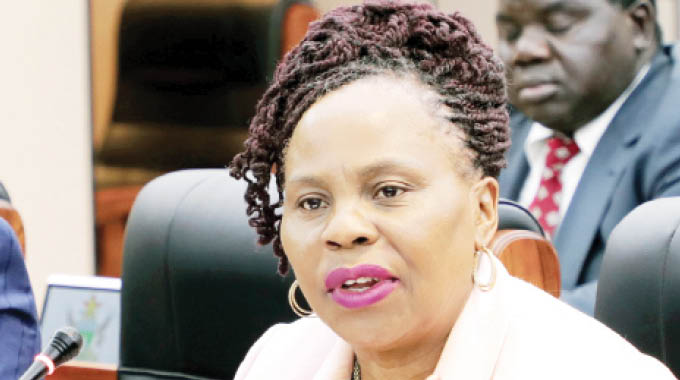
Lungelo Ndhlovu
WOMEN and girls can use the recently-enacted Freedom of Information Act to demand information that educates them on their empowerment such as sexual health, reproductive rights, political participation and whether Government systems adopt gender budgeting, according to the gender experts.
Addressing participants in a virtual dialogue to launch the ‘My Freedom of Information’ campaign organised by Tag a Life International (TaLi), Identities Media and Fojo in partnership with the Ministry of Information, Publicity and Broadcasting Services recently, the Minister Monica Mutsvangwa indicated that the new Act provides for the obligation on entities to have a written information disclosure policy.
“The law also provides for the provision of information in a language requested by the applicant. It’s important that we align all our Acts with the Constitution which was endorsed in 2013,” she said.
The Freedom of Information Act was signed into law last year, and according to TaLi founding director Nyaradzo Mashayamombe, through this campaign, ordinary citizens will be able to participate in their communities with their local leaders especially in the Zimbabwean context where devolution is happening in most communities across the country.
“Youths and women will be equipped with the knowledge of the law to be able to participate and assert their rights to information which ultimately enables them to participate in governance and democracy for the betterment of their communities,” she said.
The Freedom of Information Act which replaced the Access to Information and Protection of Privacy Act (AIPPA), also provides citizens and media practitioners with the right to access information while creating legal structures to access information from public and private bodies, said the Minister.
She said the Government is transparent to the people and wants to promote accountability within its many arms through various platforms, and be able to respond to information requests through information officers to disseminate information to both media and the public.
“The Government is open with information and is accountable to the people, hence the Cabinet briefings and Press statements. The mandate of the Government is to educate, and inform,” said the Minister.
A constitutional expert, Dr James Tsabora, from the Centre For Applied Legal Research (CARL) encouraged citizens, especially women, girls and youths to put this new law to test, by demanding gender equality and children’s rights in their communities.
“We are living in the information age. Without access to information, the very essence of social, psychological, mental and even national development is undermined. The law requires the State and the private sector to allow access to information to those who want the information for specified purposes only,” he said.
Dr Tsabora said for instance, women and girls can demand information concerning several issues such as sexual and health reproductive rights, political participation or whether budget systems of local government institutions adopt gender budgeting.
“Access to information is critical in the exercise of rights, for example children’s rights in section 81 of the Constitution or right to equality and non-discrimination in section 56 of the Constitution. Access to educational information; access to developmental information from local authorities; access to information from their Members of Parliament concerning legislative and policy developments are some of the things they must demand,” he said.
Advocate Choice Damiso, a lawyer under the Zimbabwe Women Lawyers Association acknowledged a law which provides the framework for access to information is very commendable but advised citizens not to lose sight of the fact that the Freedom of Information Act is not self-implementing.
“Information is power. Those with information have greater access to resources and opportunities. Access to information therefore is fundamental for women’s empowerment. When women and girls have access to information it means they are able to make informed choices on elements of their lives and hold Government and other power holders accountable to guarantee their rights,” she said.
Adv Damiso explained that access to information also enables women to participate more meaningfully in decision making indicating that the ‘devil’ is often in the details around implementation of the new Act.
“The language of the Freedom of Information Act is gender neutral. It presupposes that men and women have equal opportunities and capacity to access information and to invoke the remedies provided for but this is not true.
Looking at the lived realities between men and women it’s obvious that women and girls face gender specific barriers when it comes to accessing vital information,” she said.
According to Adv Damiso, these gender specific barriers include inequalities in access to: public spaces where information is shared, technical experts to assist in unpacking and understanding complex data, perceptions around whether it is culturally acceptable for women and girls to seek out certain kinds of information and limited education where women are often too busy with household chores to find time for reading and attending meetings.
“In addition to having the Freedom of Information Act, the challenge is on policy makers to go the extra mile in facilitating women’s and girls’ access to information. They can do this by making innovative use of social media platforms and mass media as well as finding ways of penetrating women’s spaces like social gatherings and repackaging information in ways that speak to the needs of women and girls,” she explained.
Miss Thubelihle Ncube, the legal and advocacy officer for Transparency International Zimbabwe said if implemented, the Freedom of Information Act was a huge step taken by authorities to deal with issues of accountability and transparency.
“Looking at how the country has been trying to fight corruption having bodies such as the Zimbabwe Anti-Corruption unit, no matter how they went with their investigations, when they wanted to access information or evidence to some corruption cases they were not able to access such information because AIPPA used to protect those companies,” she said.
So, having this Freedom of information Act, means issues of transparency and accountability have been improved because the media has access to information, where practitioners are able to draw relevant information from different stakeholders and bring it to the public, Miss Ncube explained.



 Online Reporter