Online Reporter
Muchaneta Chimuka
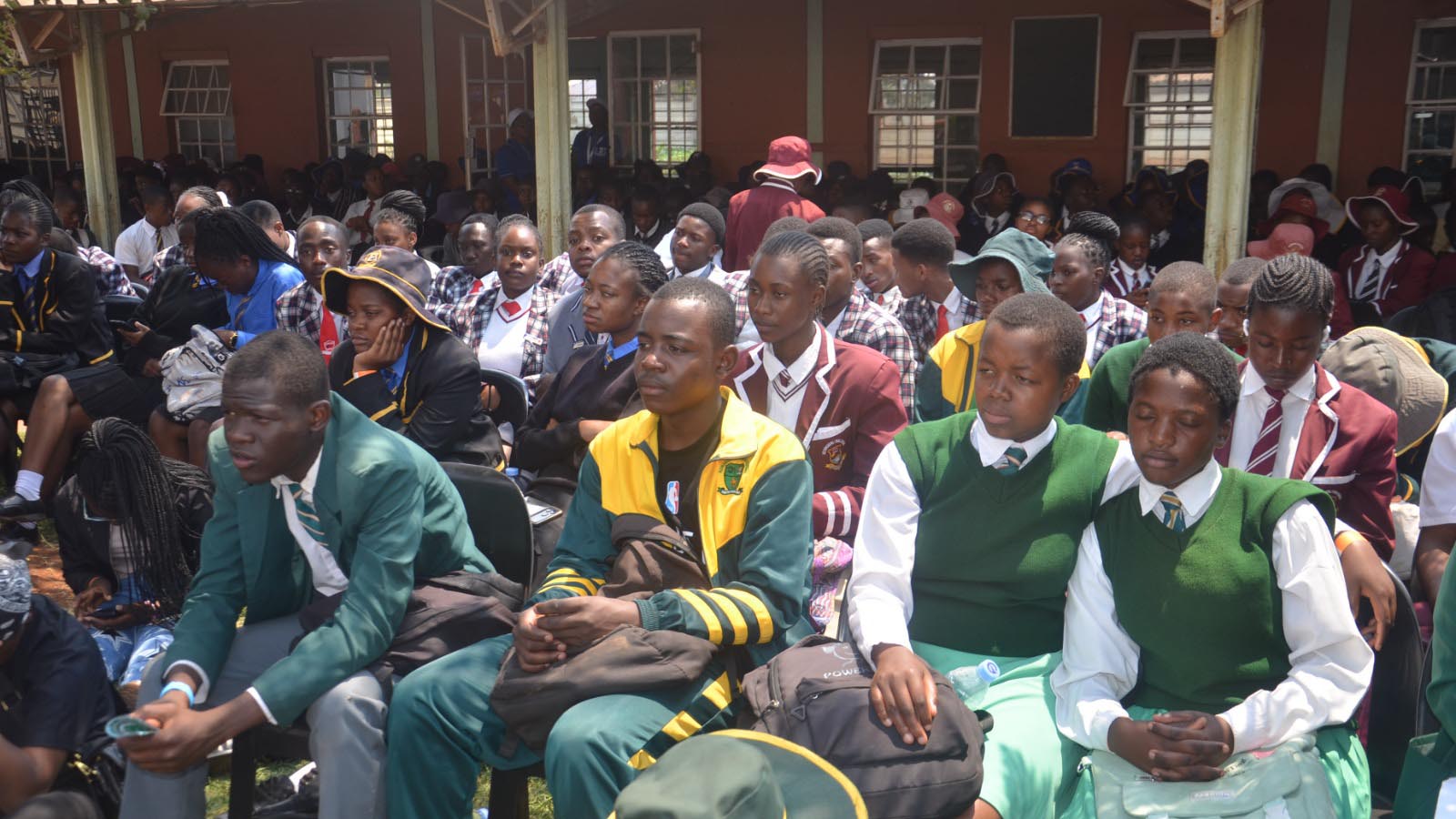
THE Zimbabwe Blind Women’s Trust has embarked on a three-day leadership and empowerment training for women with disabilities at Highfield High 2 in Harare.
The trust is a non-governmental organisation created to inform, motivate, equip, and empower visually impaired women and girls in Zimbabwe.
The training, which is being supported by Mobility International USA (MIUSA), is open to all persons with disabilities who are 18 years and above.
The trust aims to help them live full lives and is partnering with other organisations to raise awareness about their rights to privacy and independent living.
The trust’s founder and director, Ms Jules Daudi said: “We aim to empower visually impaired women and girls through information, motivation, and skills, promoting their right to live independently and maximised lives.
“This training will strengthen their leadership and advocacy skills, build confidence and communication abilities, learn about disability rights and inclusive development, engage in empowerment activities and inclusive sporting and connect them with other inspiring women with disabilities.”
She said, they were also commemorating the International Day of Persons with Disabilities as well as recognising the 16 days of activism against Gender Based Violence.
Persons with disabilities hailed the training, saying that it will enable them to compete in the global market space.
“Good leaders understand how to run a business and teamwork, hence this training will take us to greater heights and we can even participate in international forums and earn global markets,” said Mrs Spelile Machingamidze the National Disability Board Committee member.
“We can market our products online, share information and knowledge with our peers across the globe.”
She encouraged parents to support children with disabilities educationally for economic benefits.
“My family was very shy and they used to lock me indoors just because I have albinism,” she said.
“I could not explore and understand life like other girls of my age and this affected my entire life because the moment I got an opportunity, I went onto the streets.
“I was lucky to be rescued by some well-wishers, and I proceeded with my education through the Social Welfare Department, and I’m now a teacher. If parents hide their children with disabilities, they will be locking their talents.”
Tarumbidzwa Taruvinga, a law student at the University of Zimbabwe who lost her sight while she was in Form 5, said disability should not be a limiting factor.
“I lost my sight while I was in Form 5 and many people could not believe that I could no longer see. Even some teachers who were at my school could not accept my condition, even though the school was meant for children with disabilities,” she said.
“They mocked me, but I did not bother because I knew how societies fail to understand disability issues. I wanted to become a successful woman in life, and that has motivated me until now. I’m not deterred.”
Taruvinga managed to write her examinations using Braille and came out with flying colours. She is now pursuing her law studies at the University of Zimbabwe and has opened her own organisation, yet to be registered.
Highfield 2 High School head, Mr Morgan Magwenzi, applauded the trust for championing disability awareness programmes at their school and said he hoped that all the schools in the country understand disability issues.
“At my school, we once had an unfortunate incident where some learners bullied and dragged a child with albinism and they threw him against a hedge,” he said.
“Stigma and discrimination among learners with disabilities remain rife, hence we decided to train our teachers and students so that they understand, and we have moved a gear up.
“We have several students with disabilities and we have actually improved our infrastructure to ensure that school facilities are accessible. We constructed rumps such that wheelchairs can have free movement.”
Mr Prince Batisa, a member of Junior Parliament representing Highfields Constituency, thanked the Government for the inclusive education policy that enables learners with disabilities and those without to learn under the same roof without stigma and discrimination.
“Equal access policies mandate that all children have a right to education and must be admitted to school regardless of their ability, and there is need for systemic adaptation that involves changing the education system, including teaching methods, curriculum, and physical environments to accommodate all students without discrimination,” he said.
“Policies often require providing targeted support for students with disabilities or other learning needs. This can include specialised interventions, assistive devices, and individualised educational plans (IEPs).”
He said inclusion is based on the principle that diverse student backgrounds are valuable and that students learning side-by-side benefits everyone.
“Equal access policies mandate that all children have a right to education and must be admitted to school regardless of their ability, and there is need for systemic adaptation that involves changing the education system, including teaching methods, curriculum, and physical environments to accommodate all students without discrimination,” he said.