Online Reporter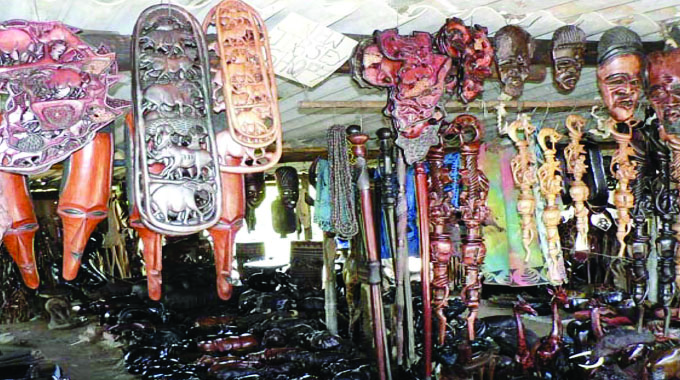
Johnson Siamachira, Features Correspondent
WHERE in the world could you come face to face with a full-grown rhino and feel completely safe?
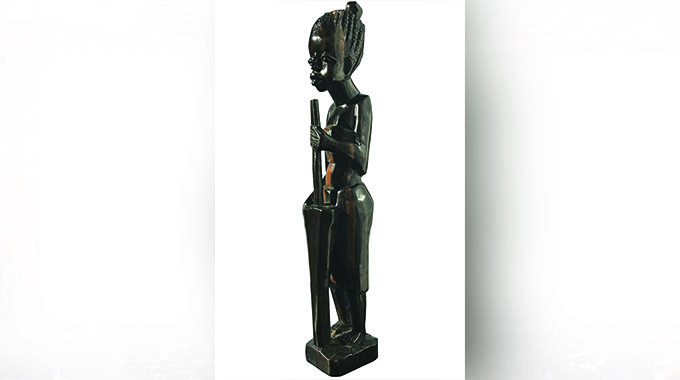
The answer is Victoria Falls, Zimbabwe — where the animal in question is carved entirely from solid wood.
Intricately detailed, this artwork is one of thousands of wooden sculptures in various shapes and sizes displayed at outdoor curio markets in the heart of the country’s premier holiday resort.
However, the hardwood trees from which these beautiful carvings are made are under threat of extinction, environmentalists warn.
A recent study on Zimbabwe’s wood carving industry, conducted by local and international researchers, found that it has become a booming business in Victoria Falls. Tourists have paid up to US$1 500 for life-sized sculptures and giant busts.
“There is money in selling wood carvings,” confirms Mr Moses Mugande, a sculptor at the bustling Elephants Walk Shopping and Artist’s Village curio market.
“We can even exchange some of our work for valuable goods, or even formal suits.”
Even tourists, who don’t purchase the sculptures are often drawn to photograph them.
Environmentally, however, the practice of tree poaching for carving materials is contributing to deforestation. As more people turn to craft-making, sustainability declines.
Deforestation not only disrupts ecosystems but also directly affects livelihoods. As Mr Mugande puts it:
“No wood means no work for most ordinary residents in Victoria Falls.”
Most of the hardwood used by sculptors in Victoria Falls is sourced — legally or illegally —from surrounding rural areas and nearby state-owned land. In protected areas, the Forestry Commission enforces strict regulations.
Previously, the Commission permitted locals to collect dead wood from forests. However, due to increased poaching, legal extraction is now rarely allowed.
Another sculptor, Mr Ndumiso Muleya, denies using illegally obtained wood but acknowledges that some of his peers have been fined.
“I get hardwood from the Forestry Commission. They supply wood that has died naturally, but it’s not enough to meet demand — trees don’t die naturally in large numbers,” he explains.
“Wet wood is easier to carve than dry wood and many sculptors are tempted to poach wet wood instead of relying on the limited supply of dry wood.”
Although he is aware that large-scale sculpture production is depleting Zimbabwe’s hardwoods, Mr Muleya says it is the only way he and many others can support their families.
“The stomach taught me the art of wood carving,” he says.
“We entered this business because there are no jobs. Then frequent droughts brought more economic hardship. So, woodcarving became our only source of income.”
While the current woodcarving boom may be good news for the thousands of craftsmen across Zimbabwe, it spells trouble for the country’s dwindling indigenous hardwood trees.
To address the issue, environmentalists are urging the Forestry Commission to introduce an eco-friendly label or stamp for finished carvings. They also recommend a public awareness campaign to educate sculptors and buyers about trading only in wood marked with a seal of approval.
“The market is there. Tourists will always buy and now, wooden sculptures fetch high prices. What would help is for sculptors to use pine, which is exotic but grows faster than hardwoods that take years to mature,” says the Victoria Falls Wildlife Trust, a local NGO.
The shift towards life-sized and larger sculptures — once dominated by smaller mantelpiece items — is believed to be driven by market demand.
“This trend is threatening our mahogany, teak and mukwa trees,” adds the Wildlife Trust.
Another growing threat is the trade in root art. For example, the roots of the mukuti tree — which can reach depths of up to 68 metres, making it the deepest-rooted plant known — are cut, stripped of bark, varnished and sold as household ornaments.
“I’ve seen people selling these roots by the roadside. And of course, when the roots are cut, the trees die,” says Mr Mugande.
“The long-term damage this booming trade is causing has yet to be fully documented. By the time we see the impact, it may be too late,” warns Mr Innocent Hodzonge, Executive Director of Environmental Africa, a locally-based NGO implementing environmental development projects in Malawi, Zambia and Zimbabwe.— New Ziana



 Bongani Ndlovu