admin
admin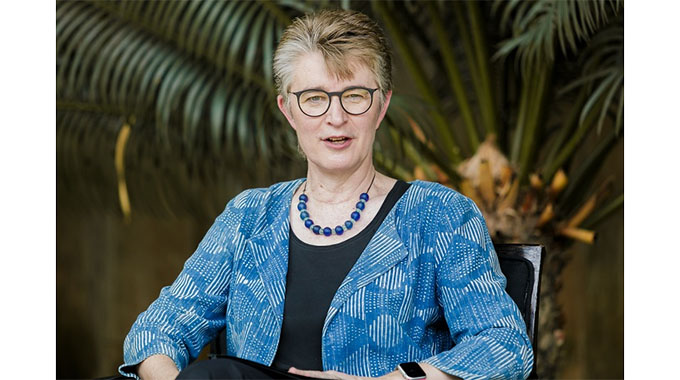
Rumbidzayi Zinyuke-Senior Health Reporter
The urban voucher component of the World Bank funded results-based financing programme has increased access to maternal healthcare for thousands of vulnerable pregnant women in Harare and Bulawayo resulting in lower maternal and neonatal deaths.
The programme, which provides free maternal, newborn and child health services for the poor, was launched in 2014 as a pilot project in five wards of Nkulumane district in Bulawayo as well as Mbare and Hopley wards in Harare’s southern district.
The beneficiaries were identified by community workers and social service workers through an eligibility test to determine their poverty status. The programme has seen an increase in the number of institutional births and improved antenatal bookings.
Speaking during a visit to Mbare polyclinic by the World Bank country director for Tanzania, Malawi, Zambia and Zimbabwe Mara Warwick to assess the impact of the project, Harare District Medical Officer (DMO) Dr Collen Nyatsambo said the programme had made significant impact on the lives of poor women.
“At least 58 percent of people in Harare and Bulawayo are living below the poverty datum line. Since the initiation of the project, we have seen increased access to health care especially to the bottom 20 percent of our people who probably would not have been able to access care in our units because of poverty.
“We have also adopted the health centre committee concept which we didn’t have and this is now a bridge between the centre and the community,” he said. Zimbabwe introduced the Results-Based Financing(RBF) with funding and technical support from the World Bank through the Health Sector Development Support Project in 2011 with the aim to accelerate access to quality maternal and child health services in 18 rural districts.
With recorded success, the project was scaled up to 42 districts in 2014, during which time it was noticed that women and children in urban communities were facing similar challenges.
The World Bank country director commended the implementation of the programme in the urban areas as it was making a difference in urban women’s lives.
“A couple of days ago we celebrated International Women’s day.
“As we talk about it, we talk about empowering women but what we have seen today is what the day should be about.
“There is nothing more empowering for a woman than to be able to access maternal healthcare, to be able to make sure that her baby is healthy, that she has the education needed to be able to carry that health forward with the baby,” she said.
“It is very good to see how this programme was able to transition from a rural programme to a rural and urban one and be able to address the needs of the most vulnerable women in an urban setting. It is also impressive how you have been able to keep improving and providing services even during Covid-19.”
Ms Warwick said the impact of the initiative on thousands of women and children was evidence that the programme needed to be continued in a sustainable manner.
“We acknowledge the gaps in financing and accessibility that has occurred and we take that on board and l think we have to deepen our dialogue with the development partners and Government on how we make sure that there is sustainability and continuity,” she said.
Catholic Organisation for Relief Aid (Cordaid) team leader Dr Endris Seid said the approach had been able to support urban poor pregnant women to have safe delivery by removing the financial access barrier for a community with healthy mothers and babies.
Cordaid is the project implementing partner.
Full story on: www.herald.co.zw
“We are now at a stage where the urban voucher programme is being scaled up through the support of the health sector, development support project and a significant co-financing by the Government of Zimbabwe. As the project is going to come to an end in April next year, we are providing technical assistance to the cities to realise sustainability,” he said.
“Given the importance of this programme, we would like to appeal to both World Bank and Government to continue financing it so that is can be sustained,” he said.
Women who have benefited from the project also said it was important for the initiative to be scaled up as it had helped alleviate the challenge of home deliveries.
Ms Panashe Muchiringi (23) a beneficiary said:
“This is my first pregnancy but I did not have the money to come for my antenatal booking here so when the community health workers came to my home and told me about the urban voucher programme, I was relieved. My husband and I don’t work so we would never have afforded for me to give birth in a hospital and I know that there are many more women like me who cannot afford to go to a health facility. I hope they will be identified and get help so that they do not die in childbirth or lose their children,” she said.
Another beneficiary Ms Trish Mukwambi (17) who already has a 1 year old baby said even though she did not have a national identity document at the time that she fell pregnant, social services officers had assisted her to be part of the programme.
“I came here when my pregnancy was still at its early stages because the social worker who assisted me realised that l needed the facility. I was treated very well and I never paid a cent even though I gave birth at Harare hospital. I hope that this programme will help more people in future because there are a lot of women in this community who cannot afford health services,” she said.


 Online Reporter