Lloyd Makonya
Correspondent
ON January 4, the global community commemorated World Braille Day, a moment set aside annually to recognise the transformative power of Braille as a tool for education, independence and inclusion for blind and visually impaired persons.
The day is, not merely symbolic, but is a reminder that access to information is a fundamental human right, and that no society can claim inclusivity while knowledge remains inaccessible to some of its citizens.
World Braille Day is officially recognised on the United Nations calendar, following its proclamation by the UN General Assembly in November 2018 through Resolution A/RES/73/161.
The date coincides with the birthday of Louis Braille, born on January 4, 1809, whose innovation reshaped the lives of millions across the world.
The observance aligns closely with the UN Convention on the Rights of Persons with Disabilities (CRPD), which affirms access to information, education and culture as non-negotiable rights.
Louis Braille lost his sight at a young age following an accident in his father’s workshop.
Despite the severe educational barriers faced by visually impaired learners in 19th-century France, Braille went on to develop a tactile reading and writing system while still a teenager.
His six-dot cell system, capable of representing letters, numbers, punctuation and musical notation, remains one of the most elegant and enduring innovations in the history of education.
Braille did more than invent a code, he unlocked literacy. For the first time, blind people could read and write independently, without mediation.
Today, Braille is recognised globally as a cornerstone of inclusive education, cognitive development and personal autonomy for persons with visual impairments.
In Zimbabwe, the significance of World Braille Day resonates strongly within the country’s evolving disability rights architecture.
The Constitution of Zimbabwe (2013) expressly prohibits discrimination on the basis of disability and affirms the right to education, dignity and equal participation in society.
These constitutional guarantees are reinforced by the Disabled Persons Act (Chapter 17:01), which, despite the need for further alignment with the CRPD, provides a foundational framework for promoting access and reasonable accommodation.
More recently, Zimbabwe has signalled commitment to disability inclusion through national development frameworks such as Vision 2030 and the National Development Strategy (NDS1&2), both of which emphasise leaving no one behind.
Inclusive education policies adopted by the Ministry of Primary and Secondary Education also recognise the need for learning materials in accessible formats, including Braille.
However, policy intent must be matched by practical access to learning resources.
Without textbooks and reading materials in formats usable by visually impaired learners, equality remains aspirational rather than real.
The Accessible Books Consortium (ABC) is a public-private partnership led by the World Intellectual Property Organization (WIPO).
Its mandate is to end the “book famine”, the global shortage of accessible format books for blind and print-disabled persons, particularly in low-income countries where less than 10 percent of published works are available in accessible formats.
ABC facilitates the cross-border exchange of accessible books through its Global Book Service, it helps in capacity building for libraries, schools and disability organisations and the promotion of inclusive and born-accessible publishing.
For Zimbabwe, participation in ABC represents a cost-effective and sustainable way to expand access to educational and recreational reading materials for blind learners, without duplicating expensive production processes. Institutions such as the Dutch Reform Church run Margaretha Hugo School of the Blind in Masvingo can significantly benefit from Zimbabwe’s engagement with the ABC system.
Through authorised entities, schools and libraries can access thousands of textbooks and general reading materials in Braille, audio and digital formats aligned to local curricula. Such access has the potential to improve literacy outcomes, examination performance and transition to tertiary education for blind learners. It also reduces dependency on outdated or scarce learning materials, a persistent challenge in special education settings.
At the heart of this accessibility ecosystem is the Marrakesh Treaty to Facilitate Access to Published Works for Persons Who Are Blind, Visually Impaired or Otherwise Print Disabled, adopted in 2013 under WIPO.
The treaty allows countries to introduce copyright exceptions that permit the production and sharing of accessible format copies without the authorisation of rights holders.
The Marrakesh Treaty is widely regarded as one of the most progressive international intellectual property instruments, placing human dignity above commercial exclusivity. Countries that implement it can legally exchange accessible books across borders, dramatically increasing availability at minimal cost.
For Zimbabwe, effective domestication and utilisation of the Marrakesh Treaty would complement existing education and disability policies, while unlocking global repositories of accessible knowledge.
The importance of access and opportunity is best illustrated by lived success stories.
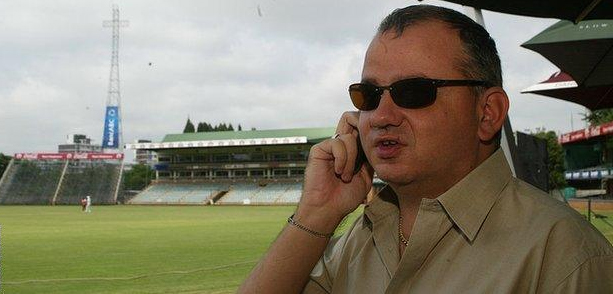
Dean du Plessis, Zimbabwe’s internationally renowned visually impaired cricket commentator, stands as a compelling example of what is possible when disability is not treated as a limitation but as a difference.
Born visually impaired, du Plessis has become famous for his extraordinary ability to describe cricket matches using acute hearing alone.
By interpreting the sound of bat on ball, stump microphones, player movements and even subtle changes in crowd reaction, he provides vivid, real-time commentary that often leaves listeners unaware that he cannot see.
He is widely regarded as the world’s first visually impaired cricket commentator, and a unique voice in global cricket broadcasting.
His success underscores a simple truth that when blind persons are given access to education, information and opportunity, they do not merely participate, they excel.
For Zimbabwe, World Braille Day, should serve as more than a commemoration. It should be a call to action for policymakers, educators, publishers and development partners to invest in accessible education, align laws with international standards and fully leverage mechanisms such as the Accessible Books Consortium and the Marrakesh Treaty.
More than two centuries after Louis Braille’s birth, his legacy continues to remind us that inclusion is not charity, but justice and that societies prosper when all their citizens are empowered to read, learn and contribute.
World Braille Day: Advancing inclusion, knowledge through accessible books