admin
admin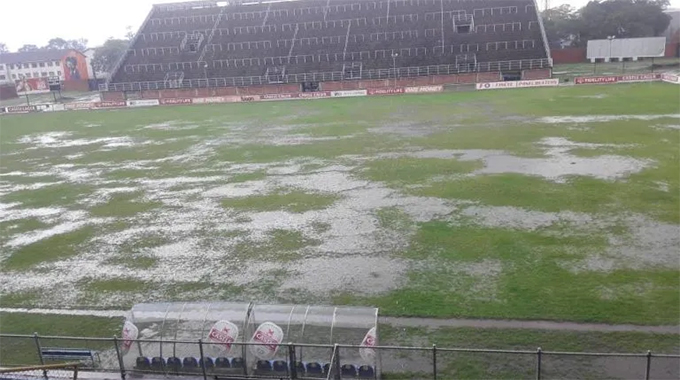
Eddie Chikamhi-Senior Sports Reporter
THE year 2022 will go down possibly as possibly the worst chapter in the history of Zimbabwean football.
The game is currently in doldrums, with a FIFA ban hovering above its head in the last eight months. Nothing seemed to move in the right direction both on domestic and international fronts during the cursed year.
Corruption and poor management have largely been blamed for this pathetic plunge. The Herald on Saturday traverses some of the lows:
The rebellious ZIFA board, SRC skirmishes
The year opened with the rebellious ZIFA board led by Felton Kamambo fighting authorities after they were suspended by the Sports and Recreation Commission.
The board was suspended in November 2021, in terms of Section 30 (i) (c) of the SRC Act, facing a chain of allegations that included failure to account for public funds, poor governance, bribery and sexual harassment of female referees, among others.
The Sports Commission indicated they wanted to institute investigations into the various allegations and begin the process of cleansing the game.
But before they could make the first steps, an open confrontation ensued as the suspended board defied the Sports Commission’s directive.
The Sports Commission had to stamp their foot down after the board members had forced their way back to the ZIFA office, after noting an appeal against their suspension at the Administrative Court.
The squabbles almost scuppered the Warriors’ participation at the 2021 AFCON tournament in Cameroon. The tensions have been escalating, for most of the time this year, with letters and statements flying from one office to the other.
But the Sports Commission stood their ground, and insisted football needed to be cleansed. Football administration in Zimbabwe has suffered years of deterioration.
Warriors’ AFCON jinx
Zimbabwe participated at the Africa Cup of Nations tournament for the fifth time at the beginning of the year in Cameroon. Once again, the Warriors failed to break the jinx when they finished bottom of the group that included Malawi, Guinea and eventual champions Senegal, and failed to go to the next round.
Losing the decisive game to Malawi was definitely a bitter pill to swallow as Zimbabwe gave away their lead to fall 1-2 to the regional rivals. They had suffered a last minute heartbreak in their first game against Senegal who clinched a 1-0 win, thanks to a late penalty conversion by Sadio Mane. The 2-1 win over Guinea in their last group game was mere consolation. With that, Norman Mapeza became the fourth Zimbabwean coach to fail the test at the continent’s premier football competition after veteran gaffer Sunday Chidzambwa (2004 and 2019), Charles Mhlauri (2006) and Callisto Pasuwa (2019).
However, this time around there was tranquility in the Warriors camp after Government poured in US$1 million. The corporate world was also beginning to warm up to the team, with FBC Holdings unveiling a cool package that included US$1 000 bonuses for each player for every game they won.
FIFA suspension
On April 24, FIFA announced that ZIFA’s membership had been suspended citing third party interference in the running of the association’s affairs. This was after the Sports Commission had suspended the association’s board as part of the process of cleansing domestic football administration.
As a result, Zimbabwe missed out on the 2023 AFCON and CHAN qualifiers and several other international events.
The Kamambo-led board faced a chain of allegations that included failure to account for public funds, poor governance, bribery and sexual harassment of female referees, among others.
Football administration in Zimbabwe had suffered years of deterioration and poor management and the Sports Commission had to act by suspending the ZIFA board to pave the way for reforms.
FIFA also slapped former ZIFA referees’ secretary Obert Zhoya with a five-year ban and a heavy fine after he was convicted in the charges of sexual harassment of female referees.
Corruption had become so endemic in Zimbabwe football administration that even the officials have been accused of bribing their way into office.
Kamambo is still battling to clear his name at the Harare Magistrates courts after he was accused of vote-buying in the December 2018 ballot that brought him into office.
A forensic audit carried out by an independent firm, BDO Zimbabwe, unearthed massive financial irregularities. ZIFA could have been prejudiced in excess of US$600 000 and ZW$73 million between December 2018 and November 2019 under Kamambo’s watch.
The discord in the football family also grew and Kamambo and board members Philemon Machana and Bryton Malandule were ousted from the ZIFA board at the Congress held in April this year.
Former vice-president Gift Banda was appointed by the ZIFA Congress to steer the ship following the recalling of Kamambo by disgruntled councillors at the emergency meeting.
Football grounds in state of disrepair
The Warriors risked facing the ignominy of playing their home games in the 2023 AFCON qualifiers in neighbouring countries after CAF announced a ban on Zimbabwe’s stadiums from hosting international games.
The FIFA suspension came as a blessing in disguise, though, and an opportunity to fix the mess noted by CAF inspectors, who had pointed out that all the stadiums, including the National Sports Stadium, failed to meet the minimum requirements.
In 2021, CAF had given Zimbabwe conditional approval to play their home matches in the 2021 AFCON qualifiers and the 2022 FIFA World Cup games at the National Sports Stadium.
But the stadium has not been refurbished. Just like the derelict Rufaro and Gwanzura, which cannot host local topflight matches, the stadium crisis persisted in 2022.
The Premier Soccer League was forced to cram all the Harare-based teams at the National Sports Stadium for their home matches while the others like Black Rhinos and Cranborne Bullets sought alternative homes in Rusape and Mutare.
Rufaro and Gwanzura are currently in a state of decay despite the numerous promises made by the Harare City Council during the course of the year. The Council, inexplicably, turned down Sakunda Holdings’ offer for a long-term lease to spruce up the stadium and its environs to world class standards. Many other grounds which used to host Premiership and Division One matches across the country are in constant decay while some are now white elephants.
Poor stadium attendances
Zimbabwean football experienced a worrying trend in 2022 as topflight football teams — big or small — played their league games in virtually empty stadiums.
The 2022 season was probably the worst in terms of poor attendances as highlighted by the poorly attended blockbuster fixture of the season featuring traditional giants Dynamos and Highlanders.
There were less than 3 000 fans when Dynamos hosted Bosso at the National Sports Stadium, the lowest attendance ever in the history of this rivalry.
While the reverse fixture in Bulawayo attracted a reasonable crowd, with an estimated 15 000 fans turning up for the contest, the match in the capital was largely ignored by the football fans.
The low football attendances have also been attributed to the Covid-19 interruptions and the tough economic conditions.
Boring football
The fans were not happy with the quality of play on display.
The football lacked entertainment value. There were no individual stars to illuminate the stadiums and teams struggled to knit together basic passes.
Dynamos fans in particular, did not hesitate to make their feelings known as their team sacrificed quality in pursuit of results by any means possible. It worked at first but when results somehow began to elude them, the fans stayed away. The Glamour Boys, who at their peak would attract 30 000 – 40 000 supporters to the big matches against CAPS United and Highlanders, this season struggled to attract 2 000 paying fans for the headline fixtures.
Hooliganism and violence rears ugly head
At least two games were abandoned this year due to crowd trouble and as the situation threatened to spiral out of control, the league was briefly suspended to allow the football leadership to attend to the scourge.
There were red flags in the Independence Day Cup final between Dynamos and Highlanders at Barbourfields as supporters rained missiles onto the pitch on different occasions to protest the referees’ decisions.
Then the following month, on May 15, the clash between the two giants was abandoned. Images from that match at Barbourfields painted a bad picture of Zimbabwean football as the country’s headline fixture was abandoned prematurely.
The match was characterised by raised tensions on the pitch and extreme levels of insanity in the terraces. Both players and supporters were disorderly.
Rowdy fans invaded the pitch at different intervals. In the heat of the madness, one of the fans was captured attacking a match official, who had to defend himself by fighting back. No one knows how that could have ended had the police not reacted in time.
The attack on referees, the destruction of the perimeter fence and advertising billboards by these hooligans, some of whom also attempted to uproot the goal posts and tore down the goal nets put a huge damper on what was supposed to be an afternoon of exciting football.
The two clubs were fined by PSL for failing to control their fans. DeMbare were fined US$7 500 for the mayhem caused by their fans.
The PSL Disciplinary Committee also ruled that the Harare giants lost the match on a 0-3 scoreline, while Highlanders were fined US$5 000 for the role played by the home fans in contributing to the disruptions.
Dynamos were also fined for the skirmishes that rocked their game against Bulawayo Chiefs at Barbourfields.
Highlanders were also caught on the wrong side in their abandoned match against FC Platinum at Mandava where fans invaded the pitch in protest of a penalty awarded to the host.
The Zimbabwe Republic Police arrested 15 people in connection with the disturbances at Mandava. The supporters apparently took the law into their hands after the referee had given a penalty decision, which they did not agree with.
The hooligans even disregarded the pleas from their own club officials, including Highlanders captain Ariel Sibanda who begged them to return to the terraces as they advanced threateningly towards the match officials.
Such was the monster face of football in 2022.



 Online Reporter